Prøve GULL - Gratis
MAX POWER
The Week Junior Science+Nature UK
|January 2025
From the second you wake up in the morning, your way of life is made possible thanks to the amazing power of electricity.
-
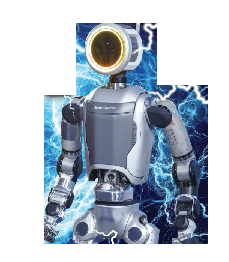
It keeps the lights on, charges your phone, powers your favourite console games, cooks your food and is now helping to create the next generation of high-tech robots. Come on a supercharged journey to get to know electricity's secrets and discover some of the surprising electrical wonders to be found in nature.
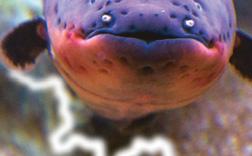 What is electricity?
Electricity is what happens when electrons (tiny, negatively charged particles found in all atoms) move about. The simplest way to experience this is to rub a balloon on your hair. When you pull it slowly away from your head, your hair "magically" sticks to the balloon.
This, of course, isn't magic but a type of electricity called static electricity. Rubbing the balloon moves electrons from your hair onto the outside of the balloon. This action gives the balloon a negative charge and your hair a positive charge, causing them to be attracted to each other. The electrons can also "jump" to another surface, creating an electric spark. The electricity that powers your home is called dynamic electricity because it is a continuous flow of electrons, also called a current. Metals like copper, which electrical wires are made out of, have lots of electrons that can freely move between the copper atoms. When you plug your TV into the wall, the electrons get pushed around the wire, creating the current that powers your TV.
Naturally sparky
You can find electricity right in the core of the planet. As Earth rotates, the liquid metal in its core moves, creating flows of electricity. This generates a giant magnetic forcefield around the planet, protecting us from dangerous solar energy from the Sun. You can sometimes see this solar energy being deflected as the amazingly colourful aurora borealis (the northern lights).

Denne historien er fra January 2025-utgaven av The Week Junior Science+Nature UK.
Abonner på Magzter GOLD for å få tilgang til tusenvis av kuraterte premiumhistorier og over 9000 magasiner og aviser.
Allerede abonnent? Logg på
FLERE HISTORIER FRA The Week Junior Science+Nature UK

The Week Junior Science+Nature UK
FIGHTING THE FREEZE
Claire Karwowski uncovers nature's wildest ways of fighting the winter freeze.

6 mins
Christmas 2025
The Week Junior Science+Nature UK
Cook up bioplastic decorations
Make your own eco-friendly ornaments.
1 min
Christmas 2025

The Week Junior Science+Nature UK
Should we switch off Christmas lights?
They brighten up the festive season, but they can have a negative impact on the environment.
1 mins
Christmas 2025
The Week Junior Science+Nature UK
Three spectacular illuminations
Glow Wild, Wakehurst
1 min
Christmas 2025

The Week Junior Science+Nature UK
THE LAST DAYS OF POMPEII
For the first time, an immersive exhibition about the destruction of the ancient Roman city of Pompeii has opened in London.
1 min
Christmas 2025

The Week Junior Science+Nature UK
Wildlife watch
Jenny Ackland unveils a winter wonderland of natural delights this festive season.
1 mins
Christmas 2025
The Week Junior Science+Nature UK
Make Snow globes
Create the perfect Christmas gift.
1 min
Christmas 2025

The Week Junior Science+Nature UK
Maggie Aderin-Pocock
Meet the scientist \"blasting off into space\" at the Christmas Lectures.
3 mins
Christmas 2025
The Week Junior Science+Nature UK
Make vegan eggnog
Whip up a dairy-free festive winter warmer that is perfect for cold nights.
1 min
Christmas 2025
The Week Junior Science+Nature UK
Octopuses
Meet the colour-changing, shape-shifting, fortune-telling aliens of the seas.
2 mins
Christmas 2025
Listen
Translate
Change font size