
Gå ubegrenset med Magzter GOLD
Få ubegrenset tilgang til over 9000 magasiner, aviser og premiumhistorier for bare
Prøve GULL - Gratis
Threat to survival
Down To Earth
|February 01, 2025
Hollongapar Gibbon Sanctuary in Assam faces ecological challenges as railway electrification and hydrocarbon exploration endanger its fragile biodiversity
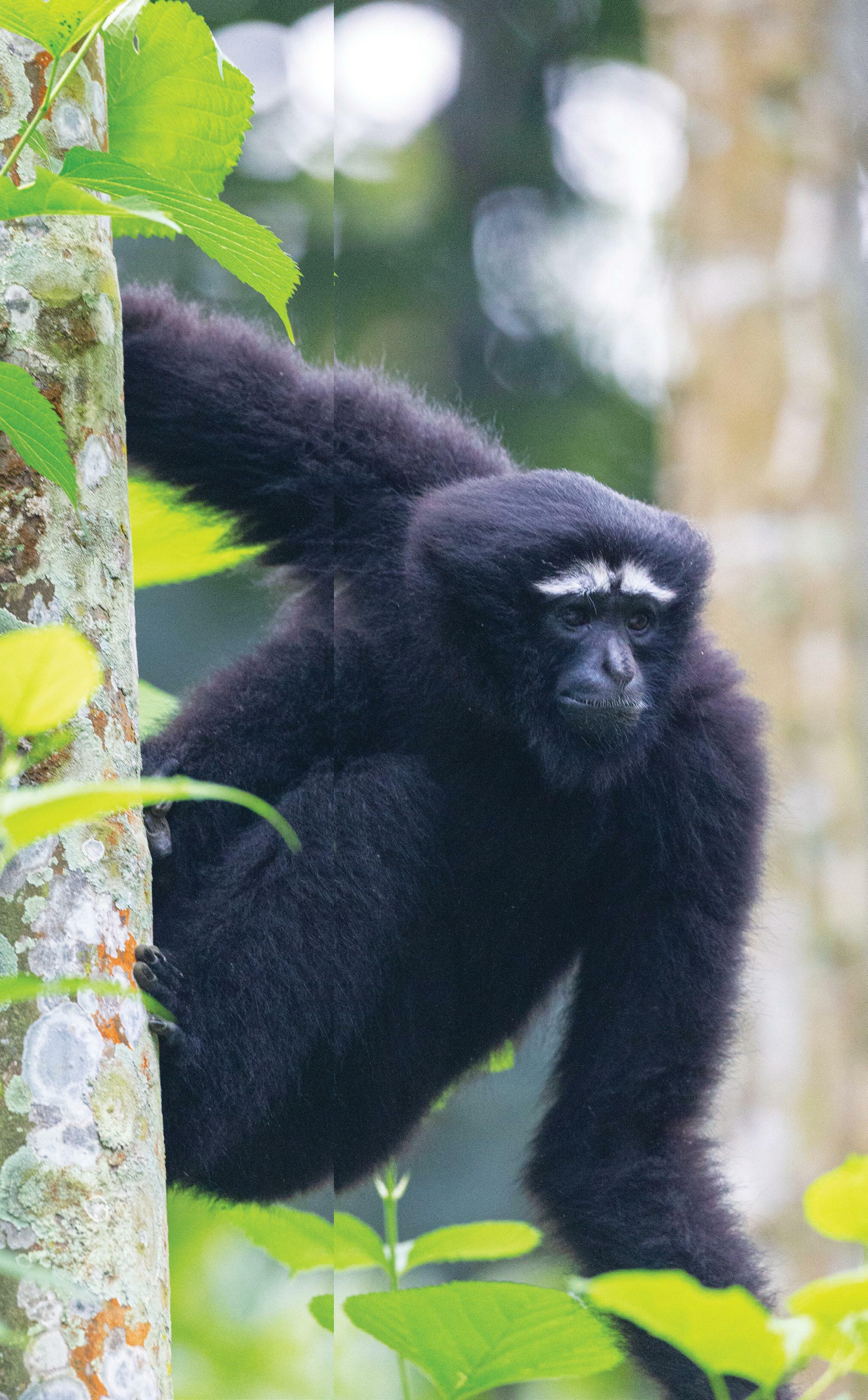
THE HOOLOCK gibbon, one of humans' closest evolutionary cousins, clings to survival in a fragile habitat in India-a 21km wildlife sanctuary in Assam's Jorhat district named after the ape itself. Over the past century, human encroachment has steadily tightened its grip on the sanctuary, which is home to over 219 bird species, six primate species (including the world's largest troop of stump-tailed macaques) and much more. A railway track, laid in 1887, cuts through its core, while "tea gardens and human settlements" encircle its "semi-evergreen forests and evergreen patches", as described by the state's forest department website.
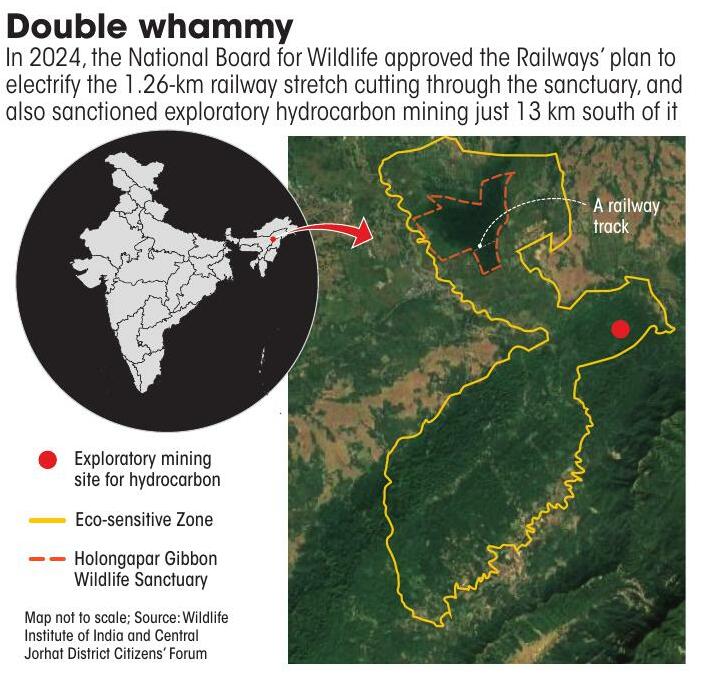
Remarkably, the Hoolock gibbon, India's sole ape species, has managed to endure. A 2019 census conducted by the Wildlife Institute of India, Dehradun, recorded 125 individuals within the sanctuary. However, conservationists are sounding the alarm over two projects sanctioned in 2024: exploratory hydrocarbon mining approved just 13 km south of the sanctuary and the electrification of the railway track running through it.
These projects could upend the delicate balance of the vulnerable ecosystem, jeopardising the future of the primate and the other biodiversity in and around the sanctuary.
 IN SEARCH OF OIL

Denne historien er fra February 01, 2025-utgaven av Down To Earth.
Abonner på Magzter GOLD for å få tilgang til tusenvis av kuraterte premiumhistorier og over 9000 magasiner og aviser.
Allerede abonnent? Logg på
FLERE HISTORIER FRA Down To Earth

Down To Earth
THINK TWICE BEFORE FELLING SAL TREES
Many trees considered to be affected by sal borer in the 1990s are still alive today

1 mins
February 16, 2026

Down To Earth
EDGE OF SURVIVAL
Caste divides deny marginalised communities land, resources and essential aid, leaving them more vulnerable to climate disasters
6 mins
February 16, 2026

Down To Earth
A WISH LIST?
Union Budget for 2026-27 conveys the impression of a roll-call of intentions and ambitious proposals, with little detail on their formulation
6 mins
February 16, 2026
Down To Earth
Break down the gender wall
THE RULING National Democratic Alliance (NDA) government has been heavily invested in the goal to make India a developed economy by 2047.
2 mins
February 16, 2026

Down To Earth
MENSTRUAL HEALTH, NOW A FUNDAMENTAL RIGHT
In a landmark judgement, the Supreme Court has recognised menstrual health and hygiene as a fundamental right under Article 21 of the Constitution of India, which guarantees the right to life and dignity.
8 mins
February 16, 2026

Down To Earth
Of devolution and new disasters
The 16th Finance Commission pushes for changes in view of new fiscal and climatic conditions
11 mins
February 16, 2026
Down To Earth
Rising risks of plastics
NEGATIVE IMPACTS on human health due to emissions linked to the plastic lifecycle could double by 2040, according to a study published in The Lancet Planetary Health in January.
1 min
February 16, 2026

Down To Earth
GAP BETWEEN EPIDEMICS NARROWING
A watershed-based and landscape-level approach is needed to address forest degradation
2 mins
February 16, 2026
Down To Earth
WAITING TO STRIKE
Sal heartwood borer is considered the biggest threat to forestry in India, especially to the sal tree, where it lives and breeds.
11 mins
February 16, 2026

Down To Earth
A SPRING DELIGHT
Mustard flowers are not meant only for the eyes. Invite them to your plate once in a while
3 mins
February 16, 2026
Listen
Translate
Change font size