Prøve GULL - Gratis
ROAD TO CITY COOL
Down To Earth
|August 16, 2023
Urban India is a heat trap, but road orientation, building materials and zone-specific master plans can drastically enhance thermal comfort

RISING EPISODES and increasing intensity of heatwaves have become quite common and a major problem in Indian cities. The threat is twofold: big cities are finding it difficult to adjust to the changing climate and need liveability improvements. Small cities, on the other hand, are on the brink of explosive growth and require "heat-proof" development. While big cities need retrofits to combat the "heat island" effect, small cities need heat-resilient master plans and by-laws.
Every city has a unique combination of natural and humanmade infrastructure and the activities resulting from them. Closely packed buildings, for instance, will generate shorter trips and hence lesser vehicular emissions that pollute the air and trap heat. More greenery and waterbodies will sequester carbon emissions and cool the ambient environment. This combination of green spaces, waterbodies and buildings is called the urban form of a city, which plays a crucial role in its heat resilience and liveability.
In 2022, Delhi-based non-profit Centre for Science and Environment (CSE) began a study to understand how different urban forms react to heat. The study, which covers 10 cities including Pune, Delhi, Kolkata, Bengaluru and Jaipur, is ongoing. But data and trends evident so far suggest steps that could help urban India fight heat.
Urban form can be broken down into and understood through physical parameters. Its key parameters include urban morphology, aspect ratio, sky view factor (SVF), blue/ green infrastructure (B/GI), floor area ratio (FAR)/ floor space index (FSI) and street orientation. At Pune, CSE recorded these parameters at 49 locations identified as the city's "heat pockets" areas where land surface temperature (LST) soars above 45°C. This is what the readings show:

Denne historien er fra August 16, 2023-utgaven av Down To Earth.
Abonner på Magzter GOLD for å få tilgang til tusenvis av kuraterte premiumhistorier og over 9000 magasiner og aviser.
Allerede abonnent? Logg på
FLERE HISTORIER FRA Down To Earth

Down To Earth
GREAT NICOBAR DILEMMA
In the fragile ecosystem of Nicobar, strategic development must align with constitutional commitment to protect environment, indigenous dignity

3 mins
March 16, 2026
Down To Earth
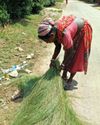
CATCH BY THE ROOTS
Sabai grass could be a game-changer for the marginalised economies of West Bengal's dry uplands. All it needs is an efficient market strategy
4 mins
March 16, 2026

Down To Earth
POWERING TRANSITION
India's renewable ambitions are rising rapidly, with half of its installed power capacity now coming from non-fossil sources. Yet the gap between capacity and generation remains wide. The experiences of two pioneering states, Karnataka and Tamil Nadu, which together generate over a fifth of the country's renewable energy, offer crucial lessons for accelerating the transition, reports PUJA DAS from Bengaluru, Chennai, Mumbai and New Delhi
16 mins
March 16, 2026

Down To Earth
At core of survival
Water scarcity defines life in a village inside Sariska Tiger Reserve's critical habitat, as debates over its relocation drag on
5 mins
March 16, 2026

Down To Earth
What's on your plate
An upcoming digital tool can help people learn about the origin of their meals and make climate-positive food choices
2 mins
March 16, 2026

Down To Earth
'Bad environment can never be good economics'
The Supreme Court of India and even the high courts were once very active and took a proactive role in protecting the environment; unfortunately, that is no longer true
4 mins
March 16, 2026
Down To Earth
Things fall apart
IN THE past year, the world has counted more missiles and bombs than hours.
2 mins
March 16, 2026

Down To Earth
Universities in crisis, innovation is stifled
Political control and skewed policies have led to unrest in academia, stifling creativity and meaningful research
4 mins
March 16, 2026

Down To Earth
SPARK IN THE GAME
The Reserve Bank of India's restored recognition of Default Loss Guarantees re-enables credit flow into last-mile electric mobility
3 mins
March 16, 2026

Down To Earth
Ushering in new eras
An appraisal of the state of biodiversity conservation, pollution reduction and climate adaptation regimes in India
3 mins
March 16, 2026
Translate
Change font size