Prøve GULL - Gratis
INDIA'S DRY RUN
Down To Earth
|December 01, 2025
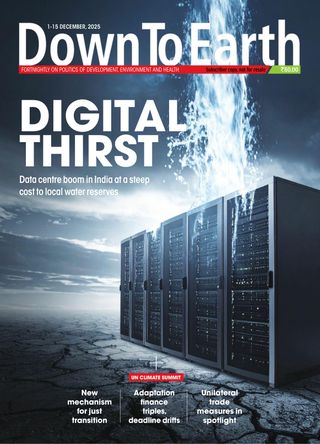
India is poised to be a global hub of data centres—back-end facilities that house servers and hardware needed to run online activities.
-
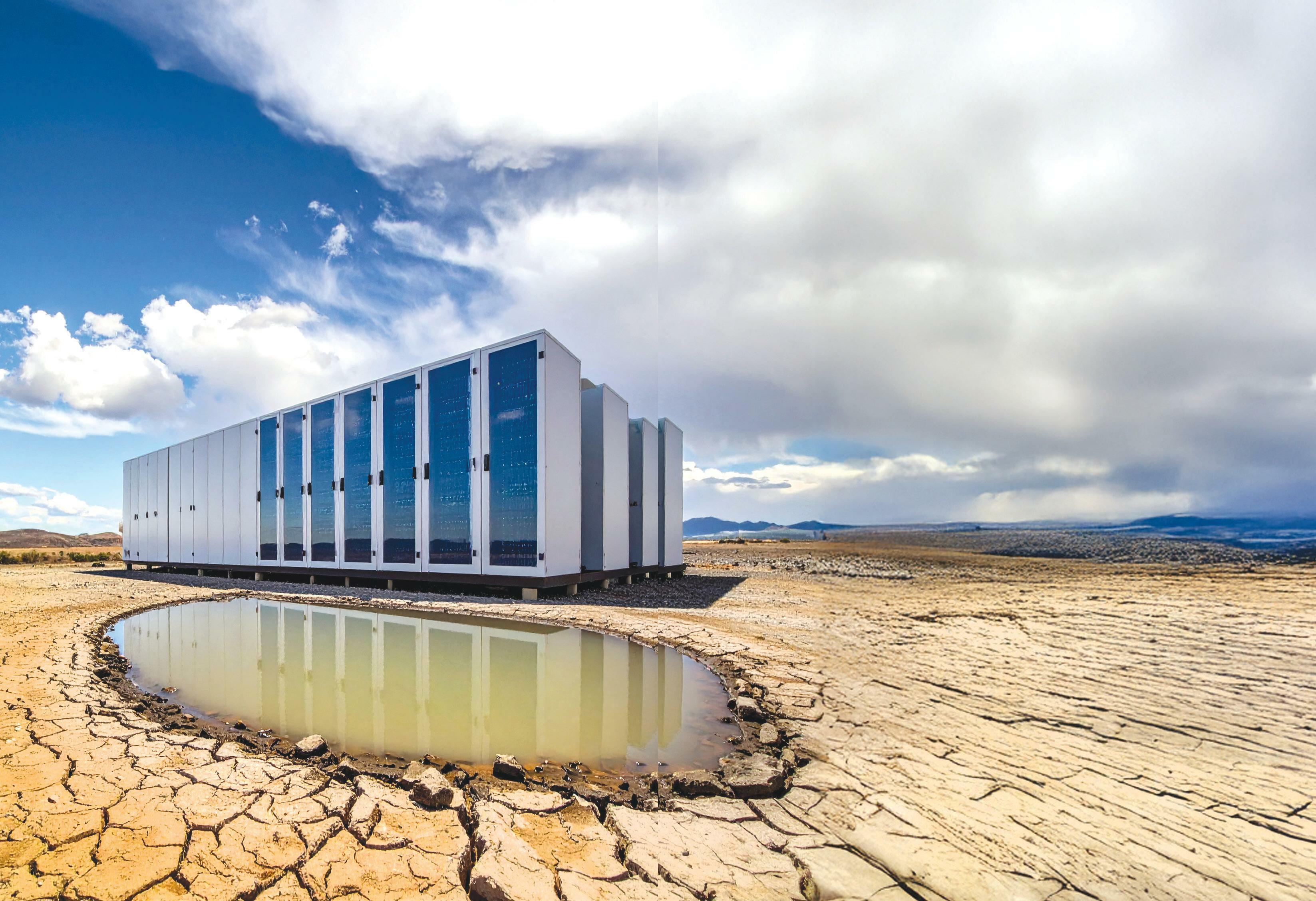
These require large volumes of water to keep the computational infrastructure cool. As companies integrate artificial intelligence into their operations, the demand for data centres is growing to meet the need for higher computational power. Since companies are setting up such facilities in water-scarce areas, the country's digital boom could make its water shortage more acute.
ROHINI KRISHNAMURTHY reports from NOIDA and BENGALURU
TWO STARKLY different worlds converge in Tusiana, a small village of 2,000 people in Uttar Pradesh. Near its entry road, a sprawling 8-hectare complex looms, with the perimeter ringed with high walls and barbed wires. Trees and suvs line the structure’s boundary wall along the wide, freshly paved road, creating a veneer of prosperity. Drive a kilometre further and the illusion dissolves. The concrete road disappears, the air turns foul, and sewage-choked streets with open drains become a common sight—an everyday reality in a village still deprived of basic infrastructure.
The sprawling complex is a data centre park owned and operated by Yotta Data Services Pvt Ltd, a Mumbai-based company belonging to the real estate major Hiranandani Group. Inaugurated in 2022, the facility in Greater Noida city, Gautam Buddha Nagar district, is only partially operational, with one of its six data centres open. While Yotta Data Services touts it as “North India’s gateway to the digital world”, Tusiana residents express a deep anxiety over the facility’s impact on the future of water availability in the area. “Two decades ago, we used to get water at a depth of 6-9 m. Now, we must dig 25 m,” says Satish Chand, a labourer from Tusiana.


Denne historien er fra December 01, 2025-utgaven av Down To Earth.
Abonner på Magzter GOLD for å få tilgang til tusenvis av kuraterte premiumhistorier og over 9000 magasiner og aviser.
Allerede abonnent? Logg på
FLERE HISTORIER FRA Down To Earth

Down To Earth
THE GREAT PIVOT
China's moves to transition to clean energy offer critical lessons to India

4 mins
March 01, 2026

Down To Earth
COAL V CORRIDOR
A proposal to mine coal along a corridor that links two tiger reserves in central India is a step away from getting final clearance. The move could affect movement and genetic diversity of tiger populations in the region
8 mins
March 01, 2026

Down To Earth
India's challenging AI predicament
Hobbled by lack of innovation and AI skills in its crucial technology sector, India is focusing on a ruinous plan to host data centres
4 mins
March 01, 2026
Down To Earth
China to implement zero tariffs across Africa
CHINA ON February 14 announced that it will implement zero tariffs for imports from all the 53 African nations it has diplomatic relations with, starting from May 1.
1 min
March 01, 2026
Down To Earth
Poverty, sans the threshold
MEASUREMENT OF poverty is a fundamental exercise, needed to direct development programmes.
2 mins
March 01, 2026

Down To Earth
A bridge across forever
For two decades, a Chhattisgarh village remains stuck in a loop of building temporary river crossings to access markets and sell forest produce
4 mins
March 01, 2026
Down To Earth
Liveable cities need a new model
CRY FOR my Delhi. This is my city—my family records many generations who have lived here.
3 mins
March 01, 2026

Down To Earth
Real impacts of the changing seasons
This refers to the article \"1,500 days, and an alarm for new climate\" (1-15 December, 2025).
1 mins
March 01, 2026

Down To Earth
‘It’s a systematic effort by US to dismantle climate policy’
The US, the world's largest historical emitter of greenhouse gases, has overturned its “endangerment finding”, the legal foundation for regulating emissions under the Clean Air Act since 2009.
4 mins
March 01, 2026
Down To Earth
Amazon turned carbon source in 2023 drought
EXTREME DROUGHT and a prolonged heatwave in 2023 pushed parts of the Amazon rainforest from acting as a carbon sink to becoming a carbon source for three months, according to a February 13 study published in the journal AGU Advances of the American Geophysical Union.
1 min
March 01, 2026
Listen
Translate
Change font size