Prøve GULL - Gratis
GROUND REALITY
Down To Earth
|November 01, 2024
What happens when the soil loses the ability to grow healthy, high-yield crops on its own?

SUKHVINDER SINGH is a worried man. Gazing at the standing lush green paddy crop on his family’s 20 hectare (ha) farmland, the 29-year-old farmer of Punjab’s Bhaini Mehraj village says, “The soil is nearly barren. On its own, it has lost the capacity to yield a crop that can fetch us a good price. We keep it alive with chemical fertilisers.” Sukhvinder’s 60-year-old father Kewal Singh has accompanied him to the field. He used to tend to the same land before his son. “Around 25 years ago, the soil in our district Barnala teemed with life—from earthworms to beetles. Chemicals finished them,” Kewal says.
As per the nutrient dashboard of Union Ministry of Agriculture and Farmers Welfare, the percentage of soil high in organic carbon in Punjab is just 6.9 per cent in 2024-25, down from 12.7 per cent in 2023-24, while the national average stands at 17.9 per cent. “This happened because the soil’s ability to absorb carbon has deteriorated to a great extent. The result is a loss of soil structure, stability and aggregation,” says Umendra Dutt, founding member and executive director of Kheti Virasat Mission (KVM), a Punjab-based non-profit. In April, kvm tested soils from four districts— Moga, Patiala, Faridkot and Bathinda—and found that the average soil organic carbon was just 0.3-0.8 per cent. It should be 1.5-2 per cent.
Poor soil microbial activity has caused a decline of mycorrhiza—a type of fungi—in the soil. Its role in the soil is to help plant roots absorb more nutrients. “Mycorrhiza converts nitrogen into ammonium, which plants can absorb and use. If the field does not have fungi or necessary bacteria, then no matter how much fertiliser you use, the plant will not absorb it to the required extent,” says Gulab Singh of Tapa village, who got his farm soil tested by Punjab Agricultural University in 2022.
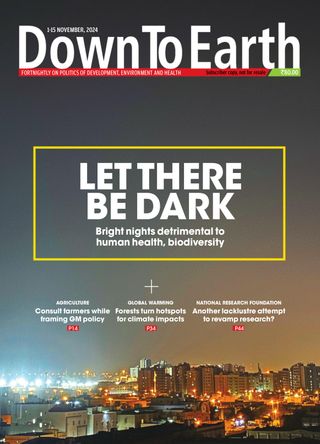

Denne historien er fra November 01, 2024-utgaven av Down To Earth.
Abonner på Magzter GOLD for å få tilgang til tusenvis av kuraterte premiumhistorier og over 9000 magasiner og aviser.
Allerede abonnent? Logg på
FLERE HISTORIER FRA Down To Earth

Down To Earth
Bitter pill
THE WEB SERIES PHARMA EXPOSES HARSH TRUTHS OF THE PHARMACEUTICAL INDUSTRY, WHERE PROFIT OFTEN BECOMES MORE IMPORTANT THAN HUMAN HEALTH

3 mins
January 16, 2026
Down To Earth
CHAOS IN-DEFINITION
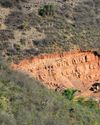
The Aravallis are perhaps India's most litigated hill range. More than 4,000 court cases have failed to arrest their destruction. The latest dispute concerns a narrow legal definition of this geological antiquity, much of which has been obliterated by mining and urban sprawl. While the Supreme Court has stayed its own judgement accepting that definition, it must see the underlying reality and help reconcile development and national security with conservation.
19 mins
January 16, 2026
Down To Earth
BITS: INDIA
Indore has recorded 16 deaths and more than 1,600 hospitalisations between December 24 and January 6.
1 min
January 16, 2026

Down To Earth
GUARANTEE EXPIRES
India's rural employment guarantee law is replaced with a centrally controlled, budget-capped scheme. Is this an attack on the right to work?
3 mins
January 16, 2026

Down To Earth
BLOOM OR BANE
Surge of vibrant pink water lilies in Kuttanad, Kerala, provides socio-economic benefits, but the plant's ecological impacts must be understood
4 mins
January 16, 2026
Down To Earth
INVISIBLE EMPLOYER
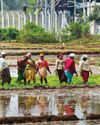
Field and academic evidence shows sharp falls in casual agricultural employment at places where groundwater access declines
3 mins
January 16, 2026

Down To Earth
Schemed for erasure
Does the VB-G RAMG Act address structural weaknesses long observed in MGNREGA's implementation?
10 mins
January 16, 2026

Down To Earth
School of change
An open school in Panagar, Madhya Pradesh, aims to protect children of tribal settlements from falling into the trap of addiction
2 mins
January 16, 2026

Down To Earth
PULSE OF RESILIENCE
As a climate-ready crop, cowpea shows potential for widespread use in India
3 mins
January 16, 2026
Down To Earth
BITS GLOBAL
Britain recorded its hottest and sunniest year ever in 2025, the country's meteorological office said on January 2.
1 min
January 16, 2026
Listen
Translate
Change font size