
Gå ubegrenset med Magzter GOLD
Få ubegrenset tilgang til over 9000 magasiner, aviser og premiumhistorier for bare
Prøve GULL - Gratis
'Fitness our evolutionary advantage, not longevity'
Down To Earth
|June 16, 2024
Nobel laureate VENKI RAMAKRISHNAN's latest book, Why We Die, covers a journey that starts in the 1800s, when British biologists Charles Darwin and Alfred Wallace proposed natural selection, and continues to this day, as researchers investigate anti-ageing compounds. But how close are we really to cheating ageing and death? In an interview with ROHINI KRISHNAMURTHY, Ramakrishnan, who received the 2009 Nobel prize in chemistry, says the focus of research is on staying healthy for a bigger fraction of life. He also examines the causes of ageing, the drugs being explored to slow down this deterioration, the people involved in the research and a few controversial claims. Excerpts:

Can science help humans defy death?
Defying death is a tall order because it means that lots of systems need to be kept going. The breakdown of these systems is indeed the common cause of death. You could also die of an infectious disease or accident.
Some people feel that if you can address the underlying common causes, you could postpone death by preventing or slowing down ageing. But can we slow it down to an extent that we live well beyond our natural limit, which is about 110 years or so? Very few people live past 110, and only one person has lived past 120 [a record held by Jeanne Calment, a Frenchwoman who died in 1997 at the age of 122]. It would take some fundamental breakthroughs to go beyond that limit. I do not think it is as easy as some people claim it is.
Could improvement in health infrastructure or medicines push that limit beyond 110 years?
It would be very hard because there are other issues, like general frailty and tissue breakdown. For example, we have the drug semaglutide, which is being used to treat diseases that accelerate ageing, like obesity. But I do not know how much time that will buy us.
A lot of focus is on healthy ageing, which is not about extending life but staying healthy for a bigger fraction of your life, so that one does not spend two decades or so in really poor health at the end. The idea is to stay healthy so people can move around and be independent.
My father, until he was about 92, used to go on eight-mile (over 12 km) walks. He cooked and did laundry by himself. At 98, he still does these chores, but finds it hard to walk now. You can see a decline between 92 and 98, even in a relatively long-lived individual. So, the question is whether you can compress that period of decline so that you are healthy for a bigger fraction of your life.

Denne historien er fra June 16, 2024-utgaven av Down To Earth.
Abonner på Magzter GOLD for å få tilgang til tusenvis av kuraterte premiumhistorier og over 9000 magasiner og aviser.
Allerede abonnent? Logg på
FLERE HISTORIER FRA Down To Earth

Down To Earth
MILES TO GO
As impacts of climate change accelerate, climate finance remains trapped in incrementalism

6 mins
April 16, 2026
Down To Earth
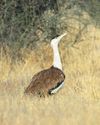
Hope for revival of the great Indian bustard
The birth of a great Indian bustard chick in the Kutch region of Gujarat has created history in the world of conservation, reviving hope.
2 mins
April 16, 2026
Down To Earth
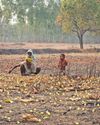
IN MAHUA TERRITORY
Once mahua starts to flower, every thing else takes a back seat for tribal communities in forests of central India
6 mins
April 16, 2026

Down To Earth
CAUGHT IN THE ENERGY GAP
Kitchens across rural India reflect a peculiar reality: energy is within reach but affordability remains a concern. PUJA DAS travels across 15 villages in Madhya Pradesh, Chhattisgarh and Uttar Pradesh to investigate why rural households still rely on traditional fuels like firewood, dung cakes and crop residue that pose a health risk, and why their energy bills are rising.
12 mins
April 16, 2026
Down To Earth
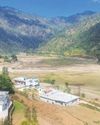
Lake or wetland?
While villages around Almora's Tadag Tal want the seasonal lake to be developed into a perennial waterbody, experts say the area is a wetland and should not be disturbed
5 mins
April 16, 2026
Down To Earth
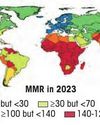
World far from curbing maternal deaths
INDIA HAS cut its maternal mortality ratio (MMR) by 80 per cent since 1990, according to a recent analysis published in The Lancet.
1 min
April 16, 2026
Down To Earth
Energy in times of war
THE DISASTROUS US-Israel war against Iran has disrupted energy supply across the world. Governments in both rich and poor countries are warning their people of dire times ahead, unlike anything seen before by this generation: acute energy scarcity, rationing and even the prospect of cars and aeroplanes running out of fuel. The question is what will the future energy map look like?
3 mins
April 16, 2026
Down To Earth
Unfinished business
Land consolidation is globally considered a critical component of land reforms and holds the key to improve agrarian productivity. But it is yet to be undertaken in meaningful ways in most parts of the country, reports
6 mins
April 16, 2026

Down To Earth
Roots of revival
Chhattisgarh's Baiga community mounts conservation efforts to keep alive a traditional art form at risk of vanishing due to ecological changes
2 mins
April 16, 2026
Down To Earth
A mass human capital loss
ADULT HEIGHT across countries, including India, is no longer increasing.
2 mins
April 16, 2026
Listen
Translate
Change font size