
Gå ubegrenset med Magzter GOLD
Få ubegrenset tilgang til over 9000 magasiner, aviser og premiumhistorier for bare
Prøve GULL - Gratis
A NEW ORDER OF TRADE
Down To Earth
|February 16, 2023
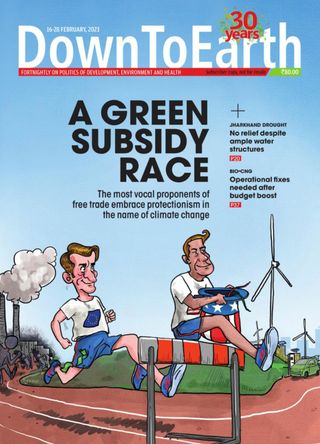
The global superpowers are abandoning free trade to fight climate change. Armed with massive subsidies and tariffs, the US and EU are leading this charge towards protectionism. This may change the global trade system as we know it. But will developing countries and the climate gain from it? An analysis
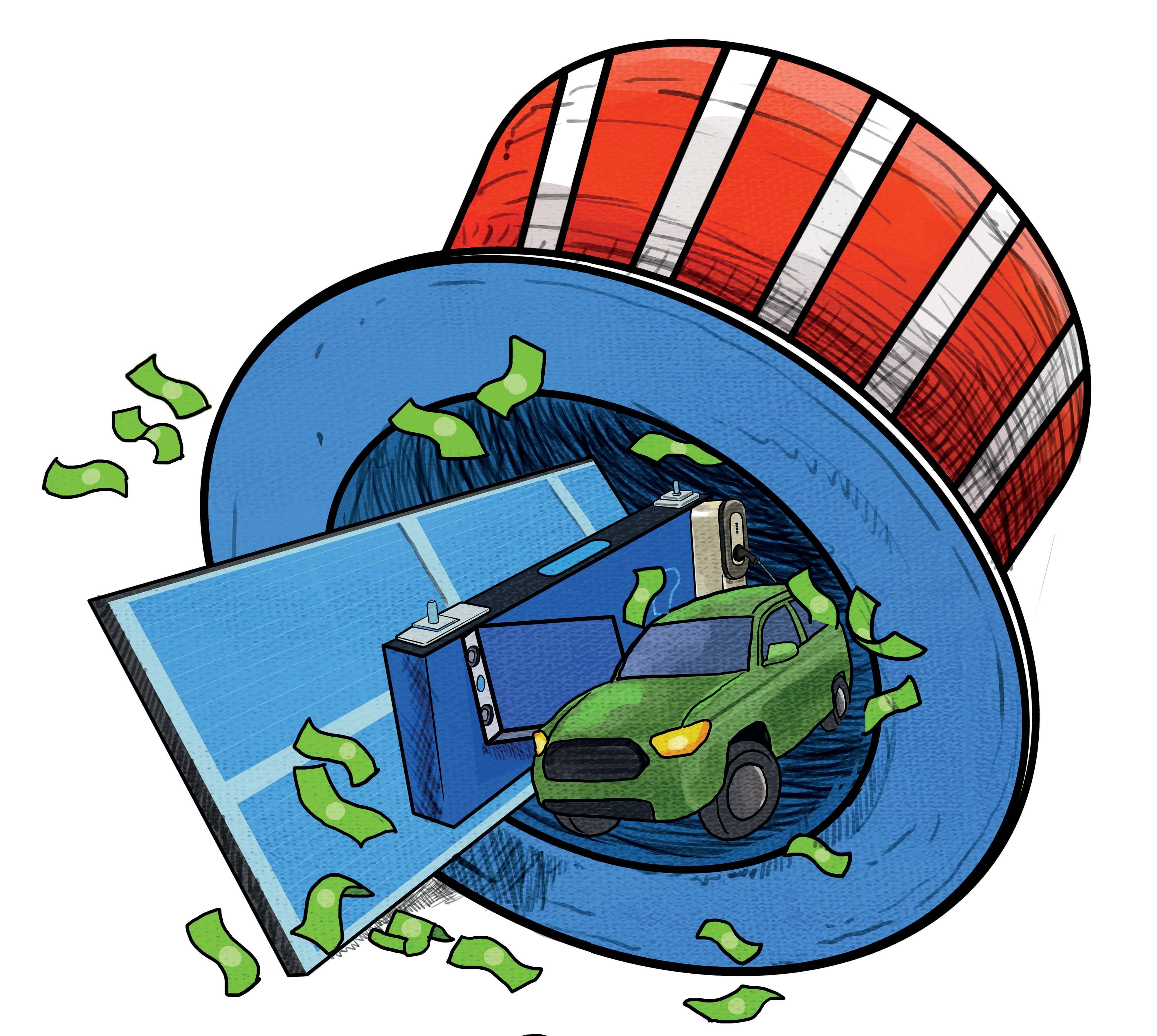
THE RACE to build a low-carbon economy is heating up. Countries have in recent months proposed or introduced policies and laws to speed up the transition from fossil fuels, promote manufacturing of clean-energy technologies at scale and decarbonise industries. On the face of it, this race appears to be part of the global effort to cut greenhouse gas emissions. But it has sparked fears of economic rivalry and neo-protectionism, as governments on the pretext of climate action try to reshore green industries and dominate the global supply chain of goods and technologies essential to avert a climate catastrophe.
Some of the new climate-focused trade measures that threaten globalisation as we know it are by the US and EU—the largest and second largest historical emitters of greenhouse gases.
Consider the Inflation Reduction Act (ira), passed by the US in August 2022. It has been billed as the most serious effort yet by the US to face up to climate change. Under ira, the government aims to unleash subsidies, about $370 billion, mainly through tax credits, over 10 years for sectors such as renewable energy, electric vehicles, energy efficient appliances and leading-edge technologies like carbon capture and storage and clean hydrogen. An analysis by McKinsey, a global management consulting firm, shows that corporations are the biggest recipient of ira funding, with an estimated $216 billion worth of tax credits. There are indirect subsidies for manufacturers too, in the form of tax credits worth $43 billion, that aim to make low-carbon purchases such as electric vehicles and rooftop solar panels more affordable.

Denne historien er fra February 16, 2023-utgaven av Down To Earth.
Abonner på Magzter GOLD for å få tilgang til tusenvis av kuraterte premiumhistorier og over 9000 magasiner og aviser.
Allerede abonnent? Logg på
FLERE HISTORIER FRA Down To Earth

Down To Earth
GREAT NICOBAR DILEMMA
In the fragile ecosystem of Nicobar, strategic development must align with constitutional commitment to protect environment, indigenous dignity

3 mins
March 16, 2026
Down To Earth
CATCH BY THE ROOTS
Sabai grass could be a game-changer for the marginalised economies of West Bengal's dry uplands. All it needs is an efficient market strategy
4 mins
March 16, 2026

Down To Earth
POWERING TRANSITION
India's renewable ambitions are rising rapidly, with half of its installed power capacity now coming from non-fossil sources. Yet the gap between capacity and generation remains wide. The experiences of two pioneering states, Karnataka and Tamil Nadu, which together generate over a fifth of the country's renewable energy, offer crucial lessons for accelerating the transition, reports PUJA DAS from Bengaluru, Chennai, Mumbai and New Delhi
16 mins
March 16, 2026

Down To Earth
At core of survival
Water scarcity defines life in a village inside Sariska Tiger Reserve's critical habitat, as debates over its relocation drag on
5 mins
March 16, 2026

Down To Earth
What's on your plate
An upcoming digital tool can help people learn about the origin of their meals and make climate-positive food choices
2 mins
March 16, 2026

Down To Earth
'Bad environment can never be good economics'
The Supreme Court of India and even the high courts were once very active and took a proactive role in protecting the environment; unfortunately, that is no longer true
4 mins
March 16, 2026
Down To Earth
Things fall apart
IN THE past year, the world has counted more missiles and bombs than hours.
2 mins
March 16, 2026

Down To Earth
Universities in crisis, innovation is stifled
Political control and skewed policies have led to unrest in academia, stifling creativity and meaningful research
4 mins
March 16, 2026

Down To Earth
SPARK IN THE GAME
The Reserve Bank of India's restored recognition of Default Loss Guarantees re-enables credit flow into last-mile electric mobility
3 mins
March 16, 2026

Down To Earth
Ushering in new eras
An appraisal of the state of biodiversity conservation, pollution reduction and climate adaptation regimes in India
3 mins
March 16, 2026
Translate
Change font size