
Gå ubegrenset med Magzter GOLD
Få ubegrenset tilgang til over 9000 magasiner, aviser og premiumhistorier for bare
Prøve GULL - Gratis
A NEW ERA FOR INDIAN RESEARCH?
Down To Earth
|August 01, 2023
The Union Cabinet on June 28 approved introduction of the National Research Foundation Bill, 2023, in the Parliament. The Bill aims to facilitate setting up of the National Research Foundation (NRF), as recommended by the National Education Policy 2020, to foster better research and innovation in the country. NRF will be governed by a board presided by the prime minister, while its functions will be overseen by an executive council chaired by the country's principal scientific advisor. The government has announced a budget of ₹50,000 crore for NRF over the next five years, more than half of which it plans to raise from public sector enterprises, industries and international research organisations. What do these proposals mean for the future of research and development in India, where investment and engagement of human capital in the sector is among the lowest in the world? ROHINI KRISHNAMURTHY speaks to scientists and academics about their expectations from the NRF Bill as well as about their concerns.

"Centralisation is a concern"
C PRAJENDRAN
ADJUNCT PROFESSOR, NATIONAL INSTITUTE OF ADVANCED STUDIES, BENGALURU
The Union Cabinet's approval for the National Research Foundation (NRF) Bill has been received with mixed feelings. Mostly modelled after the US' National Science Foundation, NRF has been discussed and developed since the time of the Manmohan Singh government. It has now been approved with an outlay of 50,000 crore for the next five years, more than half of which is expected to be contributed by the private sector. This is a meagre amount, given that India's funding for scientific research is already much less than other BRICS nations (Brazil, Russia, China and South Africa).
Besides, according to the Bill, the proposed entity will be administered by a governing body of "eminent" researchers and professionals, presided by the prime minister, and with an executive council chaired by the principal scientific advisor. This top-heavy management setup will likely lead to over-centralisation-as against the proclaimed intention of having a decentralised mechanism for science funding.
This cannot be overlooked in terms of the suspicion that a part of the fund is likely to be spent on belief-based traditional knowledge systems. There are also concerns about the criteria that would be used to select experts in the governing and executive bodies.
To unleash the full potential of Indian science and to improve the science-technology-innovation ecosystem, we require a vibrant and responsive financial system, which is autonomous, more participatory and less bureaucratic.

"First, close gaps in education"
ARINDAM GHOSH

Denne historien er fra August 01, 2023-utgaven av Down To Earth.
Abonner på Magzter GOLD for å få tilgang til tusenvis av kuraterte premiumhistorier og over 9000 magasiner og aviser.
Allerede abonnent? Logg på
FLERE HISTORIER FRA Down To Earth

Down To Earth
MILES TO GO
As impacts of climate change accelerate, climate finance remains trapped in incrementalism

6 mins
April 16, 2026

Down To Earth
Hope for revival of the great Indian bustard
The birth of a great Indian bustard chick in the Kutch region of Gujarat has created history in the world of conservation, reviving hope.
2 mins
April 16, 2026
Down To Earth
IN MAHUA TERRITORY
Once mahua starts to flower, every thing else takes a back seat for tribal communities in forests of central India
6 mins
April 16, 2026

Down To Earth
CAUGHT IN THE ENERGY GAP
Kitchens across rural India reflect a peculiar reality: energy is within reach but affordability remains a concern. PUJA DAS travels across 15 villages in Madhya Pradesh, Chhattisgarh and Uttar Pradesh to investigate why rural households still rely on traditional fuels like firewood, dung cakes and crop residue that pose a health risk, and why their energy bills are rising.
12 mins
April 16, 2026
Down To Earth
Lake or wetland?
While villages around Almora's Tadag Tal want the seasonal lake to be developed into a perennial waterbody, experts say the area is a wetland and should not be disturbed
5 mins
April 16, 2026
Down To Earth
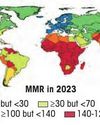
World far from curbing maternal deaths
INDIA HAS cut its maternal mortality ratio (MMR) by 80 per cent since 1990, according to a recent analysis published in The Lancet.
1 min
April 16, 2026
Down To Earth
Energy in times of war
THE DISASTROUS US-Israel war against Iran has disrupted energy supply across the world. Governments in both rich and poor countries are warning their people of dire times ahead, unlike anything seen before by this generation: acute energy scarcity, rationing and even the prospect of cars and aeroplanes running out of fuel. The question is what will the future energy map look like?
3 mins
April 16, 2026

Down To Earth
Unfinished business
Land consolidation is globally considered a critical component of land reforms and holds the key to improve agrarian productivity. But it is yet to be undertaken in meaningful ways in most parts of the country, reports
6 mins
April 16, 2026

Down To Earth
Roots of revival
Chhattisgarh's Baiga community mounts conservation efforts to keep alive a traditional art form at risk of vanishing due to ecological changes
2 mins
April 16, 2026
Down To Earth
A mass human capital loss
ADULT HEIGHT across countries, including India, is no longer increasing.
2 mins
April 16, 2026
Translate
Change font size