
Gå ubegrenset med Magzter GOLD
Få ubegrenset tilgang til over 9000 magasiner, aviser og premiumhistorier for bare
The behind the stars star signs
BBC Sky at Night Magazine
|May 2025
An astronomer's journey through the real zodiac
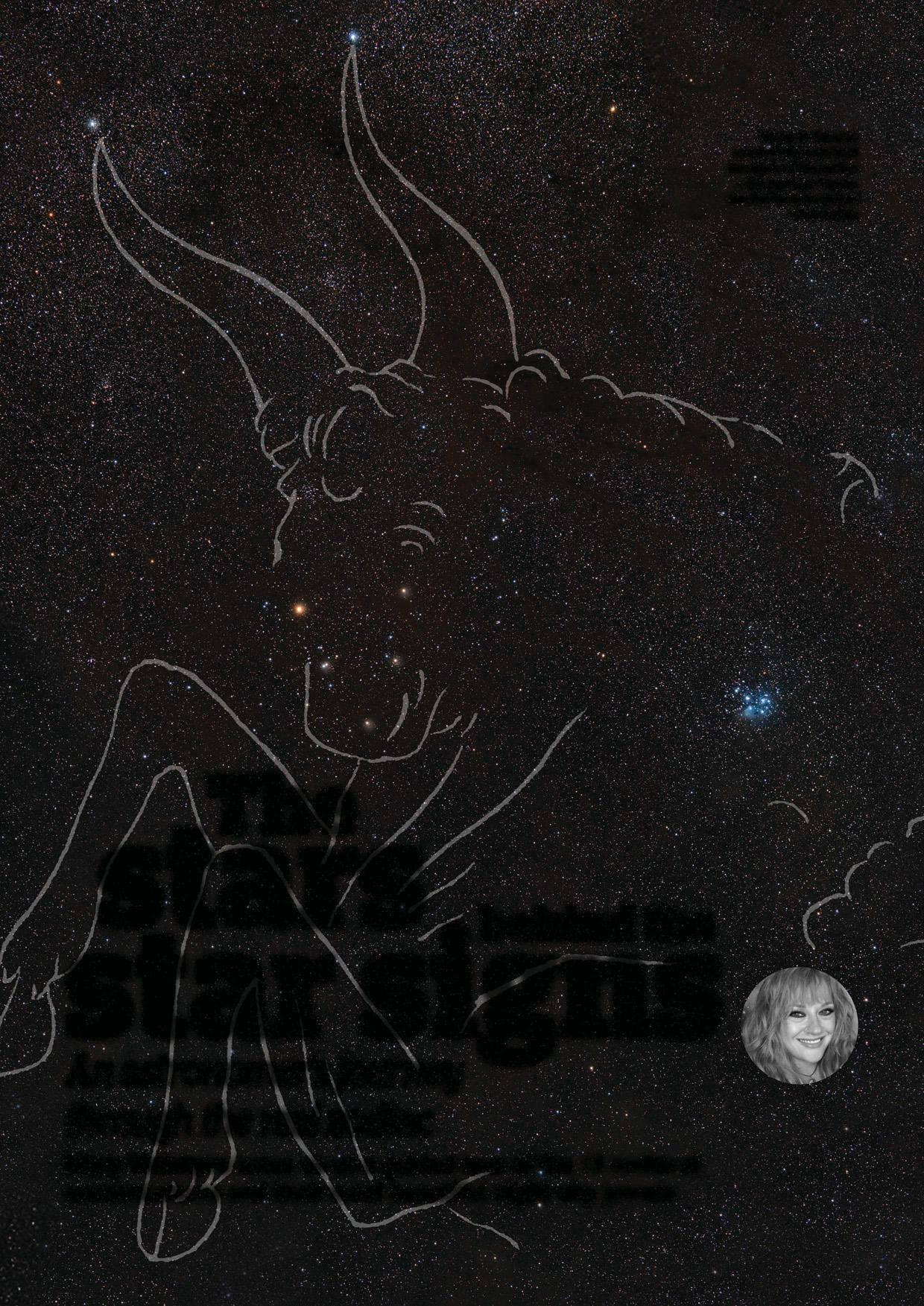
Mary McIntyre takes us on a guided tour of the 13 zodiacal constellations and their most beautiful night-sky jewels
We've all heard of the zodiac and 'star signs', whether we believe in the latter or not. But you may be unaware that the signs of the zodiac are real constellations in the night sky, just waiting to be observed and explored.
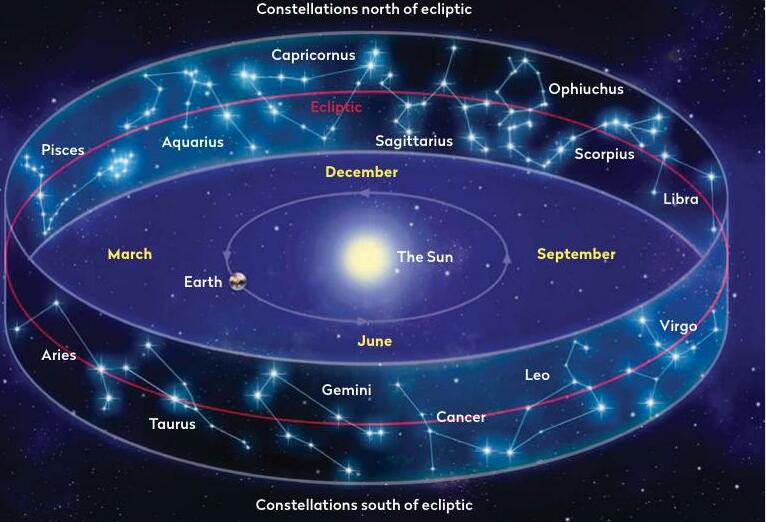 The origins of the zodiac lie in early civilisations that relied on the movement of the Sun, Moon, planets and stars to mark the passage of time. Our ancestors realised the Sun and planets passed through a small group of constellations along an imaginary line known as the 'ecliptic', which is the plane of the planets' orbit around the Sun, as seen from Earth. The ancient Greeks called this the zodiac, meaning 'circle of little animals' because most of these constellations were named after animals. In astrology, the zodiac is divided into 12 'signs', but in astronomy we know the Sun actually moves through 13 constellations over the year (the 'extra' one being Ophiuchus) and most are visible for several months. They climb the dawn twilight in the east and are visible earlier each night as they move westwards until, months later, they sink into evening twilight in the west. As a result, the path the Sun takes during a year appears to be moving backwards against the zodiac (see chart overleaf). Due to precession - the slow change in the direction of Earth's rotational axis - the Sun no longer travels through them on the same dates as it did when the signs were first assigned.
Let's take an astronomer's tour of the real zodiac - the 13 constellations and the best night-sky targets to see in them.
Aries
Best time to see: September to February
Sun transits this sign: 19 April-14 May


Denne historien er fra May 2025-utgaven av BBC Sky at Night Magazine.
Abonner på Magzter GOLD for å få tilgang til tusenvis av kuraterte premiumhistorier og over 9000 magasiner og aviser.
Allerede abonnent? Logg på
FLERE HISTORIER FRA BBC Sky at Night Magazine
BBC Sky at Night Magazine
MOONWATCH
January's top lunar feature to observe

2 mins
January 2026
BBC Sky at Night Magazine
Speed up your processing workflow
How to use Photoshop's Actions tool to drastically cut your processing time
3 mins
January 2026
BBC Sky at Night Magazine
Chasing Canada's polar lights
With solar maximum peaking and a new Moon promising dark skies, Jamie Carter travels to Churchill, Manitoba to hunt the Northern Lights - and dodge polar bears – in Canada's far north
7 mins
January 2026

BBC Sky at Night Magazine
Beyond Pluto: The search for the hidden planets
Could one – or even two - undiscovered planets lurk at the edges of our Solar System? Nicky Jenner explores how close we are to finding the elusive 'Planet 9'
6 mins
January 2026
BBC Sky at Night Magazine
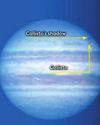
Jupiter moon events
Jupiter is a magnificent planet to observe.
2 mins
January 2026

BBC Sky at Night Magazine
What samples from space have taught us
Alastair Gunn explains what scientists have learnt in the 20 years since the first unmanned mission brought materials back from alien worlds
3 mins
January 2026
BBC Sky at Night Magazine
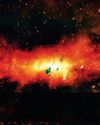
The Milky Way as you've never seen it before
This is the largest low-frequency radio colour image of our Galaxy ever assembled
1 min
January 2026
BBC Sky at Night Magazine
Merger of ‘impossibly' massive black holes explained
Scientists discover how enormous, fast-spinning black holes can exist after all
1 mins
January 2026
BBC Sky at Night Magazine
Lunar occultation of the Pleiades
BEST TIME TO SEE: 27 January from 20:30 UT
1 min
January 2026
BBC Sky at Night Magazine
The Universe's expansion may be slowing down
New study suggests current theories of dark energy could be wrong
1 mins
January 2026
Listen
Translate
Change font size