
Gå ubegrenset med Magzter GOLD
Få ubegrenset tilgang til over 9000 magasiner, aviser og premiumhistorier for bare
An astronomer at the BOTTOM OF THE WORLD
BBC Sky at Night Magazine
|August 2022
Georgina Dransfield has just returned from months at the South Pole, working to expand our understanding of exoplanets - and dreaming of a pair of jeans

There's genuinely not a lot I'd change if I could do my mission to Antarctica again. The science I went there to do went as well as I hoped it would and I made it back without losing any body parts to frostbite. The only real regret I have is that I didn't pack a pair of jeans; somehow this most inane of oversights managed to cause me a not-insignificant amount of frustration that only grew as the weeks ticked on by.
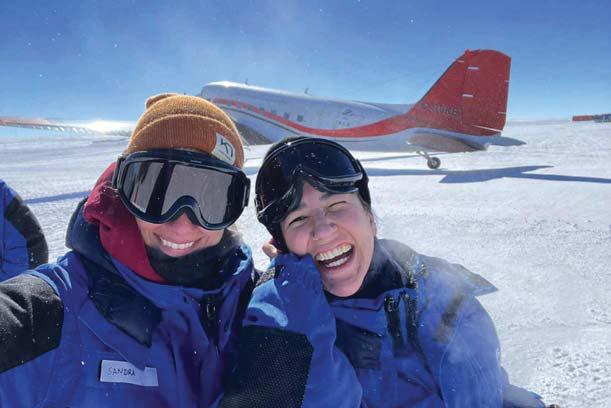
I began my jeans-less journey in Great Malvern, Worcestershire on 17 November 2021. Four trains, five planes, two quarantines and 31 days later I arrived at Concordia Station on Dome Cin Antarctica, where I would be working for the next seven weeks as part of the Antarctic Search for Transiting Exoplanets (aka ASTEP) telescope summer team.
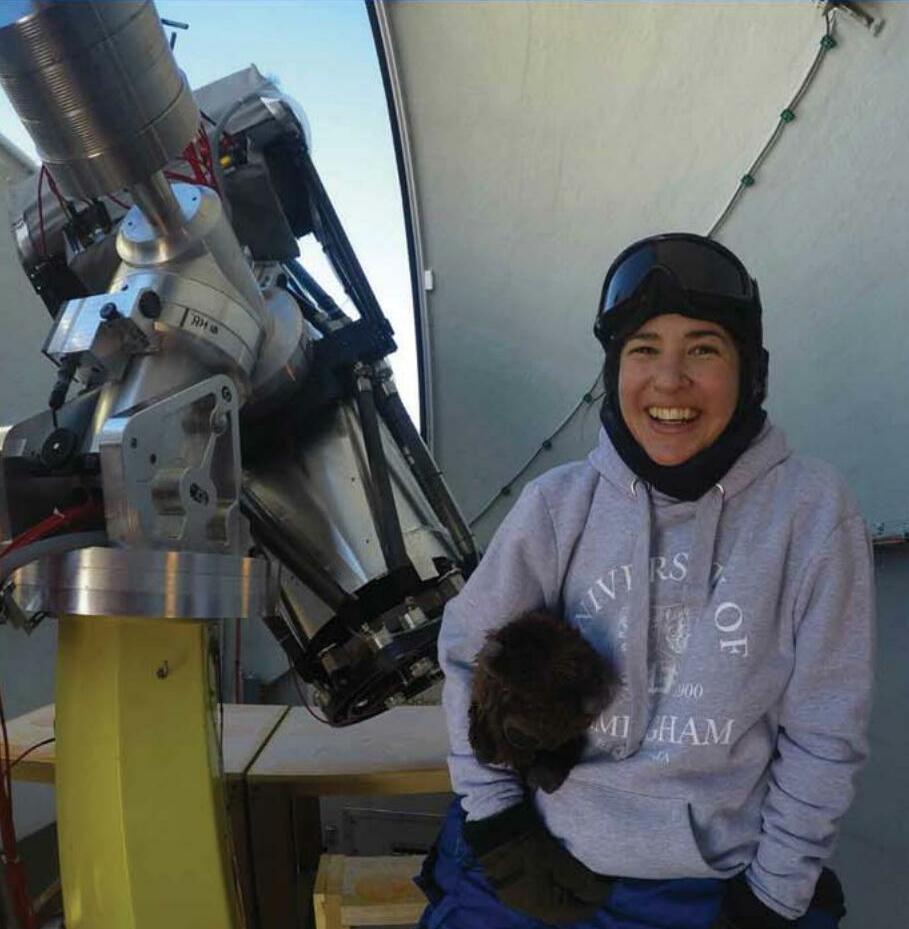
Goodbye to sunsets
The group I travelled with, mostly glaciologists and seismologists, were all itching to get to Concordia to begin data collection, and they were understandably curious as to why astronomers were headed there during the months of neverending daylight. It's a fair point. Antarctica is a brilliant astronomical site because of the long nights and dry air, but we only get to observe for half the year. So, why bother going in the summer when it never gets dark? Simple: for ASTEP, our annual summer campaigns represent our only opportunity to access the telescope for maintenance and upgrades.


Denne historien er fra August 2022-utgaven av BBC Sky at Night Magazine.
Abonner på Magzter GOLD for å få tilgang til tusenvis av kuraterte premiumhistorier og over 9000 magasiner og aviser.
Allerede abonnent? Logg på
FLERE HISTORIER FRA BBC Sky at Night Magazine
BBC Sky at Night Magazine
MOONWATCH
January's top lunar feature to observe

2 mins
January 2026
BBC Sky at Night Magazine
Speed up your processing workflow
How to use Photoshop's Actions tool to drastically cut your processing time
3 mins
January 2026
BBC Sky at Night Magazine
Chasing Canada's polar lights
With solar maximum peaking and a new Moon promising dark skies, Jamie Carter travels to Churchill, Manitoba to hunt the Northern Lights - and dodge polar bears – in Canada's far north
7 mins
January 2026
BBC Sky at Night Magazine
Beyond Pluto: The search for the hidden planets
Could one – or even two - undiscovered planets lurk at the edges of our Solar System? Nicky Jenner explores how close we are to finding the elusive 'Planet 9'
6 mins
January 2026
BBC Sky at Night Magazine
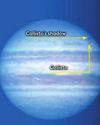
Jupiter moon events
Jupiter is a magnificent planet to observe.
2 mins
January 2026

BBC Sky at Night Magazine
What samples from space have taught us
Alastair Gunn explains what scientists have learnt in the 20 years since the first unmanned mission brought materials back from alien worlds
3 mins
January 2026
BBC Sky at Night Magazine
The Milky Way as you've never seen it before
This is the largest low-frequency radio colour image of our Galaxy ever assembled
1 min
January 2026
BBC Sky at Night Magazine
Merger of ‘impossibly' massive black holes explained
Scientists discover how enormous, fast-spinning black holes can exist after all
1 mins
January 2026
BBC Sky at Night Magazine
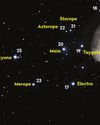
Lunar occultation of the Pleiades
BEST TIME TO SEE: 27 January from 20:30 UT
1 min
January 2026
BBC Sky at Night Magazine
The Universe's expansion may be slowing down
New study suggests current theories of dark energy could be wrong
1 mins
January 2026
Translate
Change font size