Prøve GULL - Gratis
FARM OF THE FUTURE
BBC Science Focus
|December 2023
Join the BBC's Planet Earth III film crew HED and go behind the scenes in the city farm that's transforming fields into towers and running almost everything with robots

Stepping through the heavy, air-locked door into the world’s most advanced indoor vertical farm, it’s the noise that hits you first. It’s loud. Machines buzz and whir over the insistent drone of the warehouse-scale air circulation system.
The lights are dazzling. Peering up at the two-storey-high living curtains of plants quickly prompts a protest from your neck. Nearby, a few workers, wearing coveralls, hair nets, hard hats and earplugs, keep a cool eye on their busy robot underlings. The air is bright with the fresh, sweet scent of tender young salad leaves.
It’s a far cry from the story-book picture of a farm; there’s no mud, no wellies, no hens pecking in the yard. But the owners of this facility, a San Francisco-based company called Plenty, claim the system they’re pioneering inside this warehouse in Compton, Los Angeles, can produce up to 350 times the yield compared to a field of the same size. What’s more, they say their system uses just 10 per cent of the water and zero pesticides – and that it can be replicated almost anywhere.
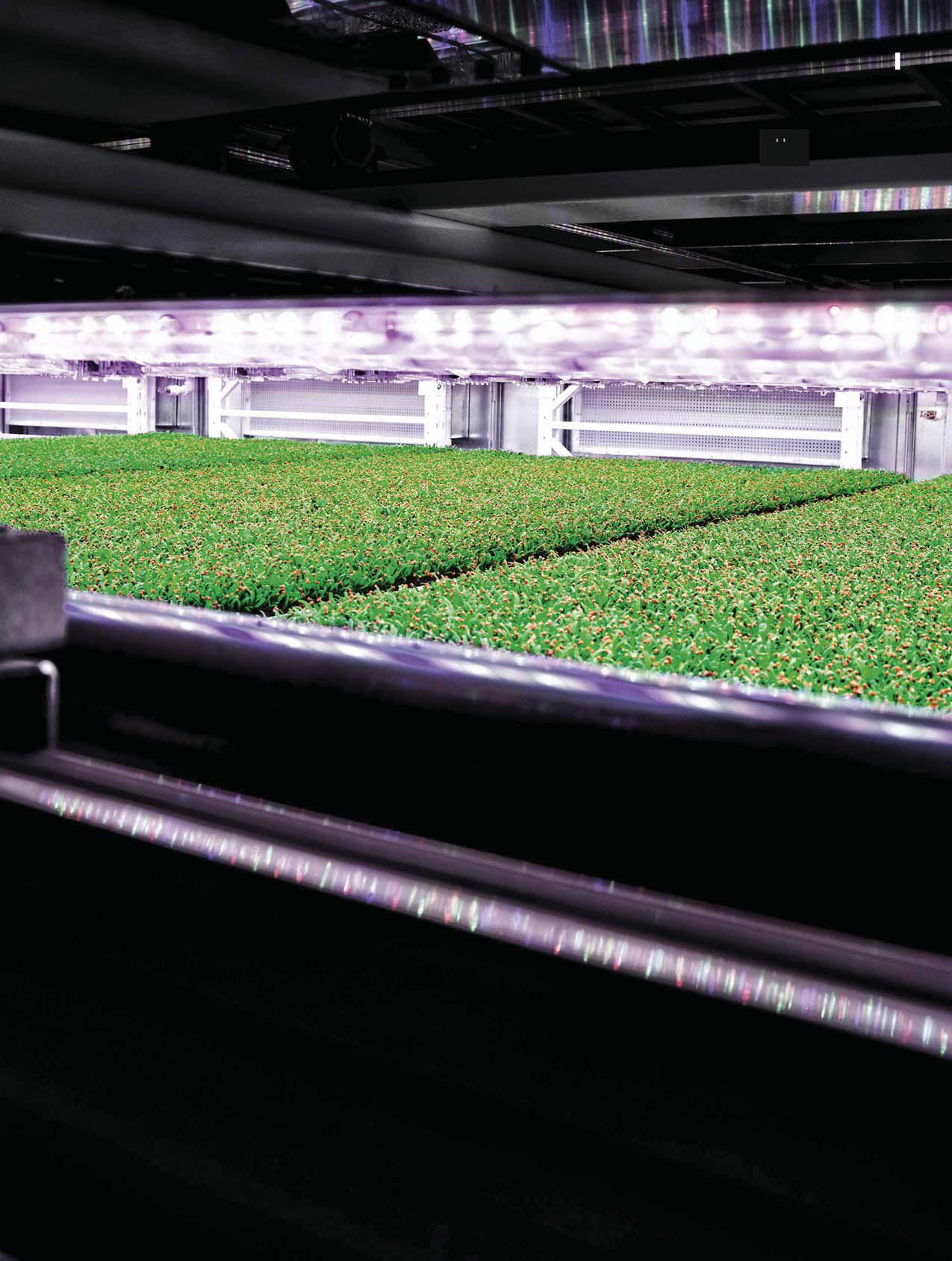
The new farm in Compton grows four types of leafy greens: baby rocket, crispy lettuce, baby kale and curly spinach, and has the potential to produce up to 2 million kg (4.5 million lbs) of food annually, in the space of a single city block. If it lives up to its promise, the approach could revolutionise the way humanity feeds itself. That’s why the crew filming the ‘Humans’ episode of Planet Earth III was on site a day after the farm began operating, so that audiences around the world could see for themselves.


Denne historien er fra December 2023-utgaven av BBC Science Focus.
Abonner på Magzter GOLD for å få tilgang til tusenvis av kuraterte premiumhistorier og over 9000 magasiner og aviser.
Allerede abonnent? Logg på
FLERE HISTORIER FRA BBC Science Focus

BBC Science Focus
DOES MY DOG HAVE ADHD?
Officially, Attention-Deficit Hyperactivity Disorder (ADHD) is a human condition. People are diagnosed with it. Dogs are not. Yet many of its core features, including hyperactivity, impulsivity and distractibility, can be found in dogs.

1 min
March 2026

BBC Science Focus
DOES MY BRAIN LIVE A LITTLE IN THE PAST?
Yes, your brain does live a little in the past. It can't help it. The information it receives via your senses is always a little out of date. Whether it's light entering the retinas in your eyes, or sounds vibrating the hairs in your ears, it not only takes time for the data to arrive, but your brain then has to process it.
2 mins
March 2026
BBC Science Focus
ASTRONOMY FOR BEGINNERS
RETURN OF THE EVENING STAR (VENUS)
1 mins
March 2026

BBC Science Focus
CAN YOU STOP YOUR SENSE OF TASTE DULLING AS YOU AGE?
Sometimes I hear people say that food just doesn't taste the same as they get older. It's tempting to blame this on age, but there are other factors at play, too.
1 mins
March 2026
BBC Science Focus
MICROBIOMES OF THE SUPERAGERS
BY STUDYING THE INCREASING NUMBER OF PEOPLE WHO ARE LIVING BEYOND THEIR 100TH BIRTHDAYS, SCIENTISTS ARE DISCOVERING THAT THE SECRET TO REACHING A RIPE OLD AGE IN RUDE HEALTH MIGHT LIE IN OUR GUTS
8 mins
March 2026

BBC Science Focus
HOW BIG WERE MEDIEVAL WAR HORSES?
You might picture knights charging into battle on towering steeds, but medieval horses were typically no bigger than modern-day ponies.
1 min
March 2026
BBC Science Focus
FORCES OF HABIT
Could new research on setting up healthy habits resuscitate those stuttering New Year resolutions?
3 mins
March 2026

BBC Science Focus
5 DANGERS HIDING IN YOUR PROCESSED FOOD
We all know that ultra-processed foods are bad for us, but what ingredients should we particularly try to avoid? And what are they doing to our bodies?
9 mins
March 2026
BBC Science Focus
Mosquitoes are becoming thirstier for human blood
Habitat loss may be pushing mosquitoes towards human hosts with deadly consequences
1 mins
March 2026

BBC Science Focus
HOW CAN I GET OVER MY EX?
Relationship breakups can be brutal, just look at the popularity of songs like 'Someone Like You' by Adele, or all the covers of 'Cry Me a River' by Julie London.
1 mins
March 2026
Translate
Change font size