Prøve GULL - Gratis
Electric toothbrushes
BBC Science Focus
|October 2025
Whether you're seeking professional precision or just a thorough clean, these brushes use science and dentist-backed design to keep cavities at bay

Oral-B iO2
Toothbrushes in Oral-B's iO range feature a dual-action motion. As well as rotating back and forth, the brush head has an oscillating linear motion, allowing it to probe into the gaps between your teeth and clean more thoroughly. Studies show that Oral-B's oscillating-rotating technology removes plaque and reduces gingivitis more effectively than manual brushes, with most people noticing improvements in as little as a week.
The iO2 brush is intended as an 'introductory' device to make switching from a manual to an electric brush easy. So, while it carries the oscillating-rotating technology, it remains simple to use. It has just one button, which lets you switch between the brush's three modes (daily, gentle and extra gentle), a builtin timer that signals when to switch brushing areas and an automatic pressure sensor that alerts you to when you're brushing too hard.
The iO2 is a great choice for children, or anyone who struggles with cleaning their teeth -especially if they're keen to make the switch to electric.
£100, shop.oralb.co.uk
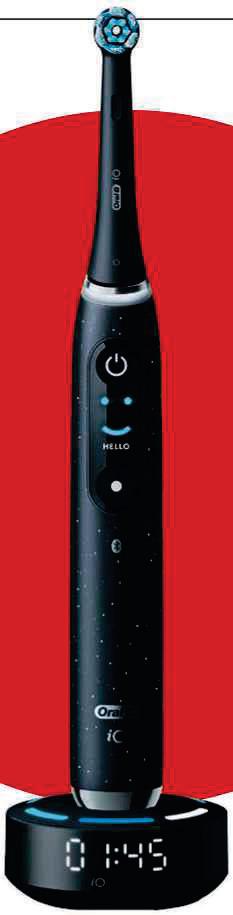 Oral-B iO10
If you want high-tech oral hygiene and you're not tied to a budget, you might want to consider the iO10 – the brush at the opposite end of Oral-B's iO range to the iO2.

Denne historien er fra October 2025-utgaven av BBC Science Focus.
Abonner på Magzter GOLD for å få tilgang til tusenvis av kuraterte premiumhistorier og over 9000 magasiner og aviser.
Allerede abonnent? Logg på
FLERE HISTORIER FRA BBC Science Focus

BBC Science Focus
DOES MY DOG HAVE ADHD?
Officially, Attention-Deficit Hyperactivity Disorder (ADHD) is a human condition. People are diagnosed with it. Dogs are not. Yet many of its core features, including hyperactivity, impulsivity and distractibility, can be found in dogs.

1 min
March 2026
BBC Science Focus
DOES MY BRAIN LIVE A LITTLE IN THE PAST?
Yes, your brain does live a little in the past. It can't help it. The information it receives via your senses is always a little out of date. Whether it's light entering the retinas in your eyes, or sounds vibrating the hairs in your ears, it not only takes time for the data to arrive, but your brain then has to process it.
2 mins
March 2026
BBC Science Focus
ASTRONOMY FOR BEGINNERS
RETURN OF THE EVENING STAR (VENUS)
1 mins
March 2026

BBC Science Focus
CAN YOU STOP YOUR SENSE OF TASTE DULLING AS YOU AGE?
Sometimes I hear people say that food just doesn't taste the same as they get older. It's tempting to blame this on age, but there are other factors at play, too.
1 mins
March 2026
BBC Science Focus
MICROBIOMES OF THE SUPERAGERS
BY STUDYING THE INCREASING NUMBER OF PEOPLE WHO ARE LIVING BEYOND THEIR 100TH BIRTHDAYS, SCIENTISTS ARE DISCOVERING THAT THE SECRET TO REACHING A RIPE OLD AGE IN RUDE HEALTH MIGHT LIE IN OUR GUTS
8 mins
March 2026

BBC Science Focus
HOW BIG WERE MEDIEVAL WAR HORSES?
You might picture knights charging into battle on towering steeds, but medieval horses were typically no bigger than modern-day ponies.
1 min
March 2026
BBC Science Focus
FORCES OF HABIT
Could new research on setting up healthy habits resuscitate those stuttering New Year resolutions?
3 mins
March 2026

BBC Science Focus
5 DANGERS HIDING IN YOUR PROCESSED FOOD
We all know that ultra-processed foods are bad for us, but what ingredients should we particularly try to avoid? And what are they doing to our bodies?
9 mins
March 2026
BBC Science Focus
Mosquitoes are becoming thirstier for human blood
Habitat loss may be pushing mosquitoes towards human hosts with deadly consequences
1 mins
March 2026

BBC Science Focus
HOW CAN I GET OVER MY EX?
Relationship breakups can be brutal, just look at the popularity of songs like 'Someone Like You' by Adele, or all the covers of 'Cry Me a River' by Julie London.
1 mins
March 2026
Listen
Translate
Change font size