Prøve GULL - Gratis
DARK MATTER A NEW DAWN
BBC Science Focus
|February 2024
A SCIENTIST SEARCHING FOR THE MISSING PART IN OUR THEORY OF THE UNIVERSE REVEALS HOW WE'LL FIND IT DO CRACKS IN THE STANDARD MODEL HINT AT THE ARRIVAL OF A NEW PHYSICS?

Tiny, fuzzy blobs. I’ve spent a lot of time in the last few years looking at images of tiny, fuzzy blobs. They’re only ever a few pixels wide, like smudges on a photo, but they could be the key that unlocks the mystery of dark matter.
The blobs are galaxies: swirling pools of stars and planets suspended in space, millions of light-years away from Earth. The images were collected by an advanced camera with a 1m (3.3ft) lens mounted on the giant Victor M Blanco Telescope, 2,200m (7,200ft) up in the mountains of the Coquimbo Region of Chile. Astronomers have spent years using it to scan the sky, gathering images of the cosmos. I, and my colleagues in the Dark Energy Survey, have pored over these images of millions of tiny fuzzy blobs in the hope that they reveal a vital missing piece in our understanding of the Universe. We’re on the edge of our seats, because this piece fills the gaping hole in our understanding of the cosmos. It could even turn that understanding completely upside down.
AN INVISIBLE TRUTH
You might think that cosmologists have the Universe sussed. And it’s true that we have learnt a lot about it and how it works.
But there’s an elephant in the room: our theory of the Universe hinges on the existence of dark matter, and we have no idea what dark matter is. In fact, less than one-fifth of the matter in the Universe is made up of particles whose physics we understand.
Do you feel confident admitting that you only understand 20 per cent of something?
Yes, we can be proud that we’ve honed a standard model of cosmology: a physical and mathematical description of the Universe. It’s a major achievement. But, thanks to this dark matter elephant, we can’t be absolutely sure that it makes any sense at all.

Denne historien er fra February 2024-utgaven av BBC Science Focus.
Abonner på Magzter GOLD for å få tilgang til tusenvis av kuraterte premiumhistorier og over 9000 magasiner og aviser.
Allerede abonnent? Logg på
FLERE HISTORIER FRA BBC Science Focus

BBC Science Focus
DOES MY DOG HAVE ADHD?
Officially, Attention-Deficit Hyperactivity Disorder (ADHD) is a human condition. People are diagnosed with it. Dogs are not. Yet many of its core features, including hyperactivity, impulsivity and distractibility, can be found in dogs.

1 min
March 2026
BBC Science Focus
DOES MY BRAIN LIVE A LITTLE IN THE PAST?
Yes, your brain does live a little in the past. It can't help it. The information it receives via your senses is always a little out of date. Whether it's light entering the retinas in your eyes, or sounds vibrating the hairs in your ears, it not only takes time for the data to arrive, but your brain then has to process it.
2 mins
March 2026
BBC Science Focus
ASTRONOMY FOR BEGINNERS
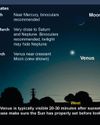
RETURN OF THE EVENING STAR (VENUS)
1 mins
March 2026

BBC Science Focus
CAN YOU STOP YOUR SENSE OF TASTE DULLING AS YOU AGE?
Sometimes I hear people say that food just doesn't taste the same as they get older. It's tempting to blame this on age, but there are other factors at play, too.
1 mins
March 2026
BBC Science Focus
MICROBIOMES OF THE SUPERAGERS
BY STUDYING THE INCREASING NUMBER OF PEOPLE WHO ARE LIVING BEYOND THEIR 100TH BIRTHDAYS, SCIENTISTS ARE DISCOVERING THAT THE SECRET TO REACHING A RIPE OLD AGE IN RUDE HEALTH MIGHT LIE IN OUR GUTS
8 mins
March 2026

BBC Science Focus
HOW BIG WERE MEDIEVAL WAR HORSES?
You might picture knights charging into battle on towering steeds, but medieval horses were typically no bigger than modern-day ponies.
1 min
March 2026

BBC Science Focus
FORCES OF HABIT
Could new research on setting up healthy habits resuscitate those stuttering New Year resolutions?
3 mins
March 2026

BBC Science Focus
5 DANGERS HIDING IN YOUR PROCESSED FOOD
We all know that ultra-processed foods are bad for us, but what ingredients should we particularly try to avoid? And what are they doing to our bodies?
9 mins
March 2026

BBC Science Focus
Mosquitoes are becoming thirstier for human blood
Habitat loss may be pushing mosquitoes towards human hosts with deadly consequences
1 mins
March 2026

BBC Science Focus
HOW CAN I GET OVER MY EX?
Relationship breakups can be brutal, just look at the popularity of songs like 'Someone Like You' by Adele, or all the covers of 'Cry Me a River' by Julie London.
1 mins
March 2026
Listen
Translate
Change font size