Prøve GULL - Gratis
AIN'T NO MOUNTAIN HIGH ENOUGH
BBC Science Focus
|December 2025
Could an exoskeleton help you scale every peak with ease? Ezzy Pearson straps on some cyborg enhancements to find out
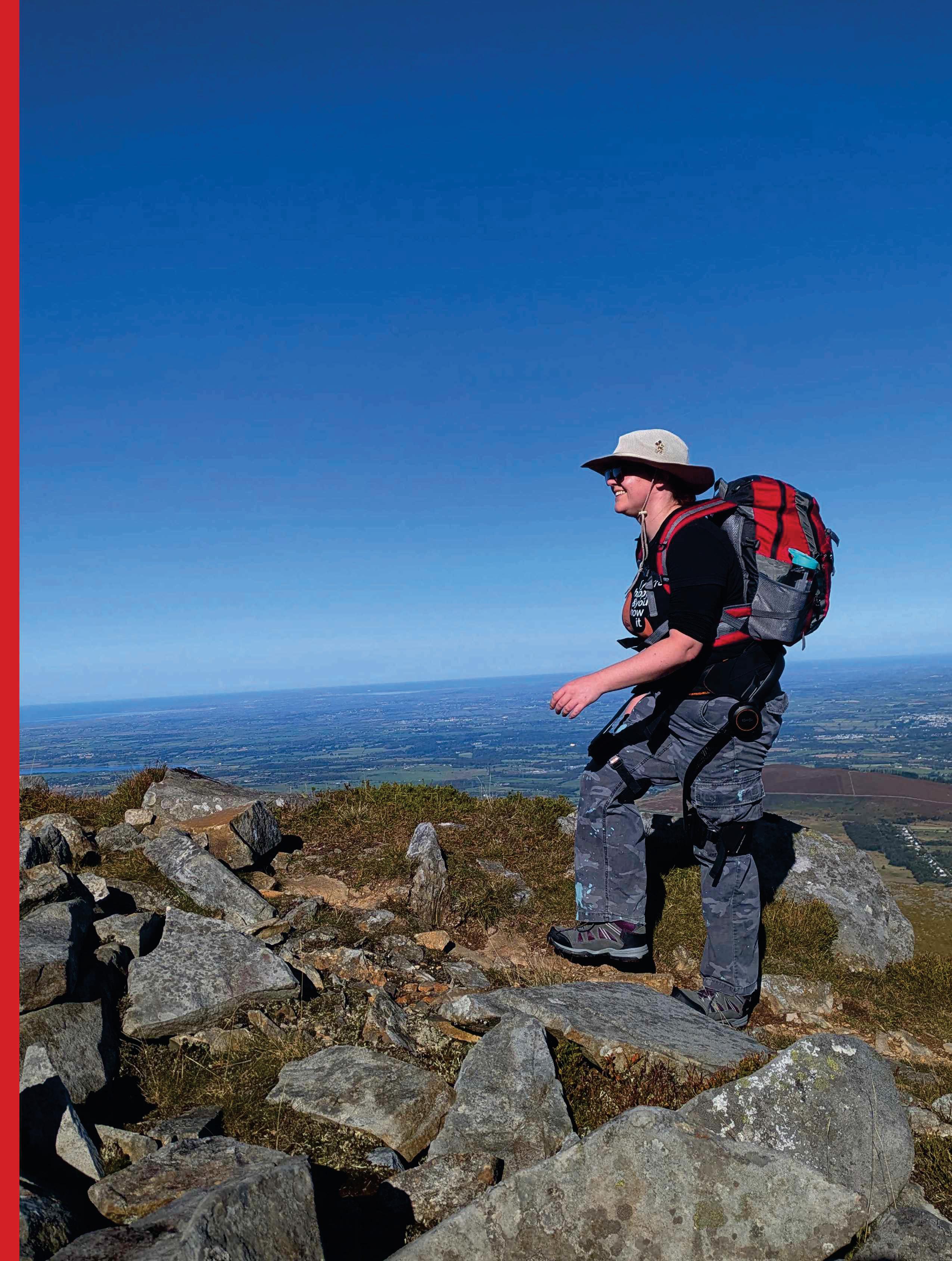
I used to love walking. When I was younger, my ideal afternoon was heading off into the woods and seeing where my feet took me. But now that I'm nearing 40, my knees aren't what they used to be and I find myself making that 'oompf' noise every time I stand up.
So, when I was offered the chance to try out an exoskeleton that would give my ailing joints a boost, I was intrigued. Especially as I would be using it to hike the rugged landscape of Snowdonia, home to Wales's highest mountain.
It would be a chance to reclaim the hobby that city-living and ageing limbs are taking from me, and - better still - I could do it by living out my sci-fi fantasy of becoming a cyborg.
YOUR LEGS, BUT STRONGER
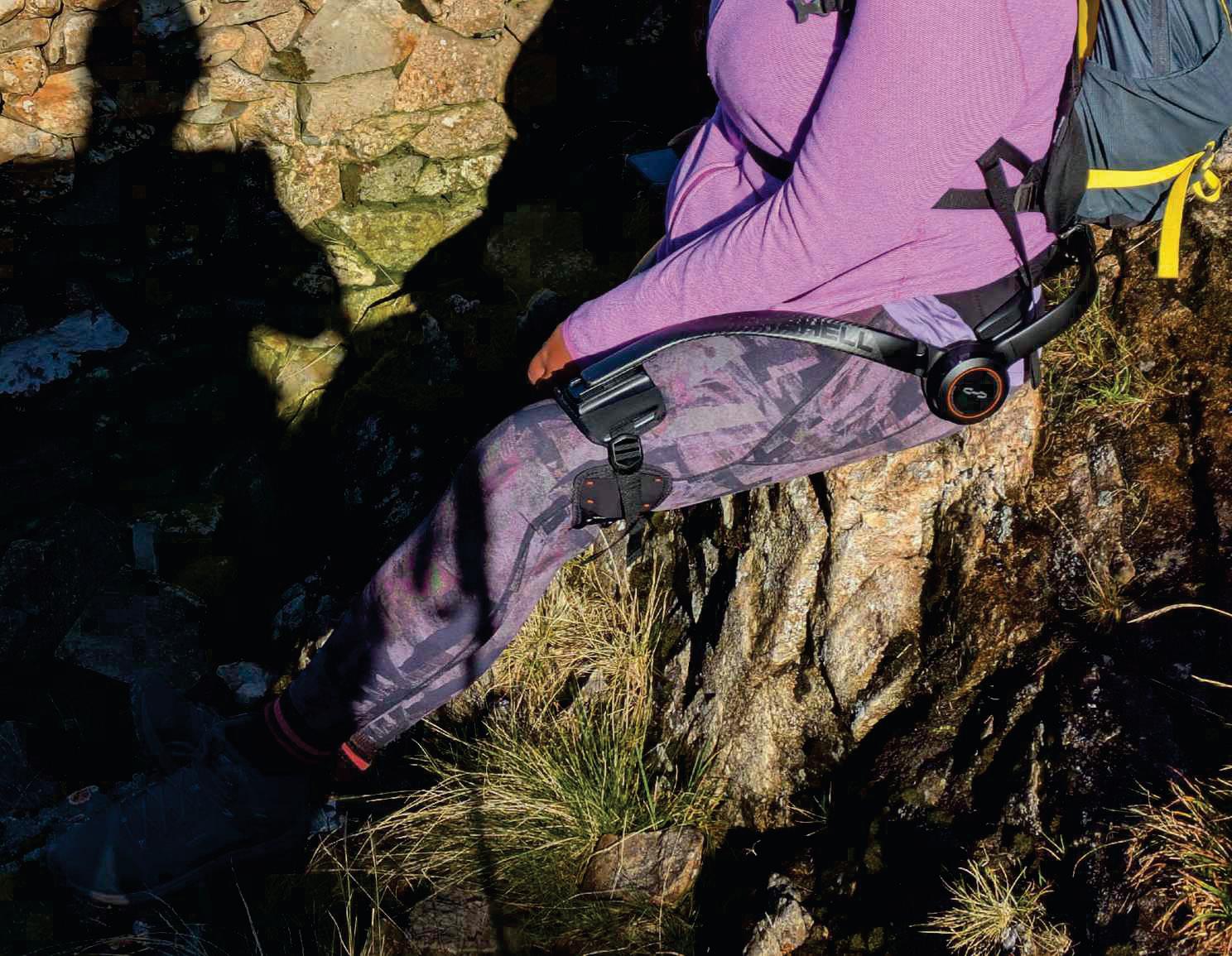
The term exoskeleton conjures up images of bulky mechanical robo suits, think Ripley's power loader in Aliens. So, I'm surprised to find that, despite being billed as an exoskeleton, the Hypershell X Ultra I'll be testing looks more like a climbing harness.
It's a lightweight contraption, weighing just 1.8kg (3.9lbs), that straps around my waist and to my thighs. Sensors throughout the £1,599 device monitor my movements, then an AI algorithm learns my gait and predicts when I'm about to take a step. When it thinks I'm starting to move, an electric motor pulls the brace around my thigh, taking some of the work of lifting my leg.
It took around 15 minutes to fit the device and learn how to use it, with an app to guide me through the process. At first, I felt like a marionette, with my legs being controlled by some invisible puppeteer, but it wasn't long before I got used to the sensation.
The idea behind the Hypershell X Ultra is to help people to hike further across more challenging terrain than they otherwise would, and there are several settings depending on how much mechanical assistance you need.

Denne historien er fra December 2025-utgaven av BBC Science Focus.
Abonner på Magzter GOLD for å få tilgang til tusenvis av kuraterte premiumhistorier og over 9000 magasiner og aviser.
Allerede abonnent? Logg på
FLERE HISTORIER FRA BBC Science Focus

BBC Science Focus
DOES MY DOG HAVE ADHD?
Officially, Attention-Deficit Hyperactivity Disorder (ADHD) is a human condition. People are diagnosed with it. Dogs are not. Yet many of its core features, including hyperactivity, impulsivity and distractibility, can be found in dogs.

1 min
March 2026

BBC Science Focus
DOES MY BRAIN LIVE A LITTLE IN THE PAST?
Yes, your brain does live a little in the past. It can't help it. The information it receives via your senses is always a little out of date. Whether it's light entering the retinas in your eyes, or sounds vibrating the hairs in your ears, it not only takes time for the data to arrive, but your brain then has to process it.
2 mins
March 2026

BBC Science Focus
ASTRONOMY FOR BEGINNERS
RETURN OF THE EVENING STAR (VENUS)
1 mins
March 2026

BBC Science Focus
CAN YOU STOP YOUR SENSE OF TASTE DULLING AS YOU AGE?
Sometimes I hear people say that food just doesn't taste the same as they get older. It's tempting to blame this on age, but there are other factors at play, too.
1 mins
March 2026
BBC Science Focus
MICROBIOMES OF THE SUPERAGERS
BY STUDYING THE INCREASING NUMBER OF PEOPLE WHO ARE LIVING BEYOND THEIR 100TH BIRTHDAYS, SCIENTISTS ARE DISCOVERING THAT THE SECRET TO REACHING A RIPE OLD AGE IN RUDE HEALTH MIGHT LIE IN OUR GUTS
8 mins
March 2026

BBC Science Focus
HOW BIG WERE MEDIEVAL WAR HORSES?
You might picture knights charging into battle on towering steeds, but medieval horses were typically no bigger than modern-day ponies.
1 min
March 2026

BBC Science Focus
FORCES OF HABIT
Could new research on setting up healthy habits resuscitate those stuttering New Year resolutions?
3 mins
March 2026

BBC Science Focus
5 DANGERS HIDING IN YOUR PROCESSED FOOD
We all know that ultra-processed foods are bad for us, but what ingredients should we particularly try to avoid? And what are they doing to our bodies?
9 mins
March 2026

BBC Science Focus
Mosquitoes are becoming thirstier for human blood
Habitat loss may be pushing mosquitoes towards human hosts with deadly consequences
1 mins
March 2026

BBC Science Focus
HOW CAN I GET OVER MY EX?
Relationship breakups can be brutal, just look at the popularity of songs like 'Someone Like You' by Adele, or all the covers of 'Cry Me a River' by Julie London.
1 mins
March 2026
Listen
Translate
Change font size