Prøve GULL - Gratis
2016 surgical strikes marked a departure from strategic restraint to responsible retaliation
The Sunday Guardian
|September 28, 2025
In September 29, 2016, India's military and political leadership took a step that altered the country's counter-terrorism playbook.
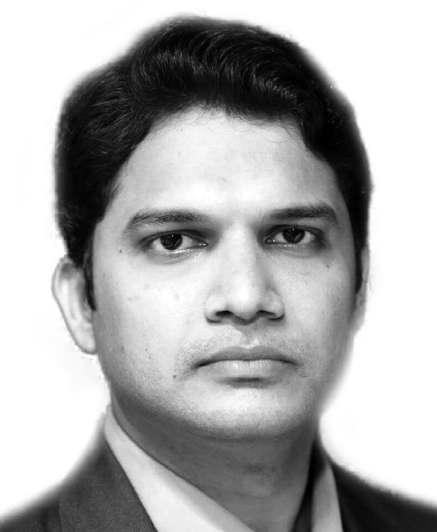
(ASHISH SINGH)
In the early hours of September 29, 2016, India's military and political leadership took a step that altered the country's counter-terrorism playbook.
The announcement by Lt Gen Ranbir Singh, then Director General of Military Operations (DGMO), was brief but historic: Indian Army special forces had conducted surgical strikes across the Line of Control (LoC), targeting terrorist launch pads in Pakistan-occupied Kashmir.
The statement marked a turning point. For decades, India had absorbed terror attacks emanating from across the border, its responses largely confined to defensive measures or covert action. But the public acknowledgment of a cross-LoC strike signalled a departure from "strategic restraint" towards what many analysts call a doctrine of responsible retaliation.
The timing was no coincidence. Just 11 days earlier, militants had attacked the Army's Uri brigade headquarters in Kashmir, killing 19 soldiers in one of the deadliest assaults on security forces in recent memory. Public anger was palpable, pressure on the government intense. India's leadership had to demonstrate resolve-not just in words, but in action.
GATHERING THE INTELLIGENCE
Behind the DGMO's calm words lay weeks of preparation. Intelligence inputs about launch pads-temporary shelters where terrorists assembled before infiltrating into India-had been building up. According to the government's official briefing, "very credible and specific information" indicated that multiple groups of militants were waiting to cross over.
Sources confirm that the surveillance matrix was exhaustive. Satellite imagery, unmanned aerial vehicles (UAVs), intercepted radio chatter, and inputs from human assets all converged to map out targets. By the last week of September, it was clear that infiltration attempts were imminent. What was required was a calibrated response that would neutralise the threat and send a wider strategic message.

Denne historien er fra September 28, 2025-utgaven av The Sunday Guardian.
Abonner på Magzter GOLD for å få tilgang til tusenvis av kuraterte premiumhistorier og over 9000 magasiner og aviser.
Allerede abonnent? Logg på
FLERE HISTORIER FRA The Sunday Guardian

The Sunday Guardian
PIYUSH GOYAL'S BRUSSELS VISIT A STEP TOWARDS FTA
Union Minister of Commerce and Industry, Piyush Goyal, concluded his two-day visit to Brussels a decisive step forward in the India-EU Free Trade Agreement (FTA) negotiations.

2 mins
January 11, 2026
The Sunday Guardian
Andaman and Nicobar arc: India's strategic anchor in the Indian Ocean Region and Indo-Pacific
The Andaman and Nicobar Command, India’s only operational tri-service command, is uniquely placed to monitor the critical waterways of the Bay of Bengal and adjoining seas. Within this island chain, the bases at Car Nicobar and Great Nicobar are of extraordinary importance.
4 mins
January 11, 2026
The Sunday Guardian
INDIA REVAMPS CRISIS COMMUNICATIONS TO CORRECT SINDOOR LAPSES
Reform effort has unfolded in multiple layers, ranging from administrative restructuring of human resources to deployment of advanced technology platforms for real-time narrative awareness.
4 mins
January 11, 2026
The Sunday Guardian
China’s mega dams threaten water security of downstream nations
China’s vast South-to-North Water Diversion Project (SN-WDP), the largest hydraulic engineering venture ever attempted, along with its relentless dam construction across the Tibetan Plateau, is reshaping Asia's rivers with consequences that stretch far beyond its borders.
3 mins
January 11, 2026

The Sunday Guardian
INDIA REMAINS AMONG FASTEST GROWING ECONOMIES, SAYS UN
India’s economy is expected to remain one of the fastest-growing major economies globally, with growth projected at 7.4 per cent in 2025, according to the United Nations’ World Economic Situation and Prospects 2026 report.
2 mins
January 11, 2026
The Sunday Guardian
WHAT MADE MAMATA DESPERATE ENOUGH TO GATE-CRASH ED RAID?
In conversations across West Bengal—at roadside teashops, public transport and in the picnics in chilly afternoons—the topic doing the rounds is just one: What made Mamata Banerjee so nervous and desperate that she had to gatecrash Enforcement Directorate raids and snatch documents, a cell phone, and a laptop?
3 mins
January 11, 2026

The Sunday Guardian
Long-term planning driving India’s energy readiness: Hardeep Puri
Union Minister for Petroleum and Natural Gas Hardeep Singh Puri highlighted that the government's long-term energy planning is translating into tangible benefits for citizens, stating that the real test of policy lies in how seamlessly it supports daily life rather than in announcements alone.
1 mins
January 11, 2026
The Sunday Guardian
NOT GETTING EXTERNAL SUPPORT, NOT TARGETING CIVILIANS: PAK TALIBAN
In an exclusive interaction with The Sunday Guardian, following a press conference by the Pakistan military spokesperson in Islamabad earlier last week, Mohammad Khorasani, spokesperson of Tehreek-e-Taliban Pakistan (TTP), responded to the Pakistan military's allegations targeting India.
5 mins
January 11, 2026

The Sunday Guardian
Banking sector recorded strong turnaround in 2025: Fin Min
The Department of Financial Services (DFS) under the Ministry of Finance reported significant progress in banking reforms, digital payments, and financial inclusion during 2025, marking a year of strengthened financial stability and governance, according to a year-end review released on Saturday.
1 min
January 11, 2026
The Sunday Guardian
Justice Soumen Sen sworn-in as Kerala CJ
Justice Soumen Sen was on Saturday sworn-in as the Chief Justice of the Kerala High Court.
1 min
January 11, 2026
Listen
Translate
Change font size