
Gå ubegrenset med Magzter GOLD
Få ubegrenset tilgang til over 9000 magasiner, aviser og premiumhistorier for bare
Prøve GULL - Gratis
The Kursk front and the secret soldiers of North Korea
The Guardian Weekly
|January 03, 2025
At dusk one afternoon last month, two dozen wounded North Korean soldiers were brought to one of the main hospitals in the Russian city of Kursk.

They were ushered into a specially designated floor, guarded by police, with access limited to translators and medical personnel.
"We were told in the morning to prepare for a special type of patient," said one of the medical staff at the hospital who treated North Koreans.
"We'd heard rumours that North Koreans were fighting there, but I didn't believe it. No one had actually seen them before. I thought it was all fake news until they arrived," the medic said, adding that most of them had shrapnel injuries.
A second medic at the scene said communication with the North Koreans was "impossible" without translators. They added that some North Koreans looked "frightened and nervous". Both medics requested to speak on condition of anonymity, fearing retribution for discussing the topic.
The arrival of the North Korean patients marked a rare moment of interaction between locals in the Kursk region and North Korean soldiers, whose presence remains shrouded in secrecy.
Up to 12,000 North Korean troops have been deployed to assist Russia in the war, according to US and South Korean officials. Most of these forces have been involved in a counteroffensive to reclaim swathes of Russian land in the Kursk region, a territory Ukraine has held since last summer.
Russia has not officially acknowledged the deployment of North Korean soldiers. During his annual press conference last month, president Vladimir Putin listed by name several units active in the fighting in the Kursk region but conspicuously avoided any mention of the North Koreans.
Early signs suggest North Korean troops may be suffering heavy casualties. Last week, South Korean military officials reported that more than 1,000 North Korean soldiers have been killed or wounded since their deployment alongside Russian forces in Ukraine.



Denne historien er fra January 03, 2025-utgaven av The Guardian Weekly.
Abonner på Magzter GOLD for å få tilgang til tusenvis av kuraterte premiumhistorier og over 9000 magasiner og aviser.
Allerede abonnent?Logg på
FLERE HISTORIER FRA The Guardian Weekly

The Guardian Weekly
Carrot halva mini bundts
Carrot halva is a sticky, spice-laced pudding that's beloved across India, Pakistan, Bangladesh and the diaspora communities abroad.

1 mins
May 15, 2026
The Guardian Weekly
Worried sick
Fearing the worst can lead to physical changes, according to this fascinating study
1 mins
May 15, 2026

The Guardian Weekly
Surviving the information crisis 'We once talked about fake news - now reality itself feels fake'
In this age of crisis, technology is pulling us apart. At its best, journalism can bring us together again.
23 mins
May 15, 2026
The Guardian Weekly
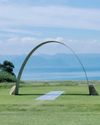
To infinity and beyond
Our writer travels to Naoshima, Japan's legendary 'art island' - and meets Lee Ufan, the great creator of its most spellbinding works
5 mins
May 15, 2026

The Guardian Weekly
Going green: how to keep iron levels up on a vegetarian diet
I’ve been advised to increase the iron in my diet but, as a vegetarian preoccupied with getting sufficient protein, I’m at a loss. June, by email
2 mins
May 15, 2026

The Guardian Weekly
Nightmarish imagining of Bolsonaro's coup bears a warning
The year is 2025 and far-right coup plotters have annihilated Brazil’s democracy, assassinating the president, closing the national congress and surrendering the Amazon rainforest and its untold riches to the United States.
2 mins
May 15, 2026
The Guardian Weekly
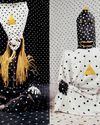
Hitting the spot
Angine de Poitrine are the year's buzziest, dottiest band-but are they really ancient aliens inspired by monkeys? The duo tell all
6 mins
May 15, 2026

The Guardian Weekly
Test drive Cana sprawling city make public transit work? Sydney may be on the right track
At Penrith, a suburb on Sydney’s rural fringe 50km west of the central business district, you can catch a train to the city every four to eight minutes during the morning peak, and roughly every 10 to 15 minutes during off-peak hours before midnight.
2 mins
May 15, 2026

The Guardian Weekly
Curve ball What it's like to live inside a Gaudí masterwork
Imagine that you live in an enormous, beautiful apartment designed by one of the world’s most admired architects in the most expensive street in Spain and for which you pay a derisory rent, with the right to live there until you die.
2 mins
May 15, 2026
The Guardian Weekly
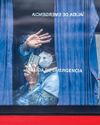
Hantavirus Outbreak that turned a dream cruise into tragedy
As the stricken ship was evacuated, questions lingered about how passengers came to be infected with the virus
6 mins
May 15, 2026
Listen
Translate
Change font size