Prøve GULL - Gratis
Once bitten, twice shy
Daily Mirror UK
|September 23, 2025
With biting and stinging insects on the rise in Britain as the climate changes, Matt Nixson hears from experts on how to deal with pests without relying on heavy-duty chemicals
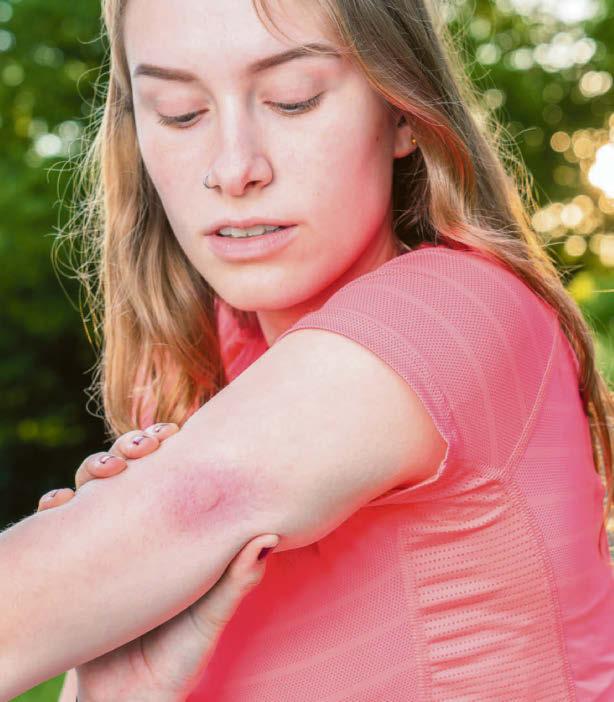
There was a time when the risk of being bitten or stung was, unless you were unlucky, only something we had to worry about if we were heading abroad. How things change.
In recent years, milder winters, hotter summers and increased rainfall have driven a boom in biting and stinging insects. The truth is, we now face a growing threat at home.
Ticks, now known to carry bacteria linked to Lyme disease, have become a particular concern, prompting the UK Health Security Agency (UKHSA), formerly Public Health England, to launch a national Surveillance Scheme.
Mosquitos, stinging flies and hornets have become, if not entirely commonplace, then certainly not rare.
And experts warn their prevalence is likely to worsen if climate change continues to drive warmer, wetter summers and milder winters here.
Dr Tim Bond, adviser to Puressentiel, says: "It's easy to assume that serious risks from insect bites and stings only exist abroad in exotic countries, but that's far from the truth. Here in the UK, the danger is very real and, in some cases, even life-threatening.
"Thanks to climate change, stinging and biting insects now have a longer season to thrive which means the risk of insect-borne illnesses are more likely."
With the change in temperatures, some insects that were previously only active in warmer months are now being seen as early as spring and well into autumn. As their habitats expand and activity increases, so does the threat to human health.
Dr Bond says: "Ticks are a particular concern. Ticks feed on the blood of birds and mammals, including humans. These tiny, spider-like parasites are being tracked through the UKHSA's Tick Surveillance Scheme, which monitors their spread and activity across the country.


Denne historien er fra September 23, 2025-utgaven av Daily Mirror UK.
Abonner på Magzter GOLD for å få tilgang til tusenvis av kuraterte premiumhistorier og over 9000 magasiner og aviser.
Allerede abonnent? Logg på
FLERE HISTORIER FRA Daily Mirror UK
Daily Mirror UK
CASEMIRO: KOBBIE IS MAIN MAN NOW
KOBBIE MAINOO has been told he is the future of Manchester United - and someone the team can be built around.

1 min
May 13, 2026
Daily Mirror UK
SOON ALL PLAYERS WILL BE STRIKERS
Union chief Molango echoes Rodri's claim
2 mins
May 13, 2026
Daily Mirror UK
STAND-OFF
Streeting to hold crunch talks with PM... Rayner ready to run... but over 100 MPs call for calm
1 min
May 13, 2026
Daily Mirror UK
Gruff sketches
First look at new Zog TV cartoon adventure
1 min
May 13, 2026
Daily Mirror UK
I'M DINING OUT ON MAJOR GLORY
Mcllroy’s enjoying his time at the top table
2 mins
May 13, 2026
Daily Mirror UK
XABI CHIC
Real's disarray has given Alonso standing a big lift
2 mins
May 13, 2026
Daily Mirror UK
More virus cases on way'
11 confirmed or suspected to have disease
2 mins
May 13, 2026
Daily Mirror UK
Fields of gold
A DETECTORIST nicknamed Golden Girl after finding at least a trinket a year is selling her treasures for £11,000.
1 mins
May 13, 2026
Daily Mirror UK
HEARTS AND MINDS
Boss McInnes has it in his head that title battle will go to last day
2 mins
May 13, 2026
Daily Mirror UK
FAT PILLS
MILLIONS of us could be put on weight loss pills for life as research suggests they could be key to staying slim for good.
2 mins
May 13, 2026
Listen
Translate
Change font size