
Gå ubegrenset med Magzter GOLD
Få ubegrenset tilgang til over 9000 magasiner, aviser og premiumhistorier for bare
Muddy Waters
The Caravan
|April 2025
Ritual inclusion at the Kumbh does not wash away Modi's contempt for Dalit rights
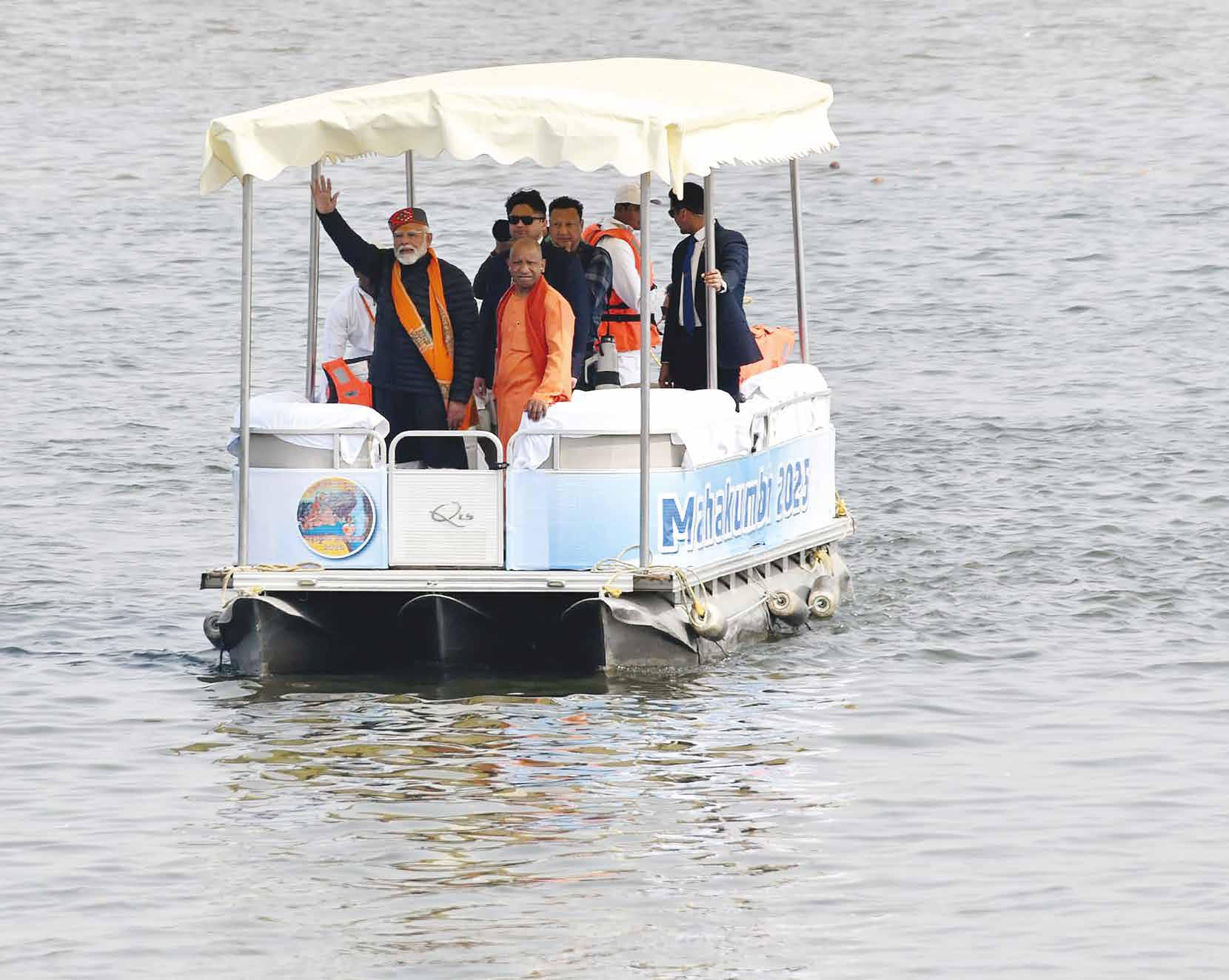
Prime Minister Narendra Modi described the Kumbh Mela as a “grand Mahayajna of Unity” that “has strengthened India’s national consciousness” for thousands of years—a blatantly exclusionary statement, given that the ritual involves only Hindus. Like the deity Krishna revealing the universe in his mouth, he wrote in a 27 February blog post, the Kumbh allowed people to witness “the massive potential of India’s collective strength,” which would have been “a great force” in the aftermath of Independence had it “been correctly recognised and harnessed towards boosting the welfare of all.” Three months earlier, he had called it an occasion where caste differences “dissolve, sectarian conflicts fade, and millions unite with a single purpose and shared belief.”
The ruling Bharatiya Janata Party distributed copies of the Constitution to the fifteen thousand sanitation workers at the two-month event, while the Uttar Pradesh government, which spent ₹7,500 crore on the mela, set up temporary primary schools for their children. A few hours after Modi’s blog post, the chief minister, Adityanath, and members of his cabinet drove home the message by dining with sanitation workers. Several commentators interpreted these activities as the BJP’s attempt to win back the Dalit vote it had lost in the 2024 general election, but this outreach was not new. At the last Ardh-Kumbh in Prayagraj, months before the 2019 election, Modi had washed the feet of five sanitation workers and glorified their menial jobs as the work of tapasvis (ascetics) and karmayogis (providers of selfless service). However, Modi’s efforts at Dalit inclusion have been restricted to the ritual realm.

Denne historien er fra April 2025-utgaven av The Caravan.
Abonner på Magzter GOLD for å få tilgang til tusenvis av kuraterte premiumhistorier og over 9000 magasiner og aviser.
Allerede abonnent? Logg på
FLERE HISTORIER FRA The Caravan
The Caravan
ANY RESEMBLANCE TO ACTUAL EVENTS IS NOT COINCIDENTAL
INTERFAITH ROMANCE FICTION IN THE ERA OF LOVE JIHAD

31 mins
December 2025
The Caravan
Manufacturing Legitimacy
How a Washington Post columnist laundered the Sangh's violent history
7 mins
December 2025

The Caravan
DEATH of REPORTAGE
THE DISMANTLING OF OUTLOOK'S LEGACY
32 mins
December 2025

The Caravan
FOG LIGHT
Samayantar's two-and-half-decade fight against the shrinking of Hindi's world
22 mins
December 2025
The Caravan
THE FINE PRINT
ON 19 MARCH 2005, thousands came out on the streets of Udupi, in coastal Karnataka, to protest a gruesome incident that had shaken the region a week earlier.
23 mins
December 2025
The Caravan
CHARACTER BUILDING
The enduring language of Indian streets
5 mins
December 2025
The Caravan
THE CONVENIENT EVASIONS OF RAJDEEP SARDESAI
DRESSED IN A turban and white kurta pyjama, Narendra Modi sat in the passenger seat of a van crossing the Patan district of Gujarat, in September 2012. Next to him sat Rajdeep Sardesai, the founder-editor of the news channel CNN-IBN.
63 mins
December 2025
The Caravan
Ahmed Kamal Junina: “Every class we hold is a defiant refusal to surrender”
A professor in Gaza on teaching during a genocide / Conflict
11 mins
December 2025
The Caravan
Bangla Pride, Urdu Prejudice
The language wars have primed West Bengal for the RSS
8 mins
November 2025

The Caravan
THE INTERVIEW
\"The people are naked before the government but the government is opaque to them\"
16 mins
November 2025
Listen
Translate
Change font size