Prøve GULL - Gratis
Mascots of the Dead
The Caravan
|August 2025
Simulated animals and ecological amnesia
-
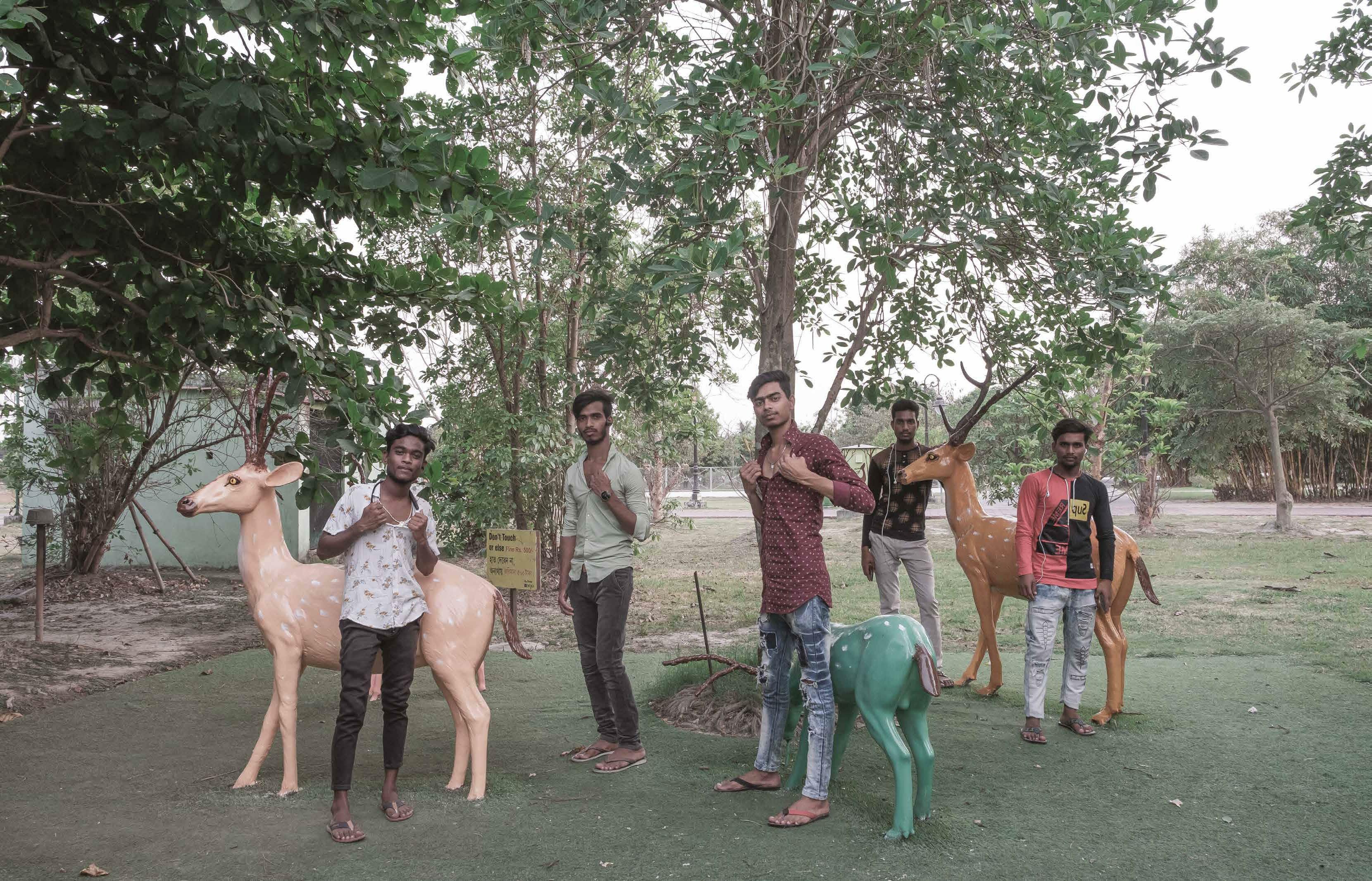
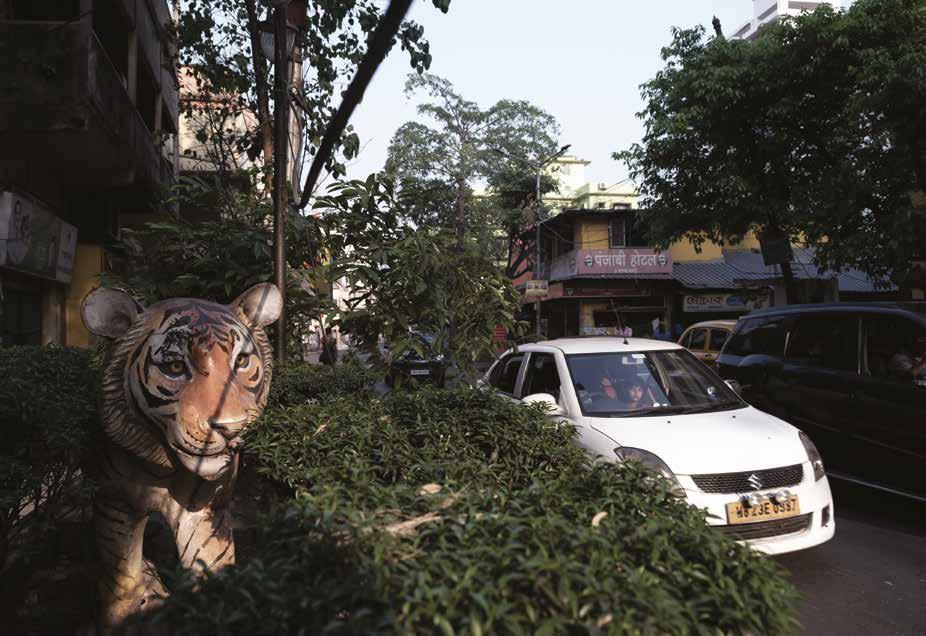
I GREW UP in a remote village near the Sundarbans, a delta in southern West Bengal. To attend school, I had to travel to a town nearby that, in the 1990s, belonged to a quieter world. My school sat amid thick greenery, dotted with homes and lanes. At dusk, the sky darkened with the wings of birds returning to roost. When I visited five years ago, the school remained, but the town had become a dense mass. The trees were gone. In their place, dusty railings guarded statues of animals—grime-covered, lifeless, absurd.
The sight took me back to the suicide note of Rohith Vemula, a Dalit student at the University of Hyderabad. Rohith took his own life, in 2016, after facing relentless caste-based violence at the university. “Our feelings are secondhand. Our love is constructed. Our beliefs are coloured. Our originality is valid through artificial art.” These words from his letter made me see how architecture—both social and environmental—is built to segregate and to normalise injustice.
Like Rohith, I come from a historically marginalised caste community and have known discrimination. As a society, our treatment of nature has always seemed to me like our treatment of the marginalised. Plants and animals are “othered” too. That explains the world we have built.
The destruction of a living tree—once a refuge for birds—and its replacement with cartoonish bird sculptures struck me with a kind of existential dread. The scene was both deeply symbolic and politically charged. It was not just about what was lost, but what was being installed in its place: a lifeless caricature of life. It evoked the simulacrum, a term used by the cultural theorist Jean Baudrillard to describe how representations overtake reality and eventually erase it. As a photographer, I felt compelled to document this shift.

Denne historien er fra August 2025-utgaven av The Caravan.
Abonner på Magzter GOLD for å få tilgang til tusenvis av kuraterte premiumhistorier og over 9000 magasiner og aviser.
Allerede abonnent? Logg på
FLERE HISTORIER FRA The Caravan
The Caravan
ANY RESEMBLANCE TO ACTUAL EVENTS IS NOT COINCIDENTAL
INTERFAITH ROMANCE FICTION IN THE ERA OF LOVE JIHAD

31 mins
December 2025
The Caravan
Manufacturing Legitimacy
How a Washington Post columnist laundered the Sangh's violent history
7 mins
December 2025

The Caravan
DEATH of REPORTAGE
THE DISMANTLING OF OUTLOOK'S LEGACY
32 mins
December 2025

The Caravan
FOG LIGHT
Samayantar's two-and-half-decade fight against the shrinking of Hindi's world
22 mins
December 2025

The Caravan
THE FINE PRINT
ON 19 MARCH 2005, thousands came out on the streets of Udupi, in coastal Karnataka, to protest a gruesome incident that had shaken the region a week earlier.
23 mins
December 2025

The Caravan
CHARACTER BUILDING
The enduring language of Indian streets
5 mins
December 2025

The Caravan
THE CONVENIENT EVASIONS OF RAJDEEP SARDESAI
DRESSED IN A turban and white kurta pyjama, Narendra Modi sat in the passenger seat of a van crossing the Patan district of Gujarat, in September 2012. Next to him sat Rajdeep Sardesai, the founder-editor of the news channel CNN-IBN.
63 mins
December 2025

The Caravan
Ahmed Kamal Junina: “Every class we hold is a defiant refusal to surrender”
A professor in Gaza on teaching during a genocide / Conflict
11 mins
December 2025

The Caravan
Bangla Pride, Urdu Prejudice
The language wars have primed West Bengal for the RSS
8 mins
November 2025

The Caravan
THE INTERVIEW
\"The people are naked before the government but the government is opaque to them\"
16 mins
November 2025
Listen
Translate
Change font size