Prøve GULL - Gratis
FAULT LINES
The Caravan
|June 2025
The pre-Sanskritic roots of Indian languages
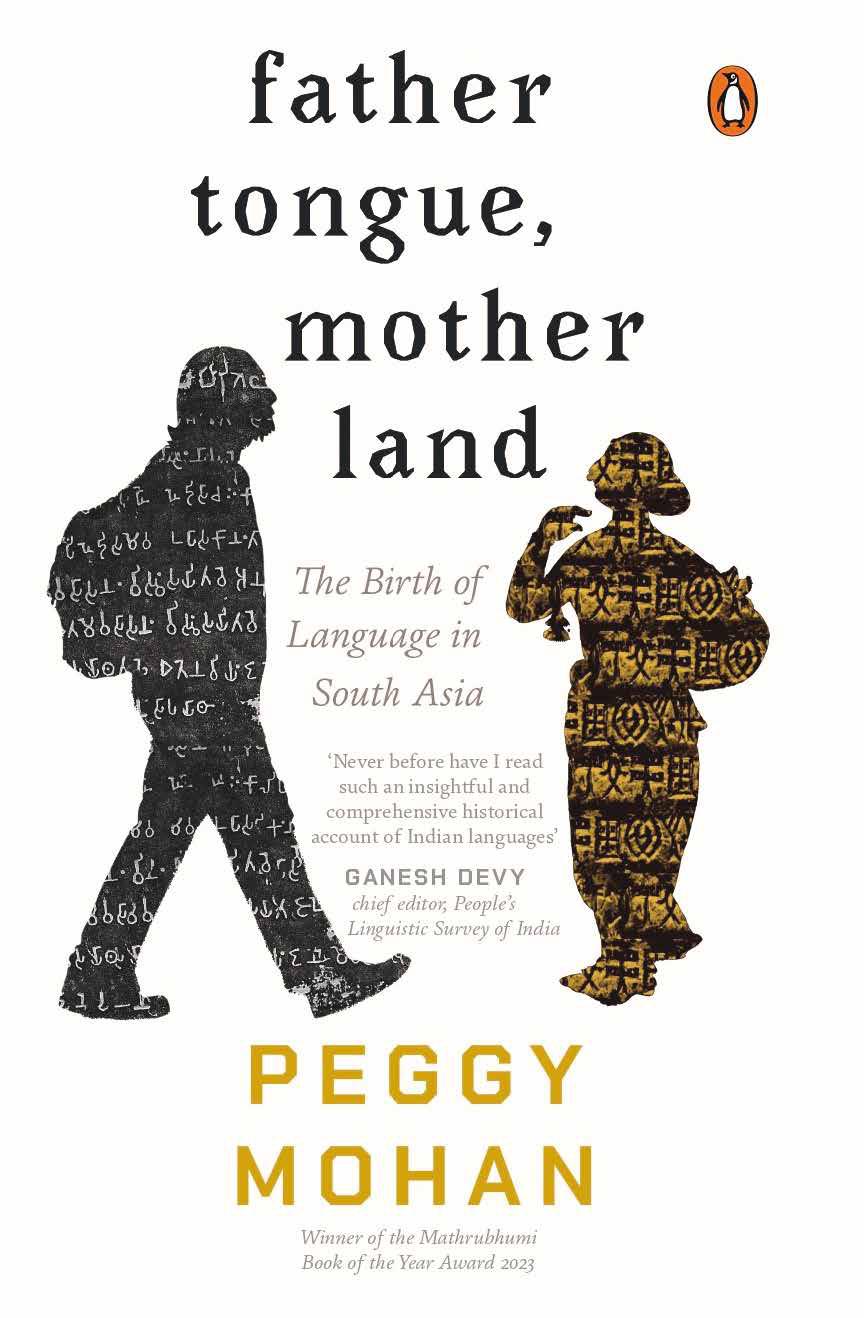
In Father Tongue, Motherland, published by Penguin Random House India, Peggy Mohan reflects on the development of modern languages in the subcontinent, asking questions about when they might have arrived, whether writing was what stabilised them, and what made people shift to them. In the following excerpt from the book, she writes: “Our most important takeaway from this story is that just as we have, in archaeological terms, an Indus Valley Periphery region, we also have, in linguistic terms, something I like to think of as an Extended Indus Valley Periphery region. This is a linguistic terrain where the languages fall into one megafamily connected by their common features that do not link back to Sanskrit and the prakrits.”
LET US NOW RECAP AN OLD STORY, but this time with a slightly different spin.
Once upon a time there was a language, early Sanskrit, with a structure that looked a lot like Avestan, Greek and Latin. In its earliest days it did not yet have the almost ubiquitous South Asian retroflex sounds—t, d, n, l and ş. It was a language where nouns took eight different case endings, depending on which class they belonged to, and could be singular, dual or plural. Verbs too had different conjugations, or paradigms, the same tenses as verbs in Avestan, Greek and Latin, and the subject was the same in all tenses. I eat, I will eat, I ate. Verbs agreed with their subjects using person markers, not gender markers, even though Sanskrit had three genders, masculine, feminine and neuter: khādati meant “he/she/it eats.”
As the Vedic migrant men took local wives and had children, spoken Sanskrit would have taken on a few local features, mainly in its accent. The children would have brought in a local pronunciation, adding t d n, ş and maybe

Denne historien er fra June 2025-utgaven av The Caravan.
Abonner på Magzter GOLD for å få tilgang til tusenvis av kuraterte premiumhistorier og over 9000 magasiner og aviser.
Allerede abonnent? Logg på
FLERE HISTORIER FRA The Caravan

The Caravan
Dim Views
Punjab's new media suffers from old problems

22 mins
February 2026

The Caravan
ON FIRM GROUND
The civic struggle against uranium mining in the West Khasi Hills
6 mins
February 2026

The Caravan
DANGEROUS LIAISON
Why India enabled Israel's genocide in Gaza
44 mins
February 2026

The Caravan
Platform for Change
A women-led union gives voice to India's gig workers
6 mins
February 2026
The Caravan
NARAVANE'S Moment of Truth
An army chief's unpublished memoir exposes how the Modi government spun the China border crisis
44 mins
February 2026
The Caravan
A Brief History of the Slap
How Telugu cinema's heroes turn violence against women into romance
9 mins
February 2026
The Caravan
FACE PALM
Why the Congress keeps losing elections
33 mins
January 2025

The Caravan
The Great Transformation
Challenges facing independent news outlets in the digital age/Media
6 mins
January 2025

The Caravan
The Mob Comes for Film Critics
Dhurandhar and the manufacture of a national consensus
11 mins
January 2025
The Caravan
Memories Are Made of This
FOOD IN DALIT AND ADIVASI WRITING
15 mins
January 2025
Listen
Translate
Change font size