Prøve GULL - Gratis
When Buckley Met Baldwin
The Atlantic
|June 2025
In 1965, the two intellectual giants squared off in a debate at Cambridge. It didn't go quite as Buckley hoped.
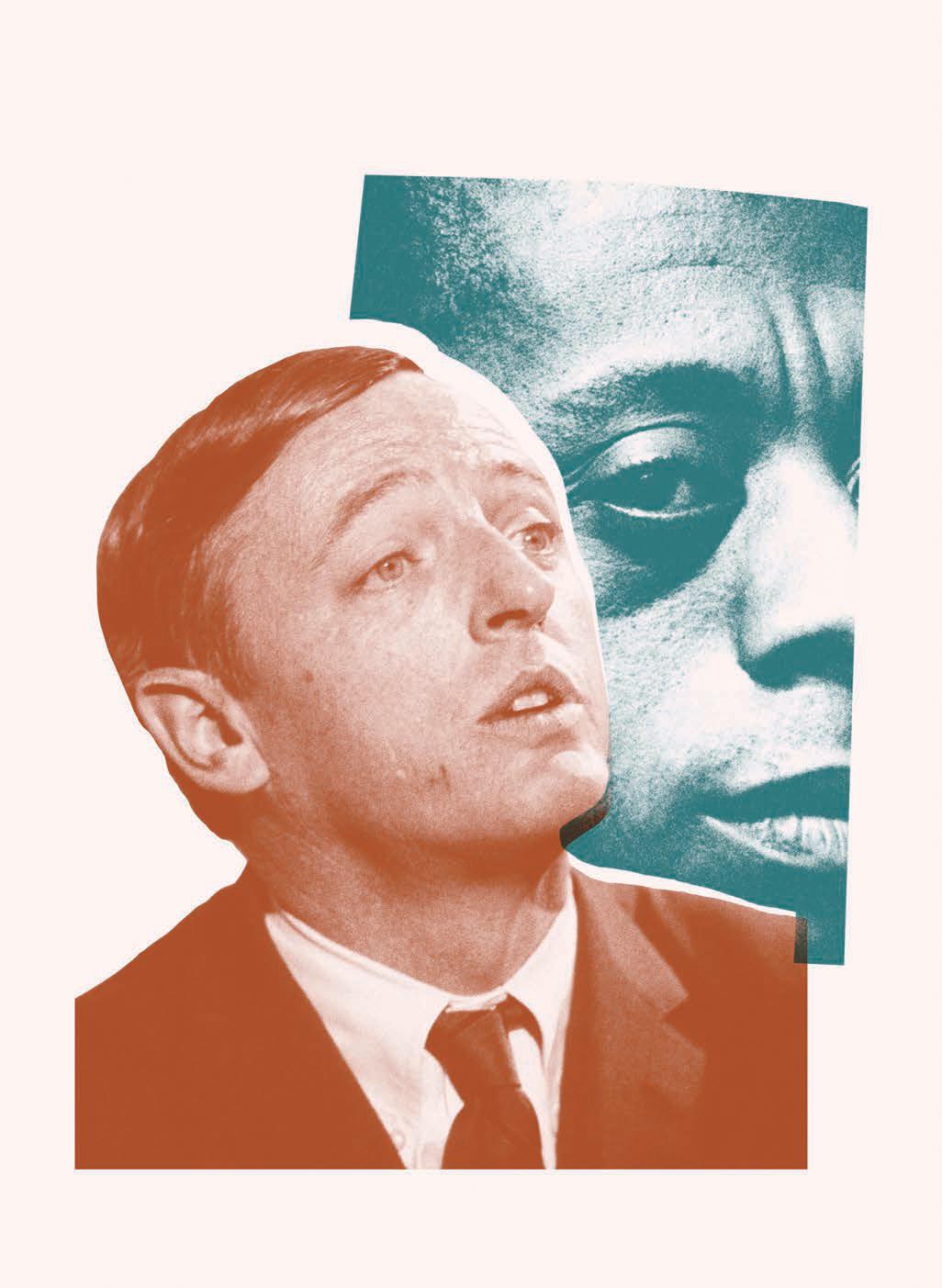
Cambridge Union with one of the most celebrated writers alive, the novelist, memoirist, critic, and essayist James Baldwin.
Buckley had been paying attention to Baldwin. He had read and admired his novel Another Country, which subtly explored complex gay and racial themes.
But he disliked Baldwin's journalism and his profuse commentary on race.
Baldwin, he had written, "celebrates his bitterness against the white community mostly in journals of the far political left," which suggested complicity-or was it cowardice? on the part of guilt-ridden white editors.
Baldwin's presence in England was itself an event. He was there to promote the paperback edition of Another Country and to discuss a screenplay with a filmmaker.
He also made himself available to journalists and students. And there was the debate with Buckley at the Cambridge Union-a debate on the subject of race in America.
Baldwin's numerous venues were not, as it happened, limited to those of the left. His arguments, moreover, were original and unorthodox, and at times even paralleled Buckley's own. Baldwin, too, was skeptical of liberal programs and the meliorist principles they rested on. When he observed that the "mountain of sociological investigations, committee reports, and plans for recreational centers have failed to change the face of Harlem," a conservative could agree.
The difference came in the conclusions Baldwin drew. The true lessons of race in America, he argued, began in what had been revealed about its white population.

Denne historien er fra June 2025-utgaven av The Atlantic.
Abonner på Magzter GOLD for å få tilgang til tusenvis av kuraterte premiumhistorier og over 9000 magasiner og aviser.
Allerede abonnent? Logg på
FLERE HISTORIER FRA The Atlantic

The Atlantic
The Realist Magic of Philip Pullman
The Golden Compass author tells us how to love this world. It's not easy.

9 mins
December 2025

The Atlantic
We Are Not One
When it came into view, Doctor Rustin was struck by its size.
14 mins
December 2025
The Atlantic
THE COMING ELECTION MAYHEM
Donald Trump's plans to throw the 2026 midterms into chaos are already under way.
22 mins
December 2025

The Atlantic
The One and Only Sammy
The astonishing, confounding career of Sammy Davis Jr.
7 mins
December 2025

The Atlantic
GET A REAL FRIEND
The false promise of AI companionship
10 mins
December 2025

The Atlantic
PRESIDENT FOR LIFE
Donald Trump is trying to amass the powers of a king.
10 mins
December 2025

The Atlantic
The Last of the Literary Outdoorsmen
Thomas McGuane—fisherman, hunter, rancher, writer—says “good riddance” to his kind.
14 mins
December 2025

The Atlantic
THE MISSING KAYAKER
What happened to Ryan Borowardı?
44 mins
December 2025

The Atlantic
The Man Who Rescued Faulkner
How the critic Malcolm Cowley made American literature into its own great tradition
9 mins
December 2025

The Atlantic
Patti Smith's Lifetime of Reinvention
Nearing 80, the punk poet reflects on the twists in her story that have surprised even her.
12 mins
December 2025
Listen
Translate
Change font size