
Gå ubegrenset med Magzter GOLD
Få ubegrenset tilgang til over 9000 magasiner, aviser og premiumhistorier for bare
Prøve GULL - Gratis
What Zoya Sees
The Atlantic
|November 2024
Long a fearless critic of Israeli society, since October 7 Zoya Cherkassky-Nnadi has made wrenching portraits of her nation's sufferingand become a target of protest.

You can't walk far in Tel Aviv without encountering a raw expression of Israel's national trauma on October 7. The streets are lined with posters of hostages, and giant signs and graffiti demanding BRING THEM HOME. Making my way through Florentin, a former slum that has become an artists' neighborhood, to visit Zoya Cherkassky-Nnadi,one of the most popular painters in Israel, I passed a mural of a child being taken hostage. A Hamas terrorist in a green headband and balaclava points a rifle at the child, who has his hands in the air. The boy is recognizable as a version of the child in the famous photograph from the Warsaw Ghetto uprising in 1943. The artist first painted the mural in Milan, but images of October 7 are not always well received outside Israel.
In Milan, someone scrubbed the Jewish child out of the picture.
Zoya first name only, at least in the art world also made drawings about October 7 that met with an unexpectedly hostile response abroad. Until then, Zoya's international reputation had been ascending. She was seen as a sharp critic and satirist of Israeli society-Israel's Hogarth, as it were. Like him, she sketches people whom others overlook; like his, her portraits editorialize. Perhaps you assume that overlooked means "Palestinian."
Zoya has made paintings about the plight of Palestinians, but what really interests her are even less visible members of Israeli society, such as African immigrants, and the invisible and stigmatized, such as sex workers. Since her October 7 drawings were shown in New York, however, she has been accused of making propaganda for Israel. Similar charges have been leveled against other prominent Israeli artists since the start of the Gaza war, but the denunciation of Zoya was particularly public.
Zoya is an immigrant herself-born in Kyiv in 1976, when Ukraine was still part I of the Soviet Union-and she has spent her life in a kind of internal exile.
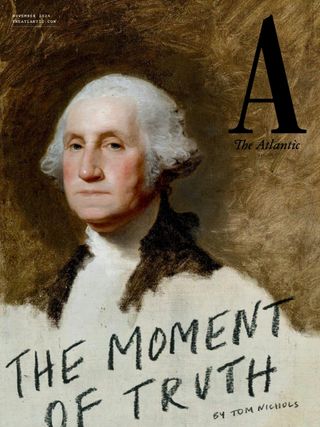

Denne historien er fra November 2024-utgaven av The Atlantic.
Abonner på Magzter GOLD for å få tilgang til tusenvis av kuraterte premiumhistorier og over 9000 magasiner og aviser.
Allerede abonnent? Logg på
FLERE HISTORIER FRA The Atlantic

The Atlantic
The Eighth Deadly Sin
Humankind has devised a new form of debasement.

5 mins
May 2026

The Atlantic
The Art of the (New) Deal
What the murals of the Wilbur J. Cohen Federal Building can teach us about patriotism, propaganda, and beauty
12 mins
May 2026

The Atlantic
New Chairs
Collaboration, for Robert Rauschenberg and Merce Cunningham, began with the arrangement of chairs.
1 mins
May 2026
The Atlantic
HISTORY IS RUNNING BACKWARDS
Why reactionaries are taking over the world
21 mins
May 2026
The Atlantic
SOMEDAY IN TEHRAN
Like Donald Trump, I, too, once underestimated the Islamic Republic of Iran.
16 mins
May 2026

The Atlantic
On Losing a Daughter
The people we were died at the exact moment our child did.
19 mins
May 2026

The Atlantic
I Found It: The Best Free Restaurant Bread in America
Thirteen thousand miles. Infinite contenders. One beautiful loaf.
15 mins
May 2026

The Atlantic
EVERYTHING IS FREE AND NOTHING MATTERS
What I saw at Jeff Bezos's Campfire retreat
9 mins
May 2026

The Atlantic
Who Is Black Comedy For?
A new book is nostalgic for the '90s. But the era of crossover success was not necessarily the pinnacle of Black comedic achievement.
8 mins
May 2026

The Atlantic
The Feeling of Becoming Less and Less of a Person
In Ben Lerner's new novel, technology divides us further from one another, and ourselves.
9 mins
May 2026
Listen
Translate
Change font size