Prøve GULL - Gratis
WHAT NOT TO WEAR
The Atlantic
|February 2025
The false promise of seasonal-color analysis
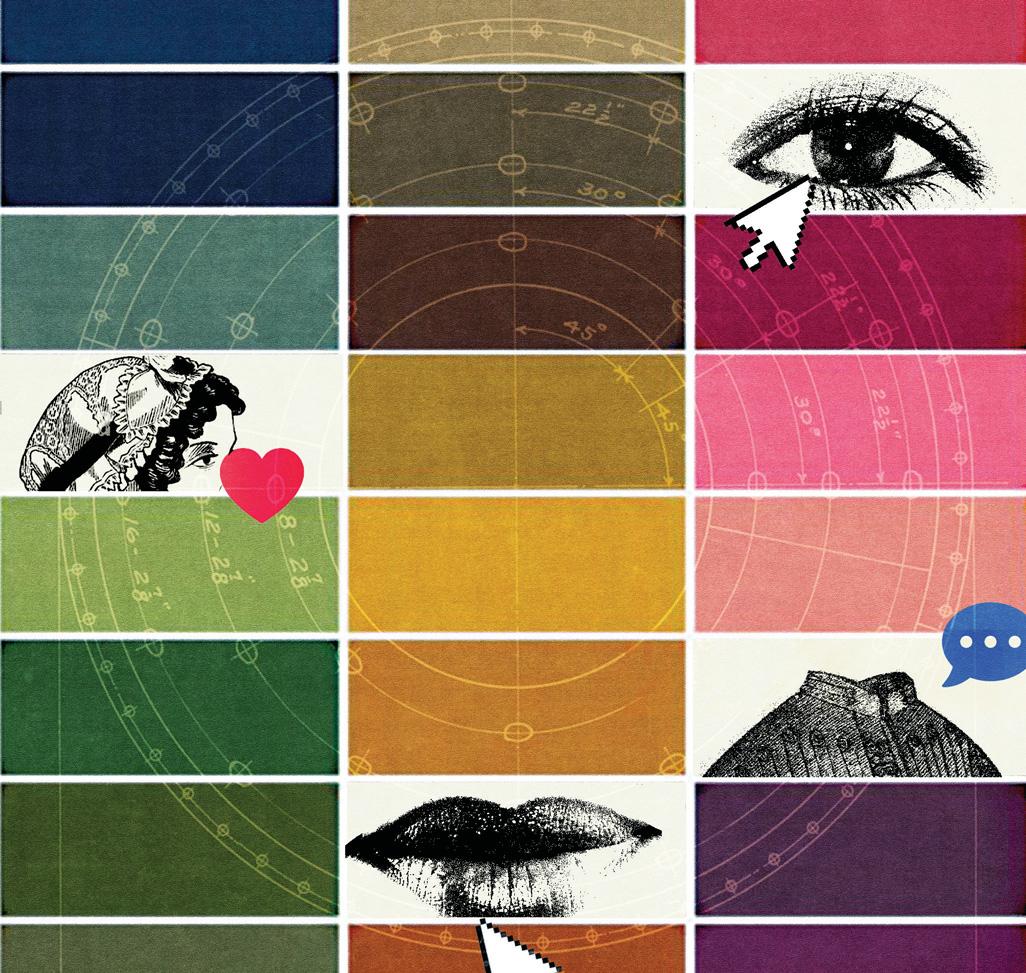
As long as people have been able to dress in color, we've been desperate to do it better. In the mid-19th century, advances in dyeing technology and synthetic organic chemistry allowed the textile industry, previously limited to what was available in nature, to mass-produce a rainbow's worth of new shades. The problem was, people began wearing some truly awful outfits, driven to clashy maximalism by this revolution in color.
The press created a minor moral panic ("un scandale optique," a French journal called it), which it then attempted to solve. An 1859 issue of Godey's Lady's Book, the most widely read American women's magazine of the antebellum era, promised to help "ill-dressed and gaudy-looking women" by invoking a prominent color theorist, the French chemist Michel-Eugène Chevreul, and his ideas about which colors were most "becoming" on various (presumably white) women. Chevreul advocated "delicate green" for those with fair skin "deficient in rose"; yellow for brunettes; and "lustreless white" for those with a "fresh complexion," whatever that means.
Chevreul died in 1889, 121 years before Instagram was invented, but had the platform been available to him, I think he would have done very well on it. There, and elsewhere on the social web, millions of people are still trying to figure out which shades look best on them. They are doing it via seasonal-color analysis, a quasiscientific, quasi-philosophical discipline that holds that we all have a set of colors that naturally suit us, and a set that do not that wash us out, make us look ruddy or green, emphasize our flaws, and minimize our beauty.
According to this method, everyone belongs to a "season," and a "subseason," determined by the coloring of their skin and features. Bright winters, for example, tend to have sparkling eyes and dark hair and look great in jewel tones; true autumns are defined by their golden undertones and should wear earthy colors.

Denne historien er fra February 2025-utgaven av The Atlantic.
Abonner på Magzter GOLD for å få tilgang til tusenvis av kuraterte premiumhistorier og over 9000 magasiner og aviser.
Allerede abonnent? Logg på
FLERE HISTORIER FRA The Atlantic

The Atlantic
You Had to Be There
An emerging field of history asks if we can ever really understand how our forebears experienced love, anger, fear, and sorrow.

23 mins
January 2026

The Atlantic
By the Horns
The week before the biggest bullfight of her career, in Cádiz, Spain, this past July, 24-year-old Miriam Cabas posted a carefully produced video on Instagram.
1 mins
January 2026

The Atlantic
The New German War Machine
After World War II, Germany embraced pacifism as a form of atonement. Now the country is arming itself again.
18 mins
January 2026
The Atlantic
The Eloquence
The prime minister was watching a disaster movie when we found him.
4 mins
January 2026

The Atlantic
What's for Dinner, Mom?
The women who want to change the way America eats
12 mins
January 2026

The Atlantic
How Terror Works
A 1947 German novel explores the sometimes corrosive, sometimes energizing nature of fear.
8 mins
January 2026

The Atlantic
Yesterday's Idea of a Modern Man
Sam Shepard, a self-made cowboy, was also a poet of masculine angst.
7 mins
January 2026

The Atlantic
ACCOMMODATION NATION
America's colleges have an extra-time-on-tests problem.
11 mins
January 2026

The Atlantic
Respect the Drummer
A new history of rock, told through its overlooked heroes
5 mins
January 2026

The Atlantic
THE MOST POWERFUL MAN IN SCIENCE
WHY IS ROBERT F. KENNEDY JR. SO CONVINCED HE'S RIGHT?
42 mins
January 2026
Listen
Translate
Change font size