Prøve GULL - Gratis
THE MAN WHO ATE NASA
The Atlantic
|September 2025
The agency once projected America's loftiest ideals. Then it ceded its ambitions to Elon Musk.
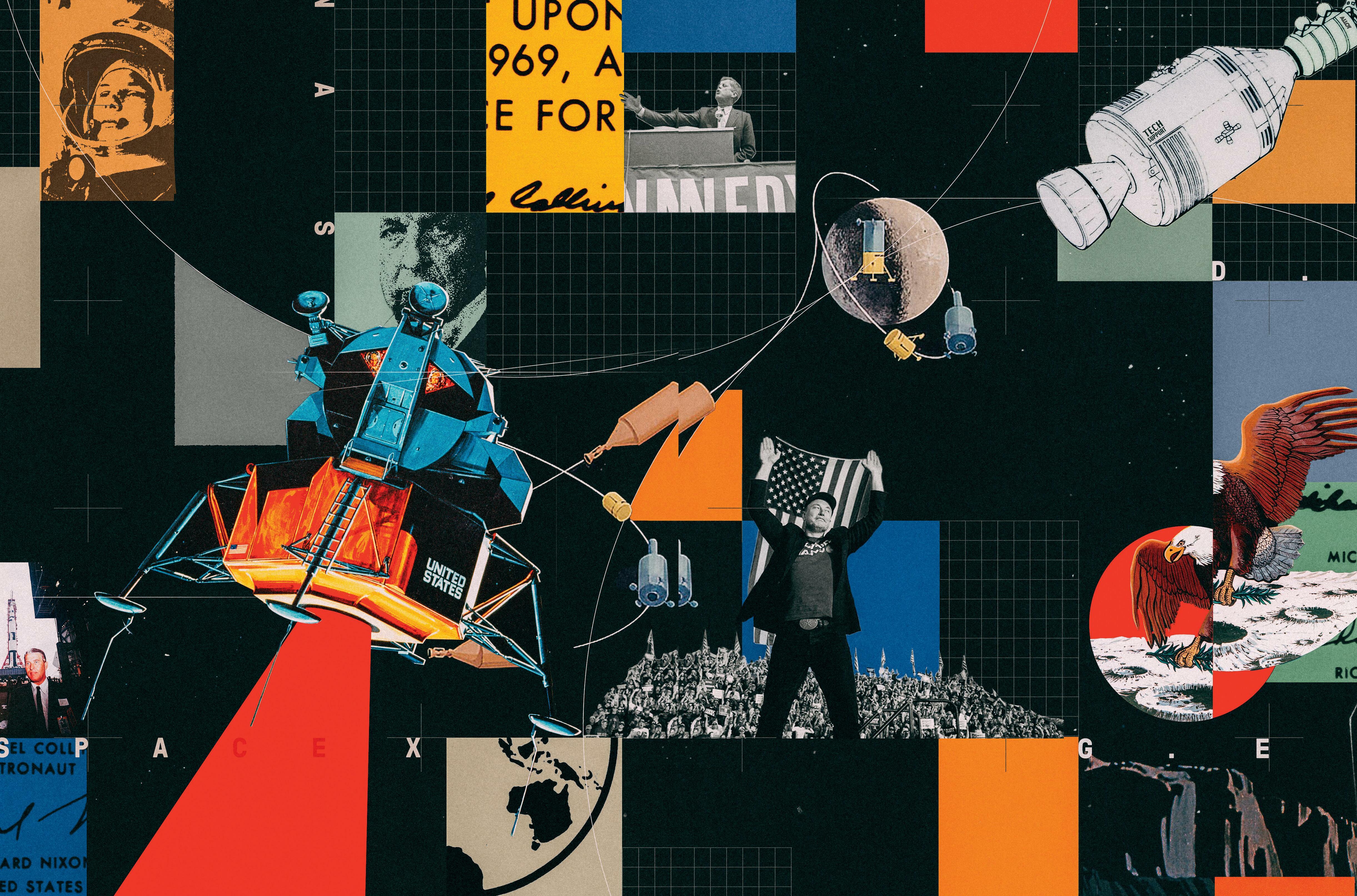
In the beginning, there was the name. A prophet guided Errol Musk to bestow it on his eldest son, or so he claimed. The seer was Wernher von Braun, a German engineer and an inspiration for Stanley Kubrick’s Dr. Strangelove. Though von Braun had built missiles for Hitler and used concentration-camp prisoners for manual labor, the U.S. government recruited him, and eventually brought him to a base in Alabama and tasked him with sending men into orbit, then to the moon.
Von Braun had always dreamed of venturing deeper into the galaxy. Back in 1949, before he emerged as the godfather of the American space program, he spilled his fantasies onto the page, in a novel titled Project Mars. He described how a new form of government would take hold on the red planet: a technocracy capable of the biggest and boldest things. At the helm of this Martian state would sit a supreme leader, known as the Elon.
Whatever the truth of this origin story, Elon Musk has seized on von Braun's prophecy as his destiny. Since the founding of SpaceX in 2002, his business decisions and political calculations have been made with a transcendent goal in mind: the moment when he carries the human species to a new homeland, a planet millions of miles away, where colonists will be insulated from the ravages of nuclear war, climate change, malevolent AI, and all the unforeseen disasters that will inevitably crush life on Earth. Far away from the old, broken planet, a libertarian utopia will flourish, under the beneficent sway of the Elon.


Denne historien er fra September 2025-utgaven av The Atlantic.
Abonner på Magzter GOLD for å få tilgang til tusenvis av kuraterte premiumhistorier og over 9000 magasiner og aviser.
Allerede abonnent? Logg på
FLERE HISTORIER FRA The Atlantic

The Atlantic
You Had to Be There
An emerging field of history asks if we can ever really understand how our forebears experienced love, anger, fear, and sorrow.

23 mins
January 2026

The Atlantic
By the Horns
The week before the biggest bullfight of her career, in Cádiz, Spain, this past July, 24-year-old Miriam Cabas posted a carefully produced video on Instagram.
1 mins
January 2026

The Atlantic
The New German War Machine
After World War II, Germany embraced pacifism as a form of atonement. Now the country is arming itself again.
18 mins
January 2026
The Atlantic
The Eloquence
The prime minister was watching a disaster movie when we found him.
4 mins
January 2026

The Atlantic
What's for Dinner, Mom?
The women who want to change the way America eats
12 mins
January 2026

The Atlantic
How Terror Works
A 1947 German novel explores the sometimes corrosive, sometimes energizing nature of fear.
8 mins
January 2026

The Atlantic
Yesterday's Idea of a Modern Man
Sam Shepard, a self-made cowboy, was also a poet of masculine angst.
7 mins
January 2026

The Atlantic
ACCOMMODATION NATION
America's colleges have an extra-time-on-tests problem.
11 mins
January 2026

The Atlantic
Respect the Drummer
A new history of rock, told through its overlooked heroes
5 mins
January 2026

The Atlantic
THE MOST POWERFUL MAN IN SCIENCE
WHY IS ROBERT F. KENNEDY JR. SO CONVINCED HE'S RIGHT?
42 mins
January 2026
Listen
Translate
Change font size