
Gå ubegrenset med Magzter GOLD
Få ubegrenset tilgang til over 9000 magasiner, aviser og premiumhistorier for bare
Damn You All to Hell!
The Atlantic
|August 2025
How Hollywood taught a generation to fear nuclear + catastrophe
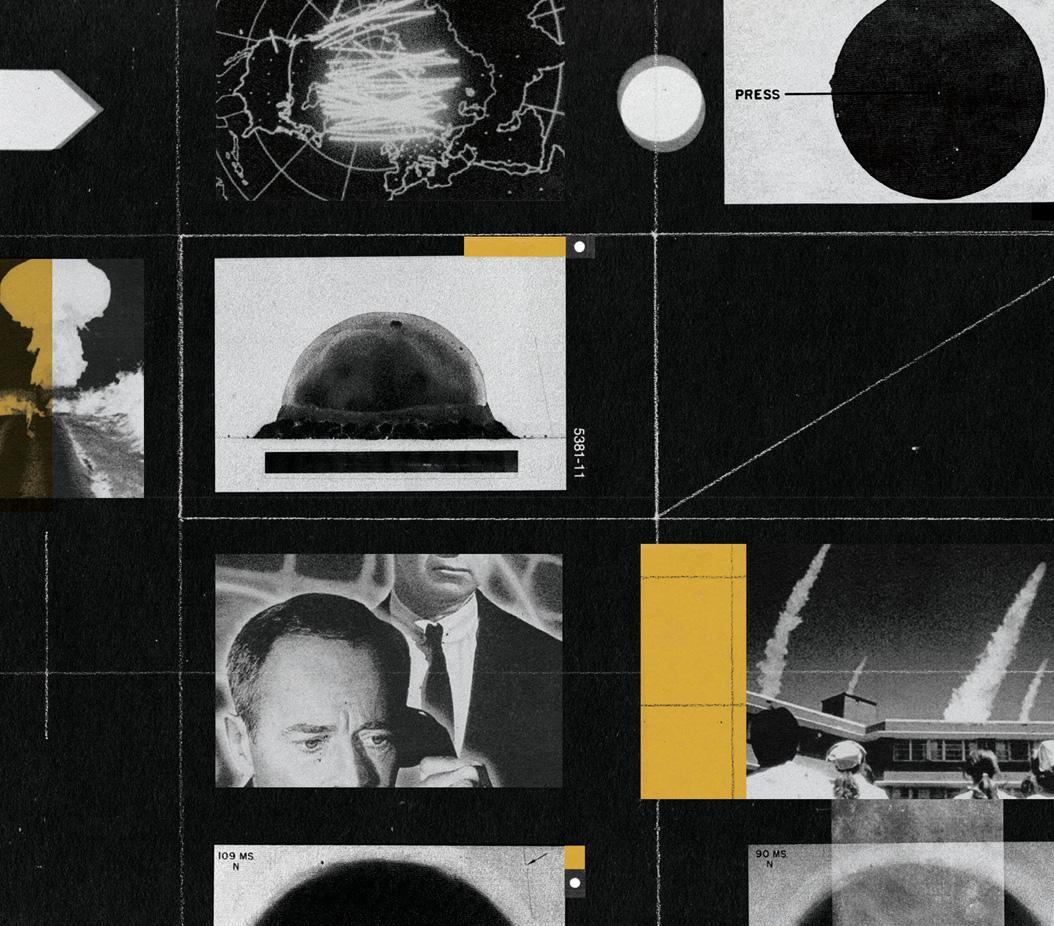
Back in the late 2000s, I was teaching a class on nuclear weapons to undergraduates who had mostly come of age after the fall of the Soviet Union. As I tried to explain what it was like to grow up worrying about a sudden apocalypse, a student raised his hand and said: “What were you so afraid of? I mean, sure, nuclear weapons are bad, but ...” And here he gave up with a puzzled shake of his head, as if to say: What was the big deal?
I paused to think of a better way to explain that the annihilation of the world was a big deal. People who grew up during the Cold War, as I did, internalized this fear as children. We still tell our campfire tales about hiding under school desks at the sound of air-raid sirens. Such things seemed mysterious, and even irrelevant, to my students in the 21st century. And then it occurred to me: They haven't seen the movies.
During the Cold War, popular culture provided Americans with images of (and a vocabulary for) nuclear war. Mushroom clouds, DEFCON alerts, exploding buildings, fallout-shelter signs—these visuals popped up in even the frothiest forms of entertainment, including comic books, James Bond movies, and music videos. The possibility of a nuclear holocaust was always lurking in the background, like the figure of Death hiding among revelers in a Bosch triptych, and we could imagine it because it had been shown to us many times on screens big and small.
Ensuing generations have grown up with their own fears: Terrorism, climate change, and now AI are upending life across the globe, and nuclear war might seem more like a historical curiosity than a concrete threat. But at this moment,

Denne historien er fra August 2025-utgaven av The Atlantic.
Abonner på Magzter GOLD for å få tilgang til tusenvis av kuraterte premiumhistorier og over 9000 magasiner og aviser.
Allerede abonnent? Logg på
FLERE HISTORIER FRA The Atlantic

The Atlantic
You Had to Be There
An emerging field of history asks if we can ever really understand how our forebears experienced love, anger, fear, and sorrow.

23 mins
January 2026

The Atlantic
By the Horns
The week before the biggest bullfight of her career, in Cádiz, Spain, this past July, 24-year-old Miriam Cabas posted a carefully produced video on Instagram.
1 mins
January 2026

The Atlantic
The New German War Machine
After World War II, Germany embraced pacifism as a form of atonement. Now the country is arming itself again.
18 mins
January 2026
The Atlantic
The Eloquence
The prime minister was watching a disaster movie when we found him.
4 mins
January 2026

The Atlantic
What's for Dinner, Mom?
The women who want to change the way America eats
12 mins
January 2026

The Atlantic
How Terror Works
A 1947 German novel explores the sometimes corrosive, sometimes energizing nature of fear.
8 mins
January 2026

The Atlantic
Yesterday's Idea of a Modern Man
Sam Shepard, a self-made cowboy, was also a poet of masculine angst.
7 mins
January 2026

The Atlantic
ACCOMMODATION NATION
America's colleges have an extra-time-on-tests problem.
11 mins
January 2026

The Atlantic
Respect the Drummer
A new history of rock, told through its overlooked heroes
5 mins
January 2026

The Atlantic
THE MOST POWERFUL MAN IN SCIENCE
WHY IS ROBERT F. KENNEDY JR. SO CONVINCED HE'S RIGHT?
42 mins
January 2026
Listen
Translate
Change font size