Prøve GULL - Gratis
The Enduring Legacy
TerraGreen
|January 2025
The Tale of Bhopal Gas Tragedy Waste Disposal after 40 Years
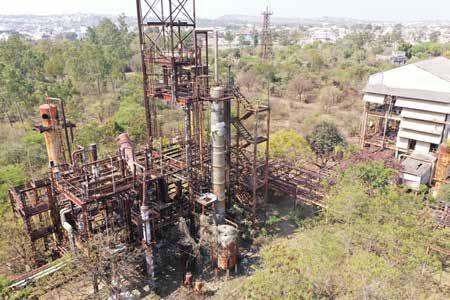
While the immediate devastation of the gas leak on December 2, 1984, was horrific, the true fury of the Bhopal tragedy unfolded in the years that followed. It wasn't just the toxic gas that claimed lives, but the slow poison that seeped into the earth, contaminating the community's foundation. The aftermath proved worse than anticipated. Union Carbide's hazardous waste caused lingering environmental damage, worsening the health crisis. For years, the government ignored to remove the toxic waste, allowing it to poison the soil and groundwater. This led to a silent epidemic, with rising cancer rates, birth defects, and entire generations affected by the toxins. Long years of vicious conflict, battle and outrage came to a whistling end on January 2,2025, when 337 tonnes of methyl isocyanate waste was ultimately sent for incineration to Pithampur. In this article, Stuti Upadhyay tries to find answer to the question: Why did it take 40 years for any meaningful action to be taken to address the waste left behind by the Bhopal Gas Tragedy?
December 2, 1984, it was in the middle of the night when the city of lakes-Bhopal-experienced a devastating nightmare. A deadly cloud of methyl isocyanate (MIC) gas leaked from the Union Carbide Factory located at a distance of 1 km from Bhopal Railway Station. Long years of vicious conflict, battle and outrage came to a whistling end on January 2, 2025, when 337 tonnes of MIC waste was ultimately sent for incineration to Pithampur. The final chapter of disposal took almost 40 years demarking its epilogue at Pithampur Waste Management Pvt. Limited, just 230 kilometres away from Bhopal city.


Denne historien er fra January 2025-utgaven av TerraGreen.
Abonner på Magzter GOLD for å få tilgang til tusenvis av kuraterte premiumhistorier og over 9000 magasiner og aviser.
Allerede abonnent? Logg på
FLERE HISTORIER FRA TerraGreen

TerraGreen
Motor Efficiency
The Silent Catalyst of India's Green Industrial Revolution

4 mins
January 2026

TerraGreen
Beauty That Betrays!
The Quiet Invasion of An Ornamental Plant
3 mins
January 2026

TerraGreen
Farming Innovation Addresses Food Shortages
Also Halves Methane Emissions
4 mins
January 2026

TerraGreen
Aravalli on the Edge
Saving India's Ancient Green Shield from Collapse
3 mins
January 2026

TerraGreen
From Orchard to Table
Apple Picking, Family Time, and Fall Colours
4 mins
January 2026

TerraGreen
Coral Reefs Could Feed Millions
If We Let Them Rebuild
3 mins
January 2026

TerraGreen
Resting on Deodars
How Fallen Trees are Being Reimagined as Urban Assets in Shimla
3 mins
January 2026

TerraGreen
India's Clean-Air Innovation at Risk
Nationwide Assessment by WeNaturalists
2 mins
January 2026

TerraGreen
CNFF-25
Highlights Environmental Concern Amid India's Cultural Heritage
3 mins
January 2026

TerraGreen
Green Farming through Circular Economy
Sustainable Practices for Waste Reduction
8 mins
January 2026
Listen
Translate
Change font size