Prøve GULL - Gratis
The Risk Report
TIME Magazine
|September 29, 2025
JUST THREE MONTHS AGO, ISRAEL and Iran fought a 12-day war that shook the Middle East. Missiles and drones flew in both directions, but with a major assist from the U.S., Israel established dominance of Iran's airspace, repeatedly struck nuclear and military targets across Iran, and killed 30 security commanders and 19 of Iran's nuclear scientists. Iran's retaliation accomplished little that might deter Israel in the future.
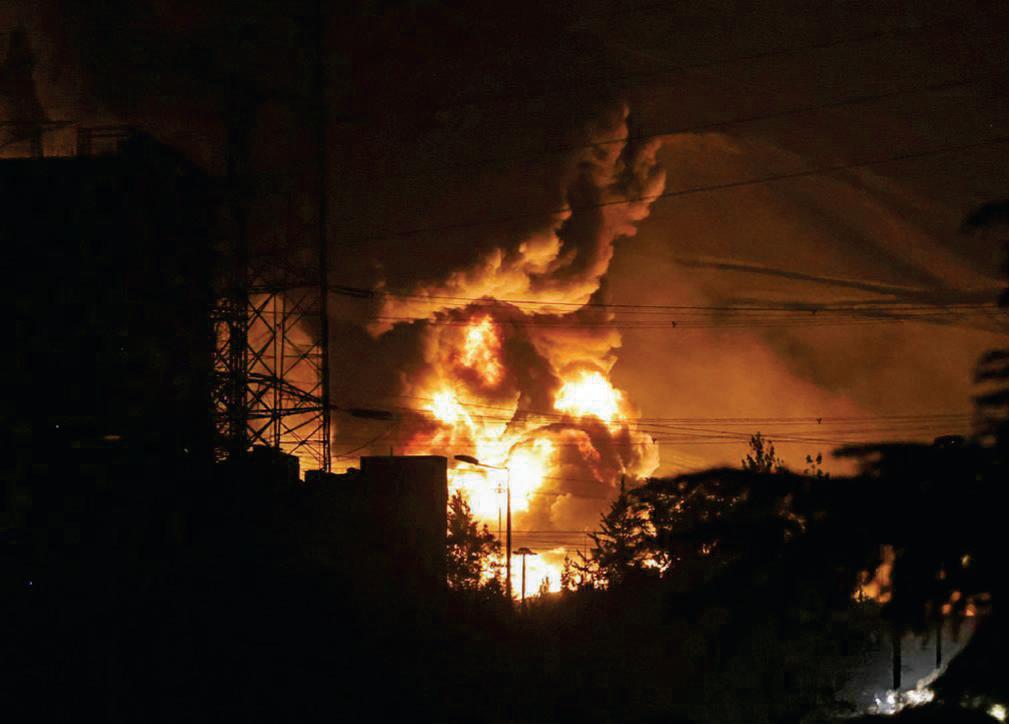
A return to war is unlikely. Though Iran likely retains a stockpile of enriched uranium and the means to rebuild enrichment capability, the Israeli-American bombing campaign ensured it is now several years away from being able to produce a nuclear weapon. Israel has also essentially normalized direct strikes inside Iran's borders and demonstrated its ability to inflict significant damage to the regime. Israel can carry out limited “mow the grass” operations if Iran makes sudden progress in rebuilding its nuclear program, and it can strike more missile bases and air-defense systems to keep Iran's defenses down.
For its part, Iran can't afford war. It will retaliate if and when Israel strikes again, but the response will be carefully calibrated to avoid a dangerous escalation it is less able to fend off. Iran is in a far weaker geopolitical position today than it was before Oct. 7, having lost much of its allied network—from Hamas and Hezbollah in Lebanon to Bashar Assad in Syria—that Tehran had long relied on to deter Israel and project power regionally.


Denne historien er fra September 29, 2025-utgaven av TIME Magazine.
Abonner på Magzter GOLD for å få tilgang til tusenvis av kuraterte premiumhistorier og over 9000 magasiner og aviser.
Allerede abonnent? Logg på
Listen
Translate
Change font size