Prøve GULL - Gratis
Lisa SU
TIME Magazine
|December 30, 2024
It's the day after the U.S. presidential election, and like much of the nation she was awake until the early hours, transfixed as the results came in, only tearing herself away once it became clear that Donald Trump had won.
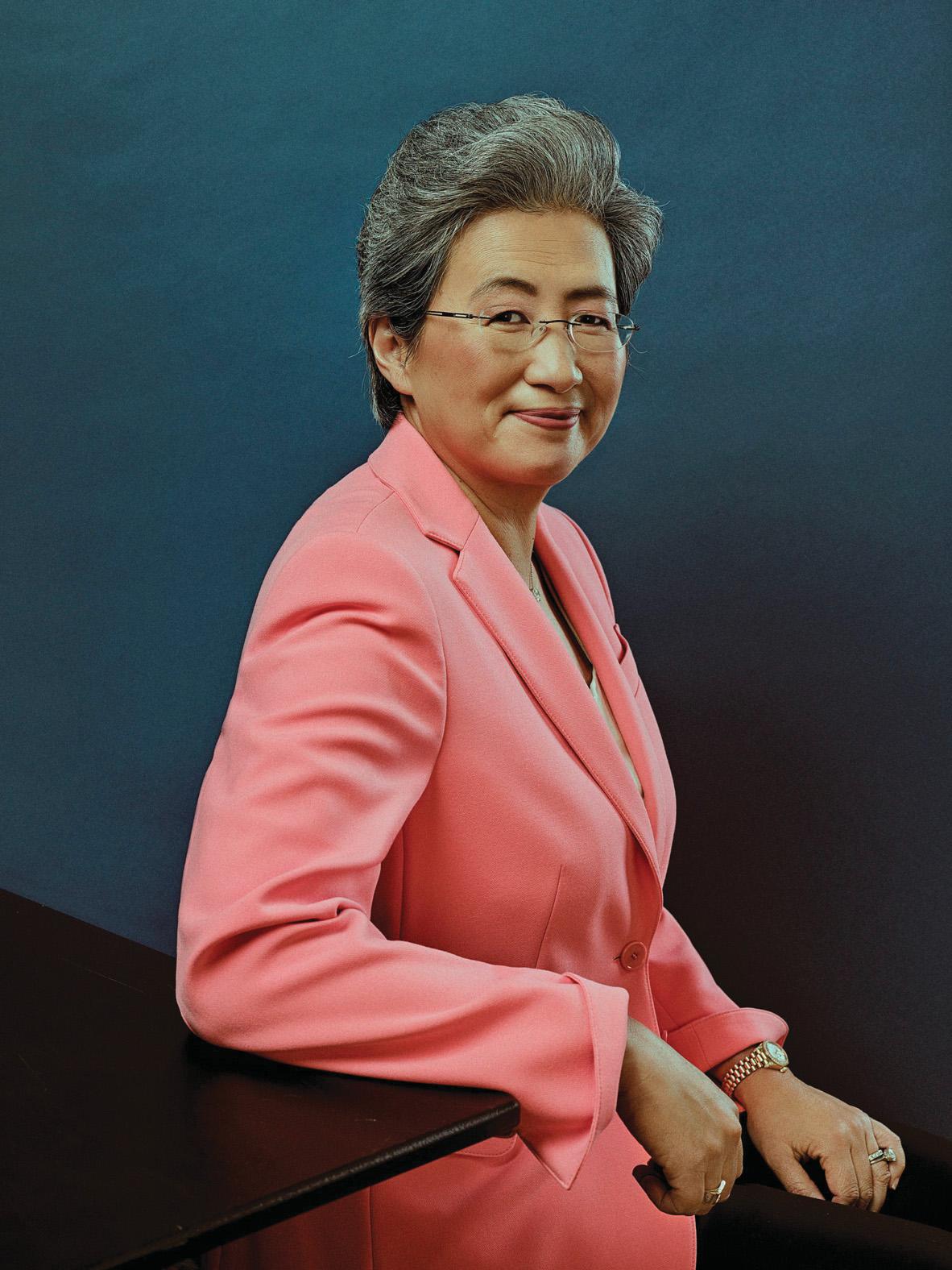
“I wanted to know,” Su explains as she takes her place at the head of a conference table in the Santa Clara, Calif., headquarters of Advanced Micro Devices (AMD). “It’s relevant information.”
The identity of the next President is pertinent news to most of America’s CEOs, but few more so than the leader of a top semiconductor company. Semiconductors, or chips, are the engines of our computers, phones, cars, internet services, and—increasingly—our artificial intelligence (AI) programs. The relentless rise of the chip over the past seven decades has grown economies, transformed lives, and helped cement the U.S., where most chips get their start, as the globe’s postwar hegemon. AMD is one of the world’s leading designers of the CPU chips that power both personal computers and data centers, the vast warehouses of servers that make possible the likes of Google, Meta, Amazon, and Microsoft. It’s also a top designer of graphics processing units, or GPUs, the specialized chips used to create and run AI programs like ChatGPT. When you send an email, stream a movie, buy something online, or chat with an AI assistant, chances are an AMD chip is providing some of the computing power needed to make that happen. In November, a supercomputer that runs on AMD chips displaced another AMD-based machine to become the world’s most powerful.


Denne historien er fra December 30, 2024-utgaven av TIME Magazine.
Abonner på Magzter GOLD for å få tilgang til tusenvis av kuraterte premiumhistorier og over 9000 magasiner og aviser.
Allerede abonnent? Logg på
Listen
Translate
Change font size