
Gå ubegrenset med Magzter GOLD
Få ubegrenset tilgang til over 9000 magasiner, aviser og premiumhistorier for bare
The language of grief
THE WEEK India
|June 29, 2025
As I write, I have just landed in London on Air-India — flying the same airline, to the same destination and on the same date and time as the ill-fated passengers who perished in Ahmedabad. I travelled to speak at the British Library under the auspices of the Jaipur Literary Festival. My very first talk was about language and the power of words. Yet words failed me at the news of the 241 lives lost on the plane and the 5 more who died on the ground. The language of grief, suffering, and loss is a landscape of shadows, often inadequate to the profound desolation it attempts to articulate. Language is made to describe what is or could be; it falters before an absence, a stuttering whisper in the face of an unimaginable void.

Literature has long grappled with the profound human experience of death, offering glimpses into its unplumbed depths. Yet it has only confirmed the inherent limitations of words. How does one truly describe the tearing of the soul, the visceral ache of an absence that permeates every fibre of one’s being? Phrases like “heartbroken,” “devastated,” or “condolences” become commonplace, yet feel hollow against the monumental reality of personal sorrow. The communal rituals of mourning often rely on shared, almost ritualistic language, but beneath this veneer of collective sympathy, the individual wrestles with an incommunicable anguish. C.S. Lewis, in A Grief Observed, captures this when he writes, “No one ever told me that grief felt so like fear.” His struggle to find a new lexicon for his bereavement after the death of his wife underscores the inadequacy of language. He grapples with the “cold, grey, level-headed, and ... all-embracing pain,” illustrating how grief often demands a radical redefinition of one’s emotional vocabulary.


Denne historien er fra June 29, 2025-utgaven av THE WEEK India.
Abonner på Magzter GOLD for å få tilgang til tusenvis av kuraterte premiumhistorier og over 9000 magasiner og aviser.
Allerede abonnent? Logg på
FLERE HISTORIER FRA THE WEEK India

THE WEEK India
WHERE THE STORM NEVER REALLY PASSES
Guantánamo Bay, once a symbol of the ‘war on terror’, has emerged as a flashpoint in Donald Trump’s immigration battles, exposing deep tensions between America’s security, legality and moral commitments

10 mins
December 21, 2025

THE WEEK India
Moderation is the key
Most people do not believe me, but I am a moderate man.
3 mins
December 21, 2025

THE WEEK India
OCEAN THERAPY
The Modi-Putin summit unveils a cooperation strategy that will rewire sea trade routes and expand India's maritime connect to the Arctic
3 mins
December 21, 2025

THE WEEK India
Indian Army men fighting for the British against the Japanese were also patriots
Readers in India may be misled by the title of Gautam Hazarika's new book, The Forgotten Indian Prisoners of World War II: Surrender, Loyalty, Betrayal and Hell. It is not about the INA prisoners who were put on trial in the Red Fort by the British. This book is about those Indian soldiers who fought the Japanese in Singapore, Malaya and Burma alongside the British, and who had to surrender, were taken prisoner, put to torture and hard labour by the Japanese, refused to join the INA, and faced death or managed to escape. While recounting their stories, Hazarika also gives an insight into the INA movement. Edited excerpts from an interview with the author:
4 mins
December 21, 2025

THE WEEK India
CHAT WITH NEHRU, QUERY KALAM...
The Prime Ministers' Museum & Library showcases the life and contributions of prime ministers and nation-builders
3 mins
December 21, 2025

THE WEEK India
The art of shifting gears in investing
“Hope is not a strategy,” Hayes growls in one memorable scene, dismissing a teammate’s starry-eyed optimism.
3 mins
December 21, 2025

THE WEEK India
Trouble on the tarmac
It is not IndiGo but Indian aviation that has become too big to fail
4 mins
December 21, 2025

THE WEEK India
SHUX AND BLUE MARBLE
THE 18 DAYS IN SPACE MIGHT HAVE MADE HIM A HOUSEHOLD NAME, BUT GROUP CAPTAIN SHUBHANSHU SHUKLA IS AS GROUNDED AS EVER. AND BEFORE HE SUITS UP FOR HIS NEXT MISSION, THE WEEK'S MAN OF THE YEAR SHARES STORIES FROM HIS LIFE AND SPACE, INCLUDING HOW HE BECAME A 'WATER BENDER'
9 mins
December 21, 2025
THE WEEK India
The parietal lobe
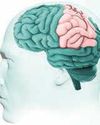
If the frontal lobe is where we decide what to do, the parietal lobe is where we understand where we are. It is the brain's internal GPS, the quiet navigator that lets you put your hand exactly where your teacup is, find the edge of a staircase without staring at it, or scratch the correct side of your head when it itches. When it works well, we move through life gracefully. When it falters, life becomes slapstick comedy.
2 mins
December 21, 2025

THE WEEK India
Area of the globe? Pie is cubed
Floating in his private pool, China's helmsman Mao Zedong shared his strategic vision with visiting Soviet strongman Nikita Khrushchev in 1958: \"You look after Europe, and leave Asia to us.\" Obviously, he expected the US to withdraw into its prewar Monroe world of the Americas, thus making the world tripolar.
2 mins
December 21, 2025
Listen
Translate
Change font size