Prøve GULL - Gratis
PRECIOUS FREEDOMS
THE WEEK India
|July 21, 2024
There is little comparison with China on civil liberties. But India could heed the lessons
On June 3, 1989, the Chinese government sent tanks, armoured vehicles, soldiers and armed police to clear Tiananmen Square, which is among the world's largest public spaces, and its periphery off protesters and bystanders. A large number of people were killed overnight and until next evening.
Thousands had gathered from across the country in the weeks leading up to the crackdown to demand political reforms, support the protests or witness what turned out to be one of the 20th century's most significant events. The Communist Party of China has since done a lot to keep any challenge to its rule, even notional, at bay.
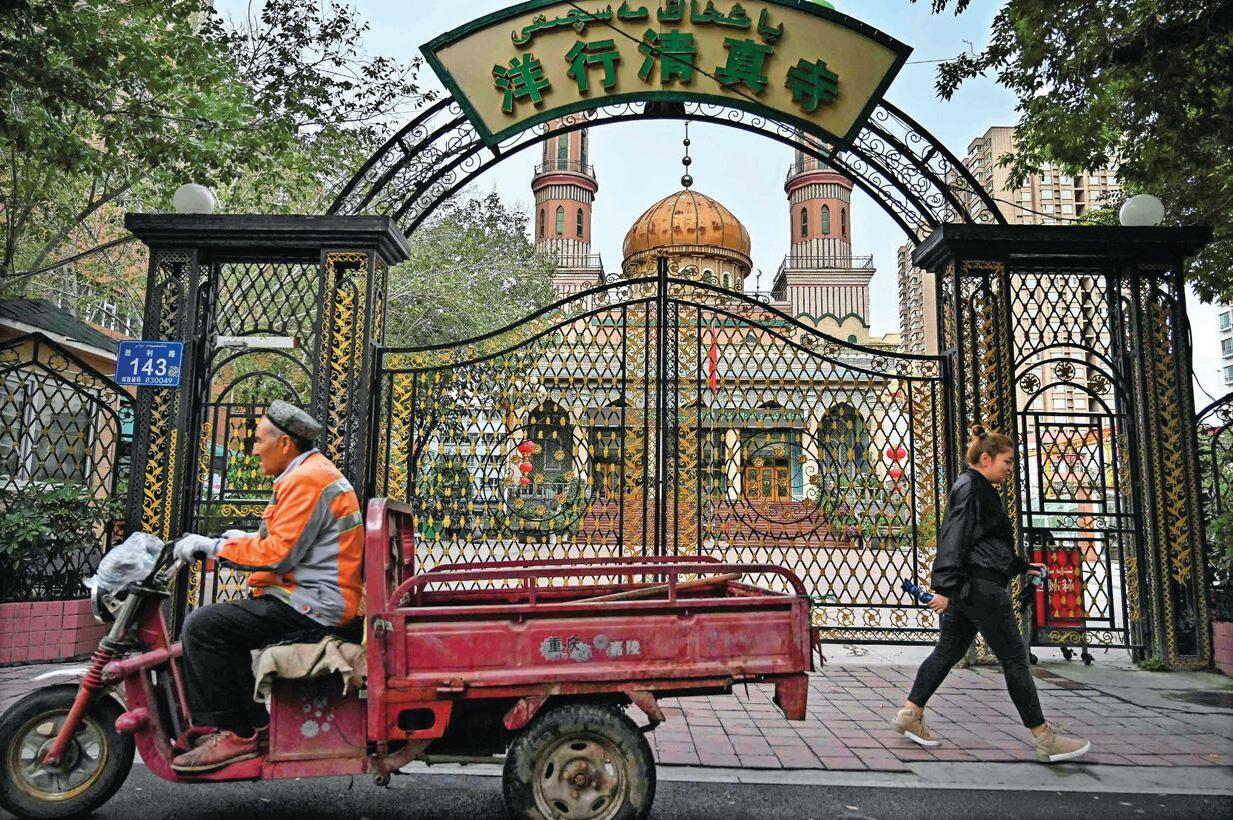
China has witnessed a vigorous crushing of civil liberties over the past decade. India saw the freedoms of speech and faith come under strain during a similar period. While the two countries cannot be compared on this matrix, India could heed the lessons from China.
This year, the Hong Kong police detained an artist for drawing "8964"-a reference to the date of the Tiananmen Square crackdown in the air. Others were arrested for gestures such as turning on their phone torch, associated with a vigil that is no longer allowed. The commemoration is barred in China. Under a national security law following the pro-democracy protests in 2019-20, Hong Kong is being made to resemble the mainland. Thousands, mostly youth, were arrested after that. Tiananmen Mothers, an NGO of the families of students killed that summer in Beijing, are not allowed to grieve in public.
So far, the party has termed the Mao-era Cultural Revolution (1966-76) a turbulent phase. It has not acknowledged 1989 more than a “political incident”.

Denne historien er fra July 21, 2024-utgaven av THE WEEK India.
Abonner på Magzter GOLD for å få tilgang til tusenvis av kuraterte premiumhistorier og over 9000 magasiner og aviser.
Allerede abonnent? Logg på
FLERE HISTORIER FRA THE WEEK India
THE WEEK India
Fire, smoke and soaring worries
The PSLV C-62 fiasco is a stress test of ISRO's technical systems, organisational processes and market credibility

7 mins
January 25, 2026

THE WEEK India
The dinosaur and the dictator
Dictators have a few things in common with T. rex, the king of dinosaurs. Both dominate their sphere of influence through brute force.
2 mins
January 25, 2026
THE WEEK India
We are developing master plans for tourism destinations
Across the world, the tourism development is more about providing seamless connection and basic infra like transportation, lodging and boarding.
2 mins
January 25, 2026

THE WEEK India
A TIGHTROPE WALK
As small-caps are yet to find valuation comfort, 2026 would be a challenging year for them
4 mins
January 25, 2026

THE WEEK India
ON THIN ICE
With the intensification of great-power rivalries in the region, Greenland's strategic and resource potential has become salient
5 mins
January 25, 2026

THE WEEK India
Elgin, Ephesus and Erdogan
Lord Elgin was wrong. Not the eighth earl whom we know as a viceroy of India, but his more famous father, the seventh who had carted away the Parthenon Marbles from Athens during 1802-1812. Elgin feared the Ottoman Turks, who had occupied Greece, might vandalise them.
2 mins
January 25, 2026
THE WEEK India
Art at the heart
The sixth edition of the Kochi-Muziris Biennale reclaims its legacy
6 mins
January 25, 2026

THE WEEK India
BENIGN PROSTATIC HYPERPLASIA (BPH): Understanding Symptoms, Diagnosis & Modern Treatment Options
Benign Prostatic Hyperplasia (BPH) is a very common medical condition affecting aging men, particularly those above 50 years.
2 mins
January 25, 2026
THE WEEK India
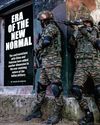
ERA OF THE NEW NORMAL
The confrontations with China and Pakistan have added another dimension to the ever-evolving nature of the Indian military
5 mins
January 25, 2026

THE WEEK India
Affordable CAR-T Therapy Brings New Hope for Blood Cancer Patients in India
For thousands of Indians battling blood cancers, a once-unimaginable dream is fast becoming reality. Cutting-edge CART cell therapy a breakthrough treatment that uses a patient's own immune system to fight cancer is now available in India at a fraction of global costs, offering renewed hope to patients with advanced disease.
1 mins
January 25, 2026
Listen
Translate
Change font size