Prøve GULL - Gratis
COUNTDOWN TO CHAOS
THE WEEK India
|May 10, 2026
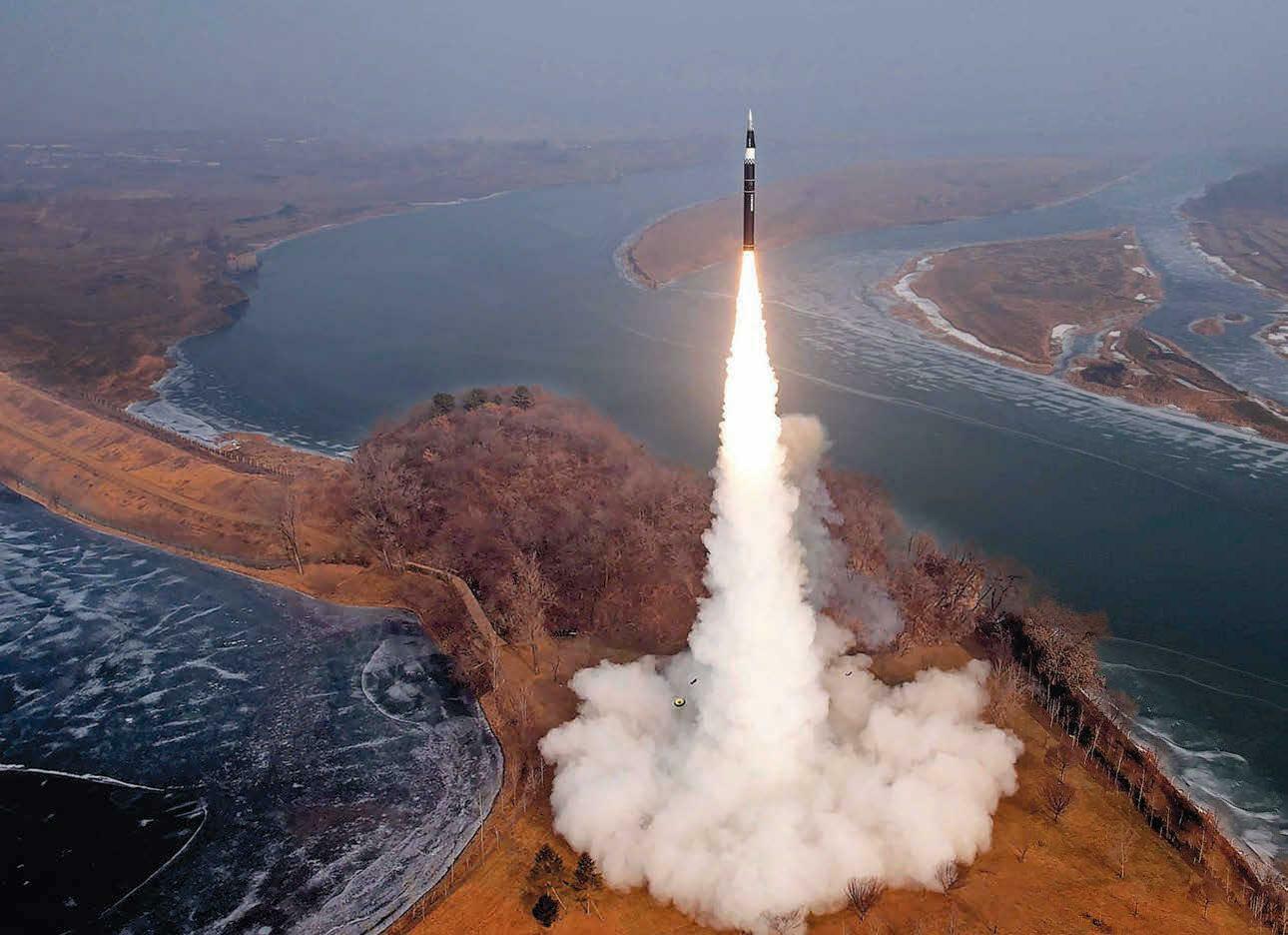
From the collapse of a key nuclear treaty to the Iran war, the world is drifting towards an unregulated nuclear competition
On May 22, 1972, Richard Nixon stepped off Air Force One in Moscow and made history as the first American president to set foot on Soviet soil. Only a decade earlier, the Cuban missile crisis had brought the two superpowers to the edge of a nuclear war. Now Nixon and Soviet leader Leonid Brezhnev had chosen a different path, to put an end to the nuclear arms race.
But putting a ceiling on the most dangerous weapons ever built was not an easy matter for either man.
Nixon was a lifelong anti-communist, sitting down to negotiate limits with the very empire he had spent a career denouncing. Brezhnev, for his part, was neither a liberal reformer nor a man given to sentimentality.
After two days of talks, Brezhnev settled on an unusual diplomatic manoeuvre. He grabbed Nixon by the arm, took the wheel of the 1972 Cadillac Eldorado he had just been gifted by the American president, and drove out of the Kremlin gates, leaving the Secret Service, in Henry Kissinger's words, "beside themselves". Stripped of advisers and protocol, the two leaders found space for a conversation the formal table had never allowed. Forty-eight hours later, in the gilded St Catherine Hall, Nixon sat across from Brezhnev and signed the Strategic Arms Limitation Talks Agreement, the first treaty in history to cap nuclear weapons.
More than five decades on, those guardrails are gone. New START, the last bilateral nuclear treaty between the US and Russia, lapsed in February, removing the final legally binding limits on the world's two largest nuclear arsenals. Together they control roughly 90 per cent of the global nuclear inventory-more than 10,000 warheads, enough to devastate organised human civilisation several times over. For arms control experts, the treaty's demise is not merely the end of a single agreement, but the collapse of five decades of structured nuclear restraint.

Denne historien er fra May 10, 2026-utgaven av THE WEEK India.
Abonner på Magzter GOLD for å få tilgang til tusenvis av kuraterte premiumhistorier og over 9000 magasiner og aviser.
Allerede abonnent? Logg på
FLERE HISTORIER FRA THE WEEK India
THE WEEK India
MASSIVE ADMISSION INTAKE MUST BE REWORKED
INTERVIEW: Professor Onkar Singh former governing board member, IIT Kanpur and IIT (BHU) Varanasi

2 mins
July 05, 2026

THE WEEK India
KNOWLEDGE WARRIORS
A simple mantra—what problem can I solve—is reshaping college education in India
5 mins
July 05, 2026

THE WEEK India
IN GREEN WE TRUST
Inside the Congress leadership's secretive green paper system that quietly drives crucial decisions
3 mins
July 05, 2026

THE WEEK India
Flower power
Thanks to government policy and scientific intervention, Bhaderwah’s lavender fields have become the epicentre of India’s Purple Revolution. The next step: going global
4 mins
July 05, 2026

THE WEEK India
The pineal gland
The first thing I noticed was that he never looked me in the eye.
3 mins
July 05, 2026
THE WEEK India
A centennial gift for the naked dancer
For a hundred years, she danced with naked abandon, and the world of antiquarians enjoyed watching her.
2 mins
July 05, 2026

THE WEEK India
BUILT DIFFERENT
India’s premier technology institutes are rethinking what an engineer should be Darling, can you buy a pint of milk,” asked the engineer's wife.
4 mins
July 05, 2026

THE WEEK India
The return of trust
A new, evolving framework for returning money to victims is reshaping the Enforcement Directorate’s response to financial fraud
7 mins
July 05, 2026

THE WEEK India
HOW YOU THINK MATTERS FAR MORE THAN WHAT YOU KNOW
Sunil Chemmankotil country manager, Adecco India
2 mins
July 05, 2026

THE WEEK India
THE LEGEND IN SLO-MO
His brace against Uzbekistan notwithstanding, Cristiano Ronaldo is searching for the speed and mobility that made him one of the greatest attackers of all time
7 mins
July 05, 2026
Listen
Translate
Change font size