
Gå ubegrenset med Magzter GOLD
Få ubegrenset tilgang til over 9000 magasiner, aviser og premiumhistorier for bare
South's Tax Revolt
Outlook
|April 11, 2025
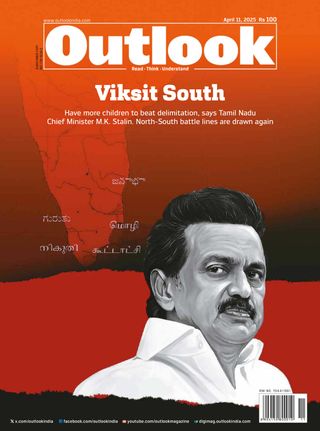
The objection of southern states over tax devolution alludes to broader challenges in India’s federal structure exacerbated by the impending delimitation exercise
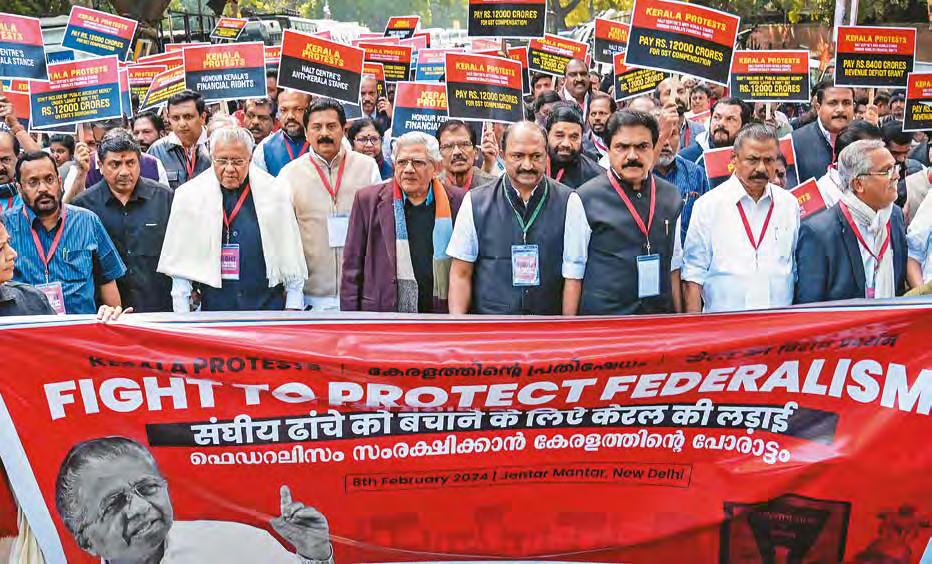
WHEN Karnataka Chief Minister Siddaramaiah landed in Delhi last year, it wasn’t for a routine meeting. He arrived with a mission, and a protest. Flanked by finance officials and party leaders, he led a massive demonstration in the capital, demanding a fairer share of central tax revenues for southern states. The message was loud and clear: the South, which contributes significantly to India’s economy, feels shortchanged in tax devolution.
At the heart of the protest was what the Karnataka government called a “fiscal injustice.” Despite being one of the highest tax-contributing states, Karnataka’s share in central devolution had dropped sharply. Tamil Nadu, Kerala, Andhra Pradesh and Telangana also voiced similar concerns. The numbers tell a striking story. In the Indian Union, the southern states are economic powerhouses, yet they receive proportionally less in central transfers than many northern states.
“This is how taxes work. One would want to give funds to those states that need them the most,” says Alok Prasanna Kumar, co-founder of the Delhi-based Vidhi Centre for Legal Policy, an independent think-tank specialising in legal research to make better laws and improve governance for public good.
The simmering discontent over tax distribution is not just an economic issue; it has now boiled down to a political and constitutional flashpoint. It raises fundamental questions about fairness in India’s federal structure. And with the looming 2026 delimitation exercise, which will redraw parliamentary constituencies based on population, the battle over revenue devolution is taking on even greater urgency.
The South Tax Movement

Denne historien er fra April 11, 2025-utgaven av Outlook.
Abonner på Magzter GOLD for å få tilgang til tusenvis av kuraterte premiumhistorier og over 9000 magasiner og aviser.
Allerede abonnent? Logg på
FLERE HISTORIER FRA Outlook

Outlook
The Big Blind Spot
Caste boundaries still shape social relations in Tamil Nadu-a state long rooted in self-respect politics

8 mins
December 11, 2025

Outlook
Jat Yamla Pagla Deewana
Dharmendra's tenderness revealed itself without any threats to his masculinity. He adapted himself throughout his 65-year-long career as both a product and creature of the times he lived through
5 mins
December 11, 2025

Outlook
Fairytale of a Fallow Land
Hope Bihar can once again be that impossibly noisy village in Phanishwar Nath Renu's Parti Parikatha-divided, yes, but still capable of insisting that rights are not favours and development is more than a slogan shouted from a stage
14 mins
December 11, 2025

Outlook
The Lesser Daughters of the Goddess
The Dravidian movement waged an ideological war against the devadasi system. As former devadasis lead a new wave of resistance, the practice is quietly sustained by caste, poverty, superstition and inherited ritual
2 mins
December 11, 2025

Outlook
The Meaning of Mariadhai
After a hundred years, what has happened to the idea of self-respect in contemporary Tamil society?
5 mins
December 11, 2025

Outlook
When the State is the Killer
The war on drugs continues to be a war on the poor
5 mins
December 11, 2025

Outlook
We Are Intellectuals
A senior law officer argued in the Supreme Court that \"intellectuals\" could be more dangerous than \"ground-level terrorists\"
5 mins
December 11, 2025
Outlook
An Equal Stage
The Dravidian Movement used novels, plays, films and even politics to spread its ideology
12 mins
December 11, 2025
Outlook
The Dignity in Self-Respect
How Periyar and the Self-Respect Movement took shape in Tamil Nadu and why the state has done better than the rest of the country on many social, civil and public parameters
5 mins
December 11, 2025

Outlook
When Sukumaar Met Elakkiya
Self-respect marriage remains a force of socio-political change even a century later
7 mins
December 11, 2025
Listen
Translate
Change font size