Prøve GULL - Gratis
Enduring Embers
Outlook
|September 01, 2025
What has made Sholay infallible in the public imagination? What makes the film tick even after 50 years of its release?
1975 remains a watershed moment in India's political history. At the heart of it lies the Emergency, a post-independence political crisis in the country like no other. Indira Gandhi, the then Prime Minister of India, had applied emergency powers across the country, trampling on democracy, curtailing civil liberties, and censoring the press completely. It was the twenty-eighth year of India's independence, and the nation was already hit by unemployment, inflation and a deep and irrevocable trust deficit towards the system.
Away from the 'political', the Hindi film industry, recognised today as the 'soft power of India', was having its moment, marked by a diverse slate of films that would go on to influence the next decades of storytelling. Some of its memorable classics, including Deewar, Sholay and Aandhi were produced in 1975. Five decades later, Sholay, directed by Ramesh Sippy, holds a pedestalled position in India's otherwise shrunken public memory. From its initial glum reception to the unprecedented frenzy that led to continuous screenings at Mumbai's Minerva cinema for the next five years and at Delhi's Plaza for the next two years, the film sparked a mania hitherto unseen. The only other instance of this level of popularity up until then had been the Ashok Kumar starrer Kismet (1943), which played close to four years at Kolkata's Roxy cinema.
So, what has made Sholay infallible in the public imagination? What makes it tick even today? The most simplistic answer would be—Sholay reflected the then India, and traces of that linger today. The film's 50th birthday is a perfect moment to break it down.
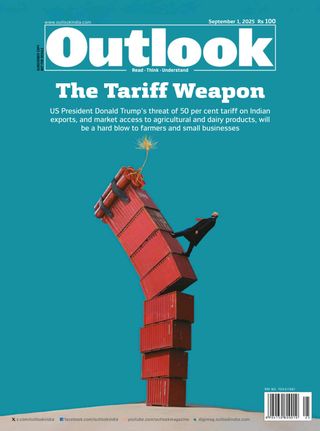

Denne historien er fra September 01, 2025-utgaven av Outlook.
Abonner på Magzter GOLD for å få tilgang til tusenvis av kuraterte premiumhistorier og over 9000 magasiner og aviser.
Allerede abonnent? Logg på
FLERE HISTORIER FRA Outlook

Outlook
Get the Right Partner
The broking industry is now in a price-war phase, but cost is no longer the key differentiator. The choice will depend on how you plan to use a broking platform

4 mins
July 06, 2026

Outlook
Balanced Fertilizer Push for India
As India faces fertilizer import shocks; Deepak Shah, Chairman of CCFI calls for shift to high NUE solutions for food security and growth.
2 mins
July 06, 2026

Outlook
India’s Anaemia Paradox
From disputed estimates to hidden causes, India’s anaemia story is entering a new phase, one that could reshape how the country understands and addresses a condition affecting millions
5 mins
July 06, 2026

Outlook
Record Placements Anchor PIMR Legacy
Prestige Institute of Management and Research, Indore (Deemed to be University): Anchoring Three Decades of Academic Vanguard and Frontier Leadership
3 mins
July 06, 2026
Outlook
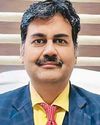
Clinical Excellence in High precision Radiation Therapy
Driven by the conviction that healing begins with humanity, radiation oncologist Dr. Amit Jain has impacted countless lives
2 mins
July 06, 2026

Outlook
A Paradise Worth Protecting
Ancient rainforests, endemic and rare mammals, birds and reptiles, exotic species of trees, breathtaking corals and indigenous tribes... Great Nicobar is home to all this and a lot more
5 mins
July 06, 2026
Outlook
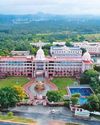
Your Future Starts Here
Adichunchanagiri University (ACU), nurturing visionary thinkers, global leaders, and bold entrepreneurs who are ready to drive impact in a fast-evolving digital economy
3 mins
July 06, 2026

Outlook
Building a Sustainable Airport Ecosystem in Bengaluru
At Kempegowda International Airport Bengaluru (BLR Airport), sustainability is a guiding philosophy shaping infrastructure, operations, growth, resilience and workplace culture.
4 mins
July 06, 2026
Outlook
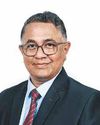
Intelligent Imaging for Smarter Healthcare
Dilip Bhosale, shares with Outlook, how Agfa Radiology Solutions is leveraging advanced digital technologies, workflow automation and global expertise to shape the future of diagnostic imaging in India in conversation with Aditi Chakraborty
2 mins
July 06, 2026

Outlook
Advancing the Future of Oncology in Eastern India
A champion of accessible and patient-centred cancer care, Dr Soma Mukhopadhyay is leading NCRI Hospital towards new standards of excellence in oncology
2 mins
July 06, 2026
Listen
Translate
Change font size