Prøve GULL - Gratis
A Difficult and Necessary Place
Outlook
|August 21, 2025
Instead of reforming mental hospitals, India is shutting them down
THE year was 1857. On the 11th of May, a straggling bunch of mutineers were coming from the not-so-distant city of Meerut, approaching the gates of the walled city of Delhi. The first ‘official’ structure they see is the mental hospital. This is outside the gates of the city, by the banks of the Yamuna, approximately where the Maulana Azad Medical College stands today. Remember that the river used to flow where the newspaper offices are located today. The significance of the date will escape nobody.
This was the first act of rebellion in India’s war of Independence—the ransacking of the mental hospital of Delhi and the ‘liberation’ of the 100-odd inmates of the hospital. History has not been kind either to the institution or its inhabitants. This act of rebellion is perhaps not celebrated as it should be, and what is completely missing is the fate of those who were liberated from the hospital. One record says “...all the patients either escaped or were set free, and were never recovered. In all probability the greater number of these perished miserably in the subsequent siege of Delhi or in the fighting before or within the walls of the city.”
This remains a defining characteristic of the mental hospital across generations.
The mental hospital remains a part of cultural discourse throughout the history of India. It may be of interest to students of literature that Saadat Hasan Manto, arguably one of the greatest of storytellers, locates the iconic tale of Toba Tek Singh in the Lahore mental hospital. The tale of the partitioning of the hospital in Manto’s story is based on a historical fact. Fiction sometimes is based on strange histories.
The story of Tezpur also needs recounting.
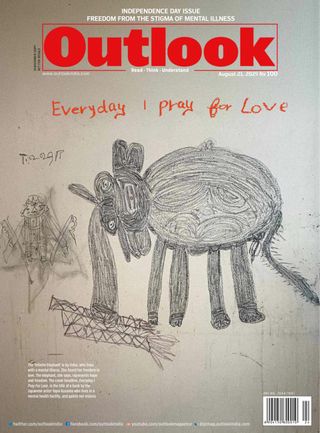

Denne historien er fra August 21, 2025-utgaven av Outlook.
Abonner på Magzter GOLD for å få tilgang til tusenvis av kuraterte premiumhistorier og over 9000 magasiner og aviser.
Allerede abonnent? Logg på
FLERE HISTORIER FRA Outlook

Outlook
Hating Dating
For many women, dating in their 30s and 40s is defined less by romance than by exhaustion, confusion and a sense of emotional attrition

2 mins
February 21, 2026

Outlook
Rage of Betrayals
THIS is a popular poem often shared when anyone talks of the 4B movement in South Korea. The women in this movement boycott the world of men; boycott heterosexual marriage, relationships, sex, and giving birth.
2 mins
February 21, 2026

Outlook
Class and Caste
Caste hierarchies continue to exist in everyday life and across campuses. Due to the persistence of caste in schools and colleges, long believed to be places for upward mobility and rational thought, these institutions end up becoming spaces where questions of \"merit\", cultural capital, language and access-or the lack of thereof-are highlighted and ridiculed. The discrimination persists from Kashmir to Kerala. From delayed degrees and stalled promotions to verbal abuse, professional isolation, and sometimes death, these case studies underscore not isolated instances but a pattern
18 mins
February 21, 2026

Outlook
The Misuse Myth
A close look at reported cases over the past ten years shows that there is no pattern of rampant misuse of the SC/ST Act in universities or higher education institutions
6 mins
February 21, 2026
Outlook
The Higher, The Lower
What is clear is that the entrenched caste hierarchy feels that power is slipping out from their grasp
6 mins
February 21, 2026
Outlook
Writing is Acting by Another Name
My wife spots him first while my attention is focused on the bucket of theatre popcorn (medium, salt and caramel mix). I look up and there he is. Pico Iyer, great travel writer, essayist, novelist, columnist, humanist, and in recent years, friend and correspondent. While the rest gasp when Timothee Chalamet appears in Marty Supreme, we gasp when Pico does.
3 mins
February 21, 2026

Outlook
Sins of Savarnatva
The upper castes believe that the UGC regulations are a death knell to their own existence
6 mins
February 21, 2026

Outlook
Invisible Labour, Visible Costs
Women shoulder disproportionate emotional and domestic work, shaping how they view intimacy and relationships
2 mins
February 21, 2026

Outlook
Between textbooks and court orders
From first choice to uncertainty as HIMSR-Jamia Hamdard dispute leaves students stranded
5 mins
February 21, 2026

Outlook
Aggressive Victimhood Versus Predictable Protests
The current controversy around the UGC regulations is meant neither to promote social justice and equity nor hurt the interests of the dominant castes. It's meant for the two to be at loggerheads and further consolidate their support behind the BJP-RSS combine
5 mins
February 21, 2026
Listen
Translate
Change font size