Prøve GULL - Gratis
Another country
New Zealand Listener
|July 8 - 14, 2023
Norman Kirk's death in office drew a veil over a fevered period of reform. How differently might New Zealand have evolved had he lived longer?
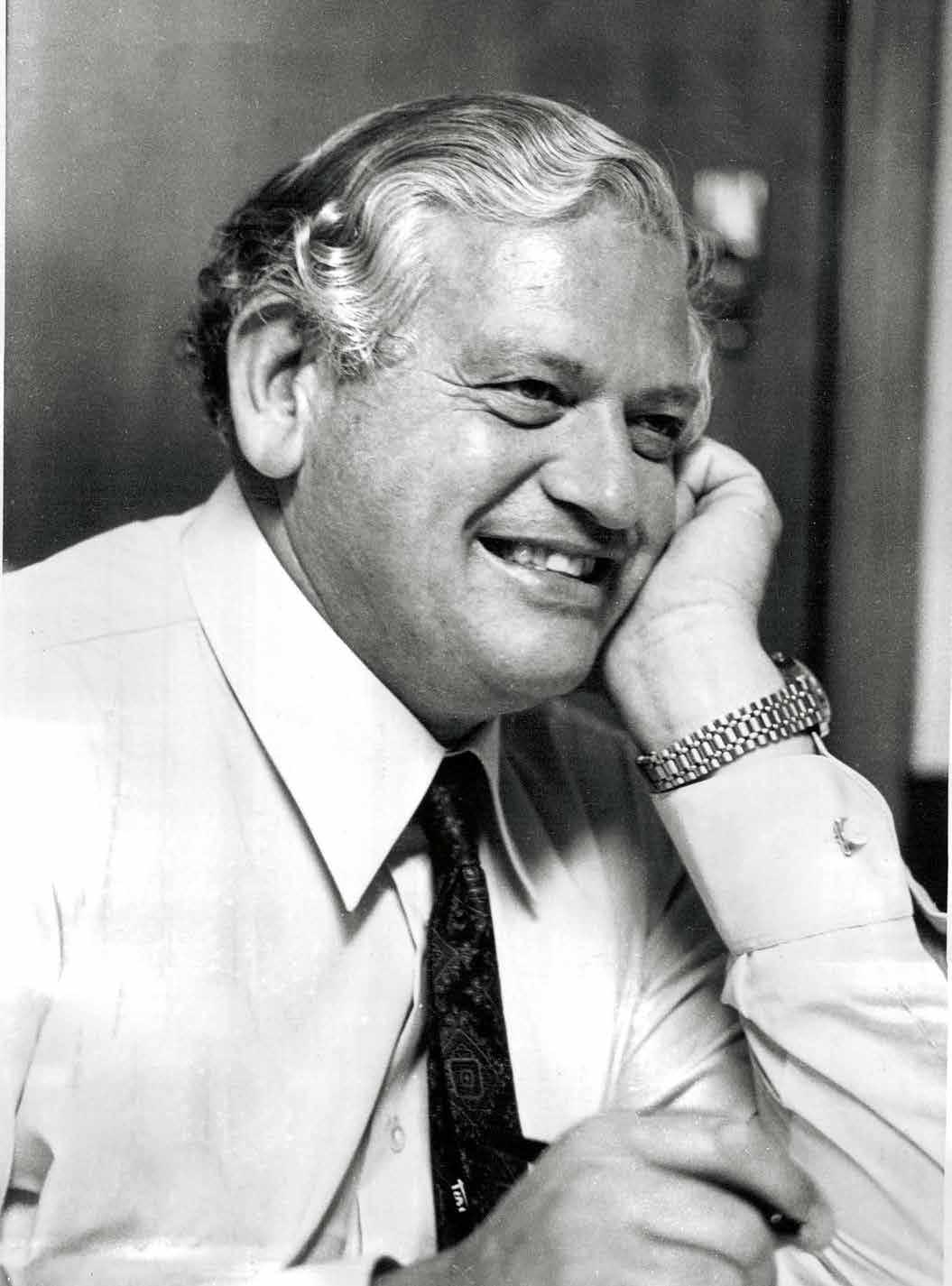
Norman Kirk always was a man in hurry. He left school at 12. He worked on the railways, on the ferries, in a dairy factory and at the Firestone factory in Christchurch. He built his own house in Kaiapoi; he scoured the shelves of the local library.
In 1953, aged 30, he became the youngest mayor in the country when he won the Kaiapoi local elections. Four years later, he won the marginal seat of Lyttelton for the Labour Party, and in 1965, successfully contested the party leadership.
By 1972, he had lost weight, bought a better-fitting suit and grown out his short back and sides. He visited the small towns of New Zealand, winning the hearts and votes of "the little people of the country", he later said, "the average families, the people who work in the factories and the farms, the manufacturers".
In November that year, this large (over 1.8m tall) working-class man swept Labour into power after 12 years of National Party leadership. Over the next 90 weeks, writes Denis Welch in We Need to Talk About Norman: New Zealand's Lost Leader, he tore into the business of government "as if there was no tomorrow". He pivoted the country away from Britain and the US to face Asia and the Pacific. He introduced policies that catered to people in the regions, to pensioners, pacifists, young people (almost a quarter of a million people voted for the first time in 1972) and environmentalists.
But there really was no tomorrow. Kirk's heart was playing up. While visiting India as prime minister, he had what appears to have been a stroke. What was almost certainly a heart turn came at the South Pacific Forum in Rarotonga in March 1974.
Back in New Zealand, he suffered a blood clot in his lung following an ill-advised double varicose vein operation. By the time he was admitted to the Home of Compassion in Wellington in late August 1974, his heart was enlarged by about 50%, only a third of one lung was working and his liver was swollen.

Denne historien er fra July 8 - 14, 2023-utgaven av New Zealand Listener.
Abonner på Magzter GOLD for å få tilgang til tusenvis av kuraterte premiumhistorier og over 9000 magasiner og aviser.
Allerede abonnent? Logg på
FLERE HISTORIER FRA New Zealand Listener

New Zealand Listener
Who's the boss?
A leading political economist believes blindly following the rules leads to inefficiency, less accountability and blunted democracy.

7 mins
May 2-8, 2026

New Zealand Listener
Softening the landing
Modelling may have advanced since 1972 but the outlook for humanity is still as bleak unless we limit growth.
2 mins
May 2-8, 2026

New Zealand Listener
My boyfriend the ATM
Fable-like story muses on what's truly valuable in life, when a strapped Parisian couple discover an easy route to cash.
2 mins
May 2-8, 2026

New Zealand Listener
Skin in the game
Booker Prize winner David Szalay, here for the Auckland Writers Festival, talks about the male experience and writing awkward sex scenes.
8 mins
May 2-8, 2026

New Zealand Listener
Baby love
Kiwi author's latest novel explores the lengths a husband will go to fulfil his wife's dying wish.
3 mins
May 2-8, 2026

New Zealand Listener
Building hope
What excitement there is in Ōtautahi!
2 mins
May 2-8, 2026

New Zealand Listener
Pick & mix
Australian nutritionists Julia Tellidis and Lauren Skora get the school term off to a healthy start.
4 mins
May 2-8, 2026

New Zealand Listener
Cruel waters
The apparent rift within National's ranks goes far deeper than a prime minister's popularity rating.
4 mins
May 2-8, 2026

New Zealand Listener
Broken agreement
Beautifully told time-straddling tale of colonialism, displacement and the power of community.
3 mins
May 2-8, 2026

New Zealand Listener
Knowledge and actions
Public health experts are as likely to eat fish and chips on the beach or drink a beer as anyone else, says Jason Gurney.
3 mins
May 2-8, 2026
Translate
Change font size