Prøve GULL - Gratis
ALL TOO HUMAN
Mother Jones
|January/February 2026
Why are we so susceptible to trusting AI chatbots?
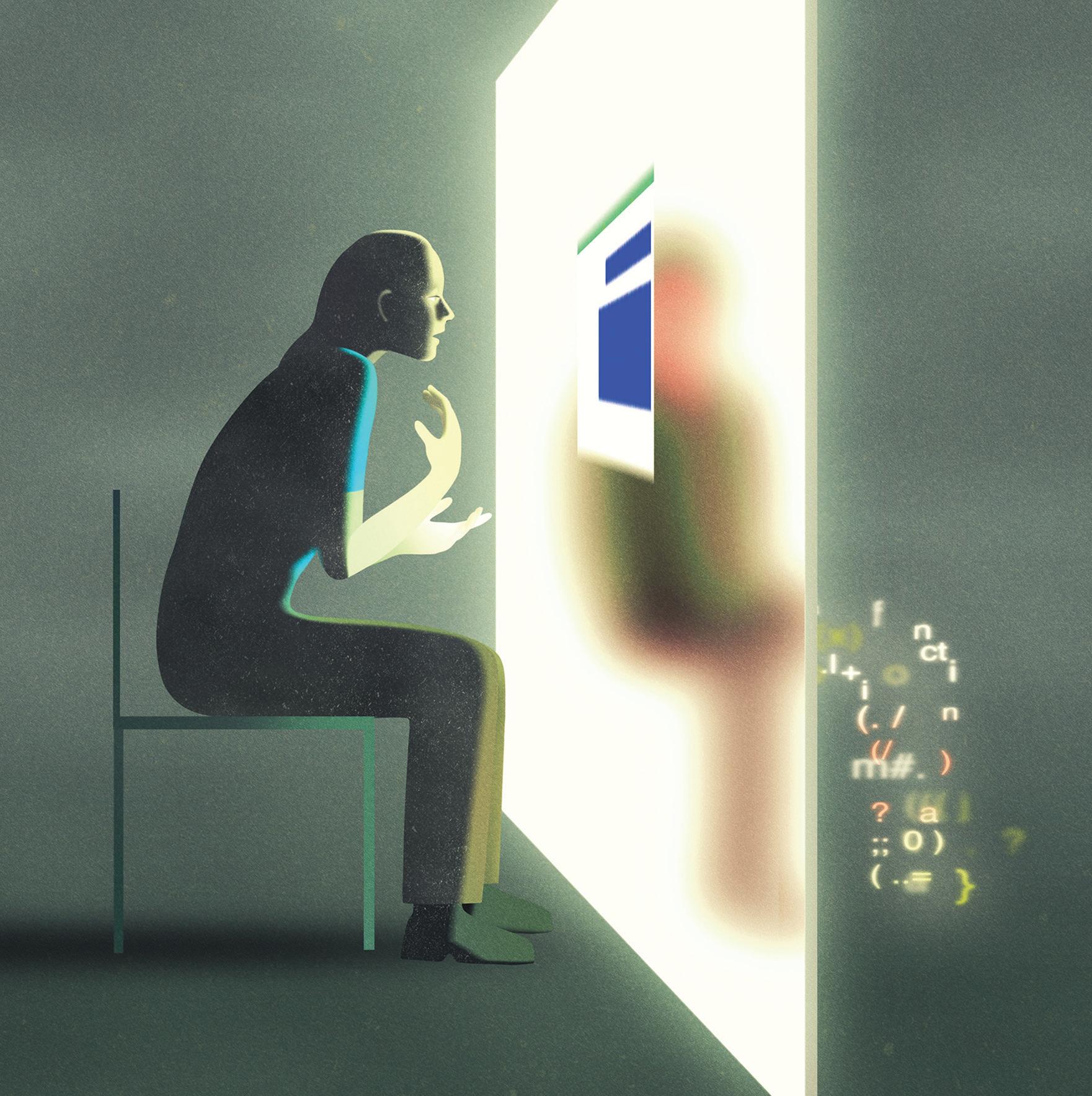
IN SUMMER 2019, a group of Dutch scientists conducted an experiment to collect “digital confessions.” At a music festival near Amsterdam, the researchers asked attendees to share a secret anonymously by chatting online with either a priest or a relatively basic chatbot, assigned at random. To their surprise, some of the nearly 300 participants offered deeply personal confessions, including of infidelity and experiences with sexual abuse. While what they shared with the priests (in reality, incognito scientists) and the chatbots was “equally intimate,” participants reported feeling more “trust” in the humans, but less fear of judgment with the chatbots. This was a novel finding, explains Emmelyn Croes, an assistant professor of communication science at Tilburg University in the Netherlands and lead author of the study. Chatbots were then primarily used for customer service or online shopping, not personal conversations, let alone confessions. “Many people couldn't imagine they would ever share anything intimate to a chatbot,” she says.
Enter ChatGPT. In 2022, three years after Croes' experiment, OpenAI launched its artificial intelligence-powered chatbot, now used by 700 million people globally, the company says. Today, people aren't just sharing their deepest secrets with virtual companions, they're engaging in regular, extended discussions that can shape beliefs and influence behavior, with some users reportedly cultivating friendships and romantic relationships with Als. In chatbot research, Croes says, “there are two domains: There's before and after ChatGPT.”


Denne historien er fra January/February 2026-utgaven av Mother Jones.
Abonner på Magzter GOLD for å få tilgang til tusenvis av kuraterte premiumhistorier og over 9000 magasiner og aviser.
Allerede abonnent? Logg på
FLERE HISTORIER FRA Mother Jones

Mother Jones
THE WELL WATCHERS
THERE ARE MILLIONS OF ABANDONED OIL WELLS ACROSS THE UNITED STATES. AN UNLIKELY GROUP OF ACTIVISTS IN TEXAS IS MAKING SURE NO ONE FORGETS THEY NEED TO BE CLEANED UP.

21 mins
January/February 2026

Mother Jones
RAGE AGAINST THE MACHINES
\"Empire of Al\" author Karen Hao on the reckless arrogance of our Silicon Valley overlords
3 mins
January/February 2026

Mother Jones
ALL TOO HUMAN
Why are we so susceptible to trusting AI chatbots?
3 mins
January/February 2026

Mother Jones
"GENDER IDEOLOGY"
How trans people came to embody the right's biggest fears
4 mins
January/February 2026

Mother Jones
HELL NO, IT'S NOT OVER
We still have rights. Time to use them.
4 mins
January/February 2026

Mother Jones
THIS IS ALL JOHN ROBERTS' FAULT
Trump owes his corrupt and abusive reign to one man.
10 mins
January/February 2026
Mother Jones
DEPARTMENT OF GETTING SHIT DONE
Scott Wiener has revolutionized California housing law. Can he bring that same energy to Congress?
21 mins
January/February 2026

Mother Jones
THE MAKING OF RILEY GAINES
How a fifth-place tie with a trans woman propelled a young swimmer to right-wing stardom
26 mins
January/February 2026

Mother Jones
DREAM TEAM
Soccer Without Borders is two decades old, but its players have never faced a rival like Trump.
6 mins
January/February 2026

Mother Jones
THE CRUELTY IS THE POST
The government memes designed to mainstream sadopopulism
7 mins
January/February 2026
Listen
Translate
Change font size