Prøve GULL - Gratis
Teach kids about misinformation
Maclean's
|September 2023
With the rampant spread of fake news and conspiracy theories, Canadian students would benefit from extra lessons in BS detection.
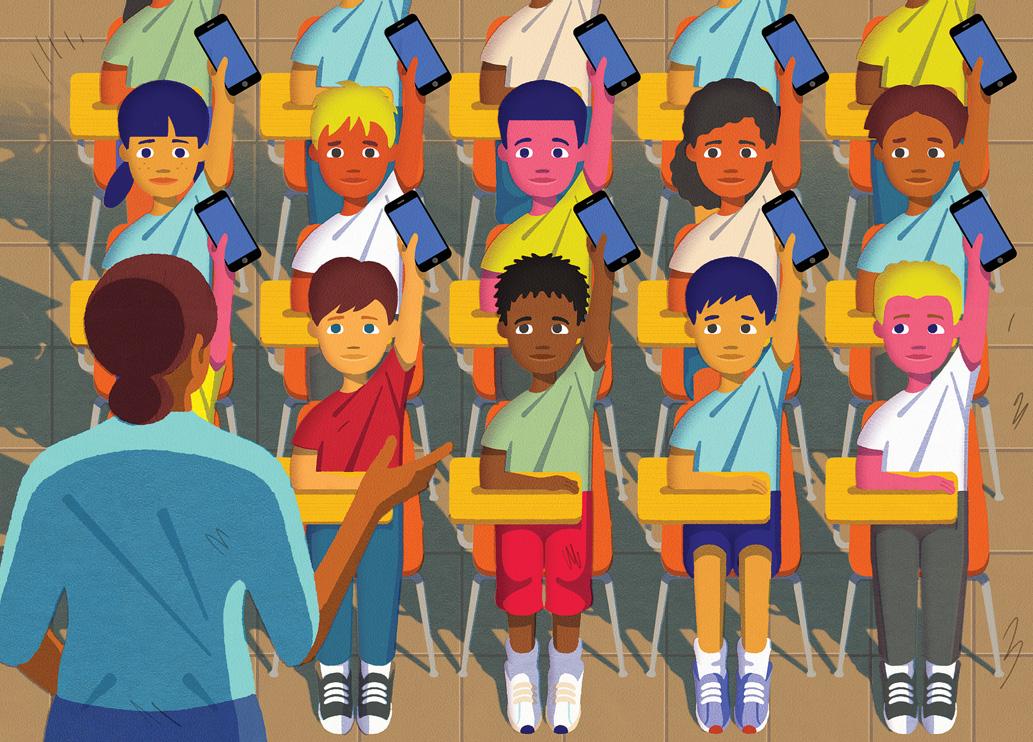
THE CANADIAN WILDFIRES were caused by space lasers? The U.S. government is run by lizard people? The COVID vaccines contain microchips? Nope, nope and nope. That all may seem obvious, but a surprising percentage of people believe such nonsense: an Abacus survey from June of 2022, for example, found that a quarter of Canadians think that it is possibly (14 per cent) or probably true (11 per cent) that COVID vaccines include secret chips designed to monitor and control their behaviour. Put another way, 3.3 million Canadians were pretty sure there were microchips in the vaccines and another 4.2 million were open to the idea. (To be clear: no microchips.) It's easy to mock these kinds of offthe-rails beliefs, but we shouldn't. In my work as a professor and author, I've been researching public representations of science for decades-including how misinformation and pseudoscience are disseminated online and I still need to remind myself to dial back the snark. People believe, share and act on harmful misinformation for complex reasons: maybe they're under financial stress, or they're experiencing mental health challenges, or they distrust government.
But, these days, there's also the problem of volume. Humans are bombarded with about 74 gigabytes of information every day, which is roughly equivalent to watching 16 movies. We check our phones more than 100 times a day. Plus, the incentives baked into our attention economy-likes, follows and retweets-are all rigged to encourage the sharing of questionable content. This ridiculously chaotic information environment could cause any adult to fall for things they shouldn't.

Denne historien er fra September 2023-utgaven av Maclean's.
Abonner på Magzter GOLD for å få tilgang til tusenvis av kuraterte premiumhistorier og over 9000 magasiner og aviser.
Allerede abonnent? Logg på
FLERE HISTORIER FRA Maclean's

Maclean's
The University's Post-Book Future
Students don't want to read novels anymore. I've filled my English-lit syllabus with movies to help them learn anyway.

4 mins
January / February 2026

Maclean's
Buy Canadian Will Transform Supply Chains
Trump's tariff chaos will prompt local food producers to expand at record speed
3 mins
January / February 2026
Maclean's
The Rise of the Micro-Restaurant
Tiny establishments like Yan Dining Room, my 26-seater in Toronto, are feeding Canadians' appetites for something new
4 mins
January / February 2026
Maclean's
Education
The international-student shortfall will worsen schools' financial woes. Donald Trump's assault on academia will hinder and help Canadian campuses. And school boards will scramble to fill teacher shortages.
4 mins
January / February 2026

Maclean's
Food
Buy Canadian fever will give us more B.C. wine, Ontario ice cream and locally grown winter strawberries-while Indigenous cuisine will have its overdue moment
4 mins
January / February 2026

Maclean's
The Adult Rec-Sports Boom
Fed up with phones, Canadians are making friends on the field
4 mins
January / February 2026
Maclean's
Concert Tickets Might Finally Get Cheaper
In 2026, we'll need fewer stadium extravaganzas and more intimate shows at small venues
3 mins
January / February 2026

Maclean's
Climate
Wildfire displacement will redraw the map, EV adoption will decelerate and Canada will miss its emissions targets. Throughout it all, Mark Carney will put climate on the backburner.
4 mins
January / February 2026

Maclean's
Canada's China Policy Will Be Decided in Washington
If Trump talks fail, Canada could look toward Beijing
3 mins
January / February 2026
Maclean's
Justice for Stablecoins
For years, people thought fiat-backed crypto was all hype, no value. Now that the government's on board, Canadians should be too.
4 mins
January / February 2026
Translate
Change font size