Prøve GULL - Gratis
Growth Industry
Maclean's
|August 2025
My company opened a fully automated greenhouse north of Toronto to boost Canada's supply of homegrown leafy greens—just in time for the trade war.
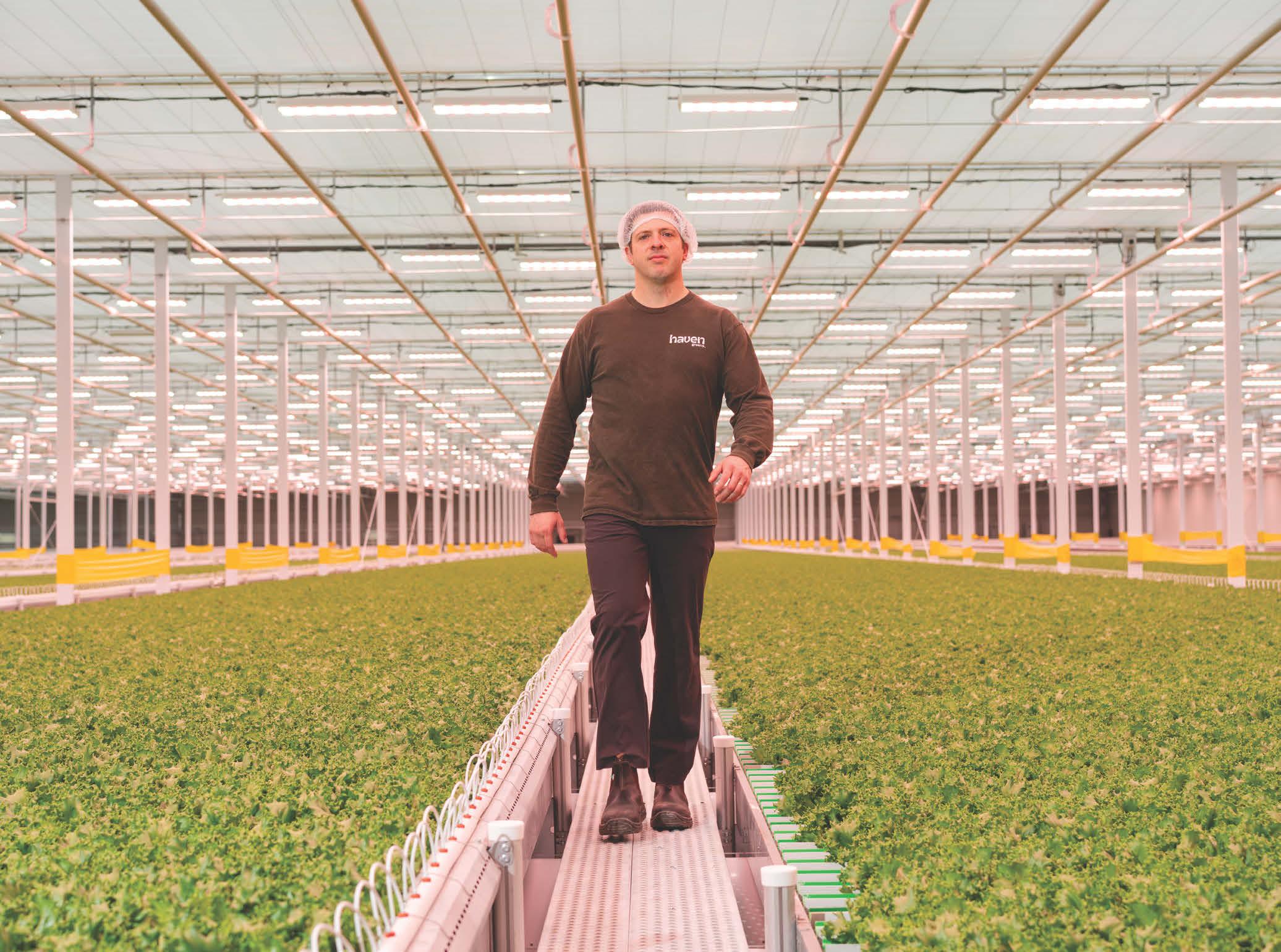
MY FAMILY HAS FARMED in King City, Ontario, since 1967. We used to run one of Canada's top horse racing and breeding businesses, but, in that world, it's notoriously difficult to stay profitable year in and year out. By the late 2000s, we were asking ourselves, “Do we double down on racing, sell our land or pivot to something else?” We chose the third option, starting with beekeeping and raising chickens. Later, we got into renewable energy, building and operating five revenue-generating solar power plants—including one on our farm. That laid the foundation for our greens business.
When I was a commerce student at Dalhousie University, one of my professors said, “Make a list of things that piss you off—those are your business ideas.” Number one on my list was grocery-store lettuce. The stuff on the shelves was always one or two days from its best-before date and often turned to mush before I could finish it all. Not only that, Canada imports the vast majority of its greens, more than 90 per cent of which come from Arizona and California. That often left us settling for slimy produce that had been on trucks for days or weeks. I decided to start a new company to establish a local supply. That became Haven Greens.
Nowadays, fewer and fewer farmers are growing field greens in Canada. This country has notoriously short growing seasons, and lettuce is a time-consuming and physically strenuous plant to harvest: workers typically walk through fields, cutting heads of lettuce one by one with small harvest blades, then carry them back to tractors in totes. Like other crops, the fate of field greens is also determined by variables like labour shortages, weather and contamination.


Denne historien er fra August 2025-utgaven av Maclean's.
Abonner på Magzter GOLD for å få tilgang til tusenvis av kuraterte premiumhistorier og over 9000 magasiner og aviser.
Allerede abonnent? Logg på
FLERE HISTORIER FRA Maclean's

Maclean's
The University's Post-Book Future
Students don't want to read novels anymore. I've filled my English-lit syllabus with movies to help them learn anyway.

4 mins
January / February 2026

Maclean's
Buy Canadian Will Transform Supply Chains
Trump's tariff chaos will prompt local food producers to expand at record speed
3 mins
January / February 2026
Maclean's
The Rise of the Micro-Restaurant
Tiny establishments like Yan Dining Room, my 26-seater in Toronto, are feeding Canadians' appetites for something new
4 mins
January / February 2026

Maclean's
Education
The international-student shortfall will worsen schools' financial woes. Donald Trump's assault on academia will hinder and help Canadian campuses. And school boards will scramble to fill teacher shortages.
4 mins
January / February 2026

Maclean's
Food
Buy Canadian fever will give us more B.C. wine, Ontario ice cream and locally grown winter strawberries-while Indigenous cuisine will have its overdue moment
4 mins
January / February 2026

Maclean's
The Adult Rec-Sports Boom
Fed up with phones, Canadians are making friends on the field
4 mins
January / February 2026
Maclean's
Concert Tickets Might Finally Get Cheaper
In 2026, we'll need fewer stadium extravaganzas and more intimate shows at small venues
3 mins
January / February 2026

Maclean's
Climate
Wildfire displacement will redraw the map, EV adoption will decelerate and Canada will miss its emissions targets. Throughout it all, Mark Carney will put climate on the backburner.
4 mins
January / February 2026

Maclean's
Canada's China Policy Will Be Decided in Washington
If Trump talks fail, Canada could look toward Beijing
3 mins
January / February 2026

Maclean's
Justice for Stablecoins
For years, people thought fiat-backed crypto was all hype, no value. Now that the government's on board, Canadians should be too.
4 mins
January / February 2026
Listen
Translate
Change font size