
Gå ubegrenset med Magzter GOLD
Få ubegrenset tilgang til over 9000 magasiner, aviser og premiumhistorier for bare
Orlando Gibbons
BBC Music Magazine
|June 2025
From court refinement to London street cries, Gibbons's music captures the very essence of early-Stuart England,
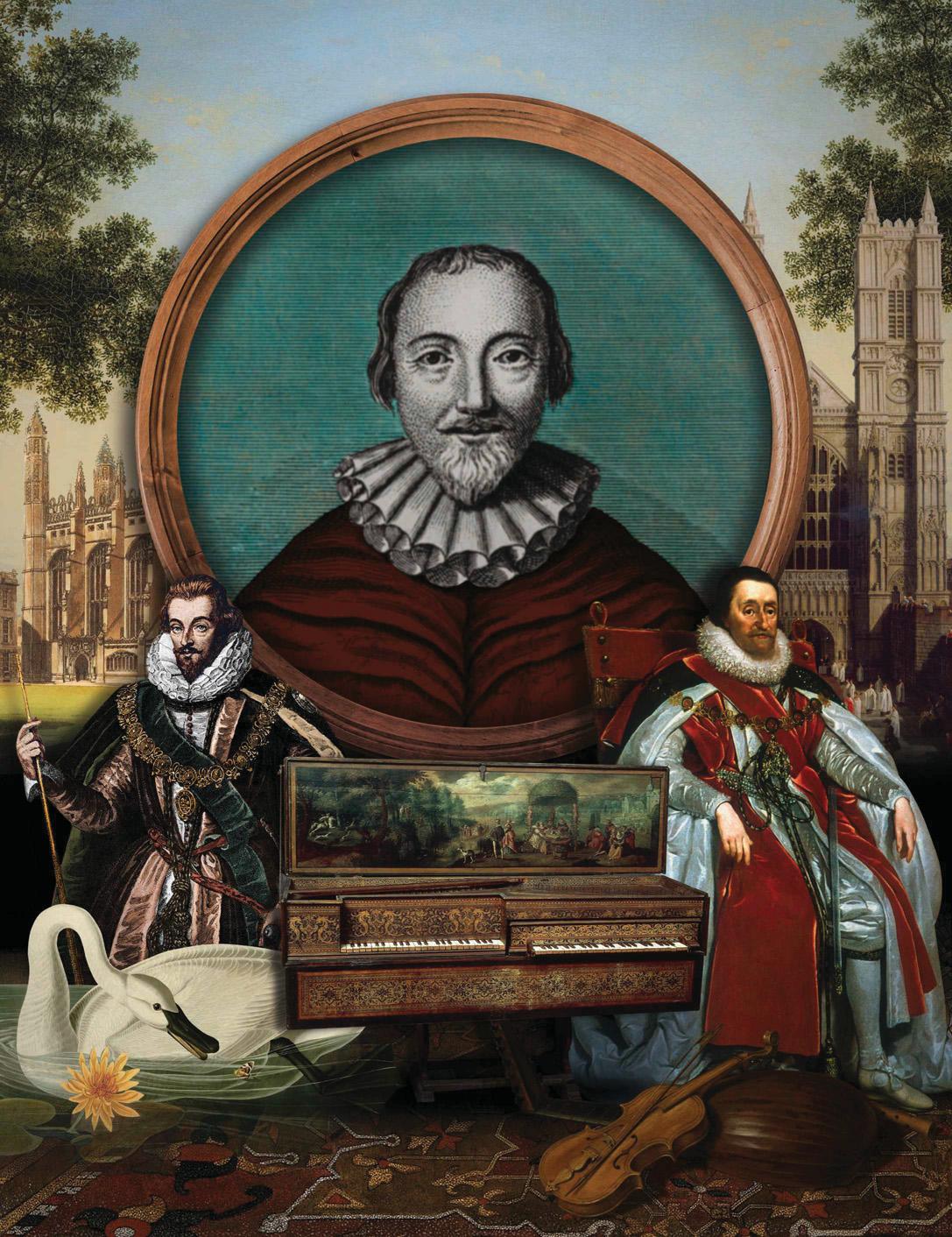
With one foot in the Renaissance and one in the Baroque, Orlando Gibbons united two golden ages of English music. While building on the polyphonic riches of William Byrd and Thomas Tallis, he also helped lay the foundations for the expressive new style of the 17th century, preparing the ground for his most distinguished successor: Henry Purcell. Gibbons was a musical thoroughbred. Born into a musical family in Oxford in 1583, he was introduced to the cut-and-thrust of local music-making by his father who ran the City Waits in both Oxford and Cambridge. His elder brother, Edward, who sang at King's College, Cambridge, then smoothed a path for the young Orlando to join the choir in 1596. The Gibbons brothers prospered: Edward was master of the choristers, and in 1598 Orlando was old enough to enter the University. When Edward left the choir late in 1598, we lose sight of Orlando too. But whatever he did, he certainly broadened his musical education and must have networked hard, for in 1603, at the age of just 19, he re-emerged fully formed - with an impressive court job under his belt. Well, almost.
Perhaps because he was so young for a prestigious post with the Chapel Royal, he initially had to serve an unpaid, probationary term. It wasn't until 1605 that he was finally sworn in as a 'Gentleman' of the Chapel Royal - a position which might have gone up in smoke after just a few months had Guy Fawkes and his co-conspirators succeeded in their explosive ambitions. But he and King James I survived unscathed, and the only fireworks which penetrated the royal walls were musical ones - with young Orlando seated at the organ. Or at least we think so.
Record keeping was a bit hit-and-miss, and the first confirmation we actually get of Orlando's new job description - as a 'royal organist' surfaces in the credentials he supplied for his Cambridge degree in 1606.

Denne historien er fra June 2025-utgaven av BBC Music Magazine.
Abonner på Magzter GOLD for å få tilgang til tusenvis av kuraterte premiumhistorier og over 9000 magasiner og aviser.
Allerede abonnent? Logg på
FLERE HISTORIER FRA BBC Music Magazine
BBC Music Magazine
Hiss and make-up
From boos to vegetables, opera stars have had to put up with all sorts being aimed in their direction over the centuries

8 mins
Christmas 2025

BBC Music Magazine
A vivid and intimate portrait of Mahler
Anna Lucia Richter brings striking depth and expressive insight to the composer's song-settings
2 mins
Christmas 2025

BBC Music Magazine
It's all in the genes
Is it a bonus or a burden to be the musical child of musical parents?
7 mins
Christmas 2025

BBC Music Magazine
Banff Canada
Spectacular views and equally stunning string quartet performances are on Jeremy Pound's agenda as he heads to the Canadian Rockies
3 mins
Christmas 2025

BBC Music Magazine
Morten Lauridsen
Terry Blain explores the life of a self-imposed recluse whose magical O Magnum Mysterium beguiles millions of listeners each Christmas
6 mins
Christmas 2025

BBC Music Magazine
In good faith
Composer Roxanna Panufnik and writer Jessica Duchen tell Amanda Holloway how they have joined forces for a new choral work that looks well beyond Christmas for its festive celebrations
8 mins
Christmas 2025

BBC Music Magazine
Westward Ho!
Composer Alex Ho is part of a growing community of musicians combining their British and Chinese heritage in fascinating ways
7 mins
Christmas 2025

BBC Music Magazine
Music & mercy
explores Venice's Ospedale della Pietà, the girls' orphanage where Vivaldi taught and composed
7 mins
Christmas 2025

BBC Music Magazine
Jingle hell!
As the Christmas season approaches, the BBC Music Magazine team share the festive tunes that make our hearts sink
9 mins
Christmas 2025
BBC Music Magazine
Bach's recycled choral music brings festive cheer to Leipzig
Shout, exult, arise, praise these days! Glorify what the Almighty today has done!' Early on the morning of 25 December 1734, these words resounded from the choir stalls of the Thomaskirche, Leipzig, to a jubilant accompaniment of festive timpani, pealing trumpets and scampering violins. Seated at a keyboard, the church's director of music Johann Sebastian Bach marshalled the musicians in a performance of the cantata Jauchzet, frohlocket! Auf, preiset die Tage, which preceded the sermon in the morning service.
3 mins
Christmas 2025
Listen
Translate
Change font size