
Gå ubegrenset med Magzter GOLD
Få ubegrenset tilgang til over 9000 magasiner, aviser og premiumhistorier for bare
Prøve GULL - Gratis
Plutarch on Grief
Philosophy Now
|February/March 2026
Massimo Pigliucci is moved by a 2,000 year old letter.
-
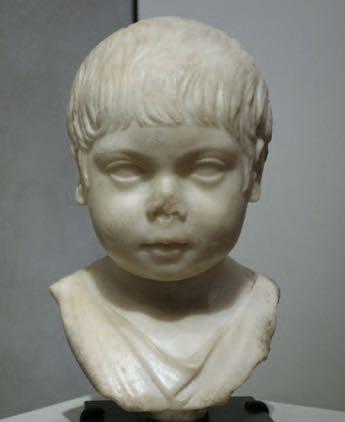
The time is around 90 CE, and Plutarch of Chaeronea in Greece is travelling when news reaches him of the death of his two-year-old daughter Timoxena. Since Plutarch is unable to return home immediately, he decides to write to his wife, also named Timoxena, attempting to use his knowledge of philosophy to provide some consolation for her grief.
While this sad episode took place almost two millennia ago, similar situations of course occur today, reminding us just how difficult it is to be of comfort to our fellow human beings when they are distraught. But Plutarch, a Platonist, was one of many Greco-Roman intellectuals who thought that if philosophy isn’t going to be useful in practice then it’s not worth bothering with in the first place.
The letter displays a tender and personal tone, with Plutarch attempting to balance acknowledgment of the genuine grief he himself is experiencing as the father of little Timoxena with the delivery of philosophical counsel to the person with whom he has shared the most intimate moments of his life, including Timoxena’s birth. The challenge he faces is how to provide comfort to his wife without coming across as being condescending or, worse, denying the reality of her pain. One way Plutarch achieves this is by treating his wife as his intellectual equal - something certainly quite rare in those times.

Denne historien er fra February/March 2026-utgaven av Philosophy Now.
Abonner på Magzter GOLD for å få tilgang til tusenvis av kuraterte premiumhistorier og over 9000 magasiner og aviser.
Allerede abonnent? Logg på
FLERE HISTORIER FRA Philosophy Now

Philosophy Now
The Possibility- Bearing Animal
Raymond Tallis explores a twilight zone.

7 mins
February/March 2026

Philosophy Now
Amazing Times at the Pub Agora
John Douglas Mullen is a philosophical bar fly on the wall.
8 mins
February/March 2026

Philosophy Now
Friedrich Nietzsche (1844-1900)
Hilarius Bogbinder considers the all too human life of the notorious iconoclast.
11 mins
February/March 2026

Philosophy Now
Heisenberg's Philosophy of Quantum Mechanics
Kanan Purkayastha explains how Werner Heisenberg's 1925 paper turned the quantum theory of the early 1900s into the quantum mechanics of today.
10 mins
February/March 2026

Philosophy Now
Cicero & the Ideal of Virtue
Abdullah Shaikh explores Cicero's ideas about the core Roman principle of virtus.
13 mins
February/March 2026

Philosophy Now
ROPE
Les Jones has a Nietzschean take on a Hitchcock thriller.
6 mins
February/March 2026
Philosophy Now
What Have the Romans Ever Done For Us?
Salve! This issue's theme is Roman Philosophy. But as the rebels in Monty Python's Life of Brian asked, what have the Romans ever done for us? The question seems relevant here; we are philosophers, not archaeologists.
2 mins
February/March 2026

Philosophy Now
Paul Guyer
Paul Guyer is an American philosopher and a leading scholar of both Immanuel Kant and aesthetics. AmirAli Maleki interviews him about Kant's political and moral vision.
9 mins
February/March 2026

Philosophy Now
Identity in the Age of Connectivity
Sara Asran explores the dynamics of identity online.
6 mins
February/March 2026

Philosophy Now
A Very Short History of Critical Thinking
Luc de Brabandere summarises a long history through key figures of thought.
7 mins
February/March 2026
Listen
Translate
Change font size