
Gå ubegrenset med Magzter GOLD
Få ubegrenset tilgang til over 9000 magasiner, aviser og premiumhistorier for bare
Prøve GULL - Gratis
Evolution or Progress?
Philosophy Now
|December 2025 / January 2026
Adam Neiblum asks what the difference is, and why it matters.
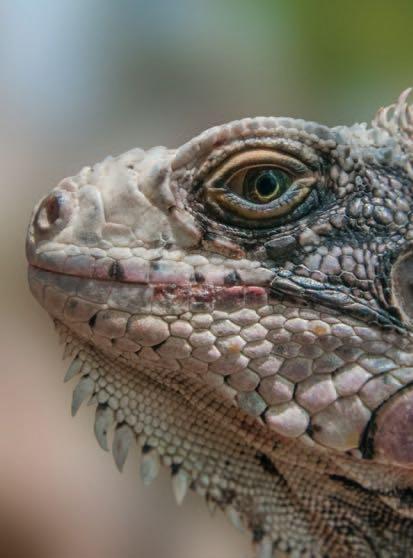
Progress' and 'evolution' are widely considered synonyms, and are used interchangeably every day. Most people also regard evolution, in the Darwinian sense, to be a form of progress or improvement. We often hear talk about our species evolving to a higher state of being or a more advanced consciousness. But progress and evolution are not the same thing, and describe very different forms of change. Recognizing the differing kinds of change has a direct bearing upon our understanding of what it means to be Homo sapiens, both as a member of a culture and also as an animal – a product of the very evolutionary process that has created and shaped every species, including our own. So the conflation of 'progress' and 'evolution' matters more than a mere semantic error.
First, evolution consists of:
A) A genetic mutation in an organism;
B) A consequent change in body and/or behavior;
C) Rigorous testing of that body and/or behavior through interactions between the organism and its environment. If this change benefits the organism in terms of better reproductive potential – that is, in its 'fitness' - that change spreads into the subsequent generations.
Progress, meanwhile, consists of:
A) An ideal or goal - literacy, or justice, for example;
B) A gap between this ideal and the real-world state of affairs;
C) A process of movement - individually, collectively, or even species-wide – towards that goal or ideal.

Denne historien er fra December 2025 / January 2026-utgaven av Philosophy Now.
Abonner på Magzter GOLD for å få tilgang til tusenvis av kuraterte premiumhistorier og over 9000 magasiner og aviser.
Allerede abonnent? Logg på
FLERE HISTORIER FRA Philosophy Now

Philosophy Now
Bilbo Theorizes About Wellbeing
Eric Comerford overhears Bilbo and Gandalf discussing happiness.

9 mins
December 2025 / January 2026

Philosophy Now
What Women?
Marcia Yudkin remembers almost choking at Cornell
11 mins
December 2025 / January 2026

Philosophy Now
Islamic Philosophers On Tyranny
Amir Ali Maleki looks at tyranny from an Islamic perspective.
4 mins
December 2025 / January 2026

Philosophy Now
Peter Singer
The controversial Australian philosopher defends the right to choose to die on utilitarian grounds
5 mins
December 2025 / January 2026

Philosophy Now
Another Conversation with Martin Heidegger?
Raymond Tallis talks about communication problems.
7 mins
December 2025 / January 2026

Philosophy Now
Letters
When inspiration strikes, don't bottle it up. Email me at rick.lewis@philosophynow.org Keep them short and keep them coming!
17 mins
December 2025 / January 2026
Philosophy Now
The Philosophy of William Blake
Mark Vernon looks at the imaginative thinking of an imaginative artist.
9 mins
December 2025 / January 2026

Philosophy Now
Philosophical Haiku
Peering through life’s lens God in nature is deduced: The joy of being.
1 mins
December 2025 / January 2026

Philosophy Now
Philosophy Shorts
More songs about Buildings and Food' was the title of a 1978 album by the rock band Talking Heads. It was about all the things rock stars normally don't sing about. Pop songs are usually about variations on the theme of love; tracks like Rose Royce's 1976 hit 'Car Wash' are the exception. Philosophers, likewise, tend to have a narrow focus on epistemology, metaphysics and trifles like the meaning of life. But occasionally great minds stray from their turf and write about other matters, for example buildings (Martin Heidegger), food (Hobbes), tomato juice (Robert Nozick), and the weather (Lucretius and Aristotle). This series of Shorts is about these unfamiliar themes; about the things philosophers also write about.
2 mins
December 2025 / January 2026

Philosophy Now
Hedonic Treadmills in the Vale of Tears
Michael Gracey looks at how philosophers have pursued happiness.
8 mins
December 2025 / January 2026
Listen
Translate
Change font size