
Gå ubegrenset med Magzter GOLD
Få ubegrenset tilgang til over 9000 magasiner, aviser og premiumhistorier for bare
Your Questions Answered
Kiplinger's Personal Finance
|June 2023
Kiplinger readers have inquiring minds when it comes to investing. Here's what you're asking about.

NO DOUBT ABOUT IT, YOU ARE A thoughtful and inquisitive group. You send us many e-mails with astute questions about investing. We try to respond to most of them individually (although we can never give individual investment advice). Here are some queries about topics we thought many of you might be wondering about as well.
Why would anyone lock up money for 30 years when you can get a higher yield on a shorter-term bond? - RICHARD READY SHAWANO, WISC.
Take a moment to consider why short-term yields are more generous currently. Typically, the longer you lock up your money, the higher the interest rate you receive. But when investors see a recession looming and therefore expect interest rates to fall, they bid up long-term bond prices in anticipation, sometimes pushing yields on long bonds below short-term yields. (Prices and yields move in opposite directions.) That creates a “yield curve inversion.”
If we do head into a recession, look for the Federal Reserve to cut short-term rates—but rates will likely fall across the board. So you could end up wishing you had locked in today’s long-term rates, says Kathy Jones, chief fixed-income strategist for the Schwab Center for Financial Research. Long-term bonds also offer a higher potential for capital gains if rates head lower. The longer a bond is from maturity, the more sensitive its price is to changes in interest rates. A drop in interest rates could allow you to sell your long-term bond for a profit.
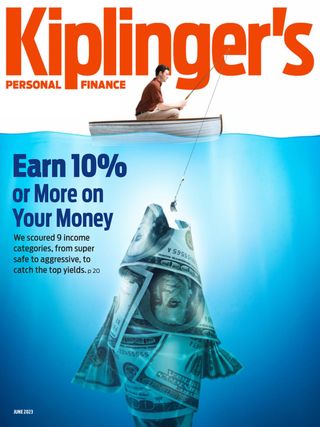

Denne historien er fra June 2023-utgaven av Kiplinger's Personal Finance.
Abonner på Magzter GOLD for å få tilgang til tusenvis av kuraterte premiumhistorier og over 9000 magasiner og aviser.
Allerede abonnent? Logg på
FLERE HISTORIER FRA Kiplinger's Personal Finance

Kiplinger's Personal Finance
A Helping Hand for the Homeless
This nonprofit offers shelters, job programs, support in finding a home and more.

2 mins
January 2026

Kiplinger's Personal Finance
Downsizing Advice, Part II
My column on downsizing (see “Living in Retirement,” Oct.) struck a chord with readers. I heard from many who offered advice on successfully culling clutter.
2 mins
January 2026
Kiplinger's Personal Finance
WHY COMPANY GUIDANCE MATTERS
Understanding how corporate profit forecasts affect analysts' estimates and stock ratings can help you make investment decisions.
4 mins
January 2026

Kiplinger's Personal Finance
WHAT SCIENCE REVEALS ABOUT MONEY AND A HAPPY RETIREMENT
Whether you're still planning or already retired, these research-based insights point the way to your best post-work life.
12 mins
January 2026

Kiplinger's Personal Finance
WHAT TO KNOW ABOUT FLOOD INSURANCE
Even if your home is outside a high-risk area, you may want to purchase coverage.
2 mins
January 2026
Kiplinger's Personal Finance
My Retirement Learning Curve
THE NEW WORLD OF RETIREMENT
2 mins
January 2026

Kiplinger's Personal Finance
CREATE A FINANCIAL PLAN WITH THESE TOOLS
Online programs for do-it-yourselfers are better than ever-and they're affordable, too.
9 mins
January 2026

Kiplinger's Personal Finance
2026 MONEY CALENDAR
These key dates and tips will help you make the most of your money in the new year.
7 mins
January 2026
Kiplinger's Personal Finance
Should You Renew Your CD?
AFTER you put money in a certificate of deposit, you can sit back while it collects interest over its term. Once it reaches maturity, you'll face a decision: renew it or withdraw the funds.
1 mins
January 2026

Kiplinger's Personal Finance
GIVING THE BULL THE BENEFIT OF THE DOUBT
KIPLINGER: What do you see ahead for financial markets in 2026? Do you have a target price for the S&P 500?
5 mins
January 2026
Translate
Change font size