Prøve GULL - Gratis
WILD THINGS
The New Yorker
|June 29, 2026
Why do animals have sex, anyway?
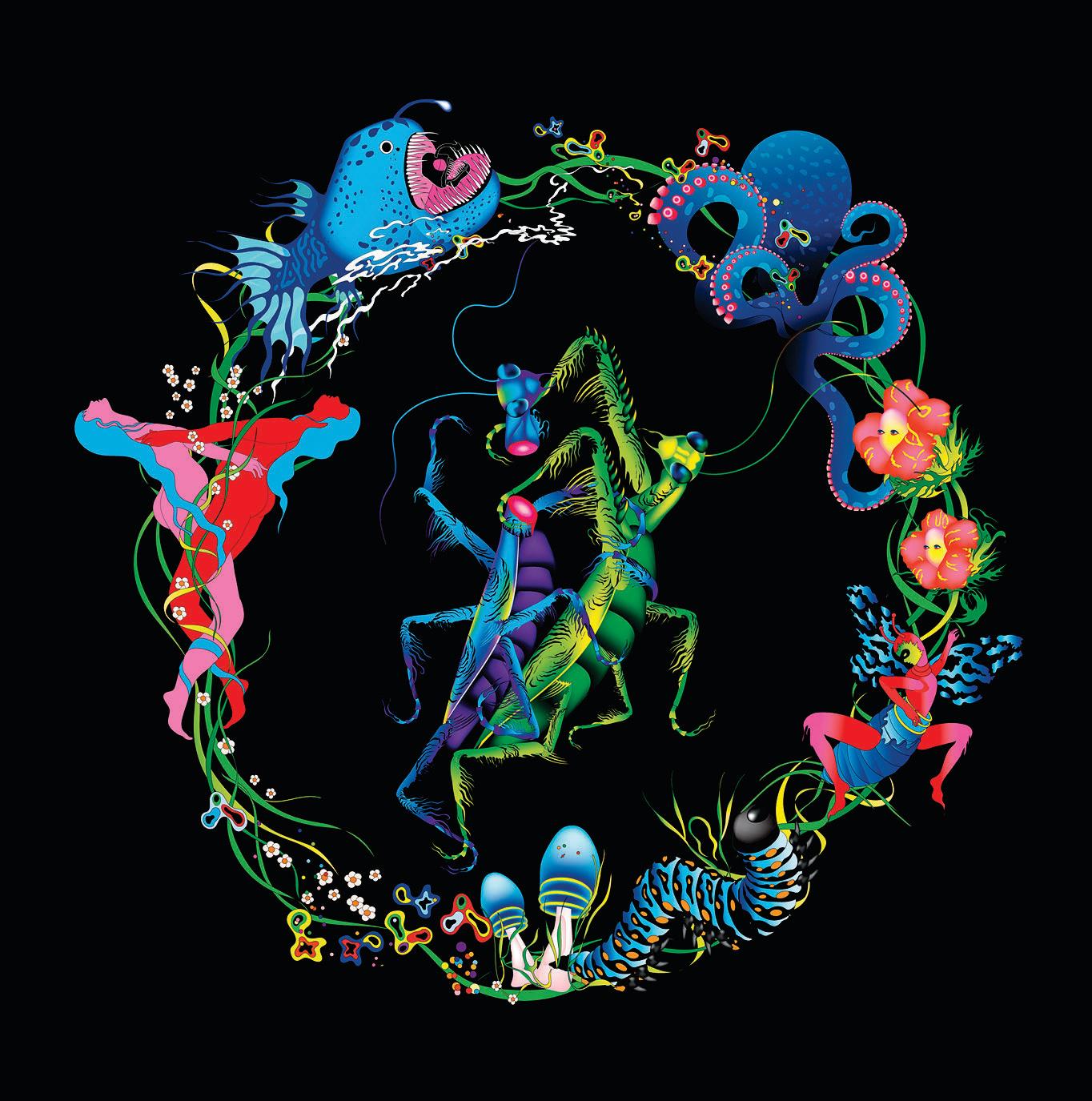
Across the natural world, reproduction resists tidy categories and easy moral lessons.
Darwin found sex a mystery. He was perplexed not by the practice—he and his wife, who also happened to be his cousin, had ten children—but by the point of it. Darwin spent the last part of his life experimenting with plants, and he was particularly intrigued by cowslips, whose flowers come in two very different forms. Each form can fertilize itself, yet each requires the services of the other in order to be, in Darwin’s words, “perfectly fertile.” Why should nature insist on such “intercrossing of distinct individuals?” he asked. And why bother with sex at all, when, via processes like budding or fission, it was evidently possible to multiply without it? “We do not even in the least know the final cause of sexuality,” Darwin lamented in a paper he published on cowslips in 1862. “The whole subject is as yet hidden in darkness.”
In Darwin's day, of course, the processes by which gametes are formed and then fused had yet to be discovered. As more was learned about genes, chromosomes, and meiosis, the mystery of sex only deepened. In the nineteen-seventies, the British evolutionary biologist John Maynard Smith wrote an entire book about the puzzle. In it, he proposed a thought experiment. Suppose a chance mutation in a species granted a random female the ability to reproduce all on her own, through parthenogenesis. (Many lizards do, in fact, reproduce this way.) This single mom would give birth only to daughters, who would produce only daughters, and so on. By dispensing with sons and lovers, the tribe of sexless females would double its rate of reproduction and so, quite quickly, take over. Maynard Smith labelled this the “twofold advantage of parthenogenesis”; it’s often, more provocatively, referred to as the “twofold cost of sex.” Given the math, sex must confer some important advantage. But what is it?

Denne historien er fra June 29, 2026-utgaven av The New Yorker.
Abonner på Magzter GOLD for å få tilgang til tusenvis av kuraterte premiumhistorier og over 9000 magasiner og aviser.
Allerede abonnent? Logg på
FLERE HISTORIER FRA The New Yorker
The New Yorker
CONTRIBUTORS
Eliza Griswold (\"Young Americans,\" p. 12) is a contributing writer.

1 mins
June 29, 2026

The New Yorker
THE READERS
Early in my treatment, we decided that you wouldn't read my work.
24 mins
June 29, 2026

The New Yorker
URBAN LEGEND
Closing out a crime trilogy about a changing New York, Colson Whitehead excavates his own foundations.
33 mins
June 29, 2026
The New Yorker
ABOUT TOWN
POST-ROCK | Last year, the Chicago instrumental post-rock band Tortoise returned with \"Touch,\" its first album in nearly a decade, the further explorations of an inquisitive nature.
3 mins
June 29, 2026

The New Yorker
GOINGS ON JUNE 24-30, 2026
What we're watching, listening to, and doing this week.
1 min
June 29, 2026

The New Yorker
LONGING FOR ITHACA
There’s a reason Homer’s homecoming epic has long defeated the directors.
16 mins
June 29, 2026

The New Yorker
HOT PURSUIT
The repo man coming for your ride.
35 mins
June 29, 2026
The New Yorker
WILD THINGS
Why do animals have sex, anyway?
14 mins
June 29, 2026

The New Yorker
PRICKLY PAIRS - “The Invite.”
“The Invite” begins with an aphorism: “One should always be in love.
6 mins
June 29, 2026
The New Yorker
BRAVE NEW WORLD DEPT.INSTANCING
Wednesday evenings at Hex&Co., board-game café and bar in Morningside Heights, are dedicated to \"RPG Encounters,\" in which fans of role-playing games gather to create collaborative stories over espresso drinks.
3 mins
June 29, 2026
Listen
Translate
Change font size