Prøve GULL - Gratis
TO DIE, TO WEEP - "Hamnet."
The New Yorker
|December 01, 2025
Two families, unconcerned with dignity.
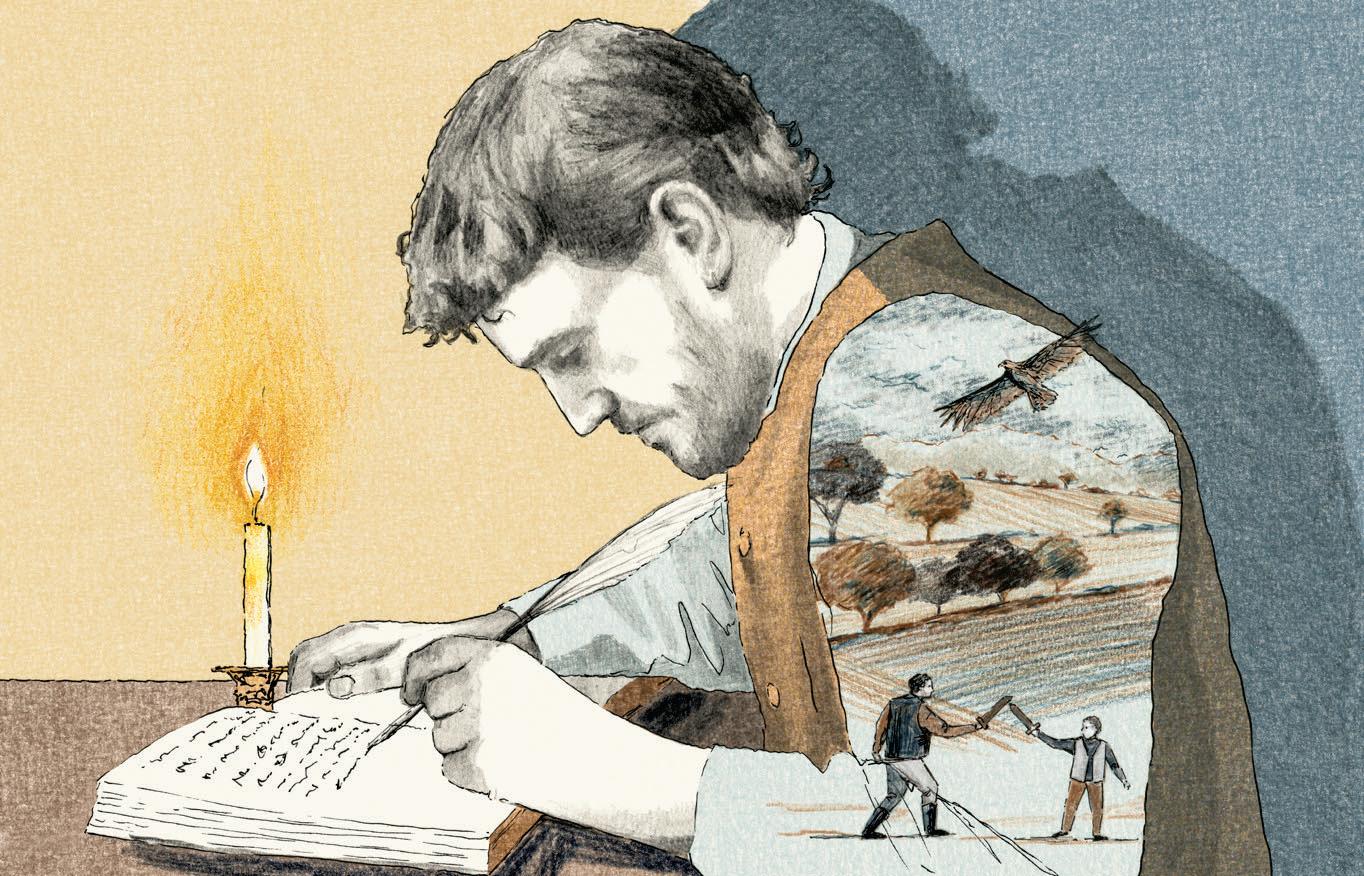
The Hathaways are farmers, in the English county of Warwickshire, with close ties to the land—some would say too close, at least in the case of Agnes, a young woman so eccentrically at one with nature that she is rumored to have been born of a forest witch. The Shakespeares are led by a glover, whose business has seen better days. His eldest son—William, of course, though he is not immediately identified as such—defrays his father’s debts by tutoring Agnes’s younger brothers in Latin, an arrangement that begets many reversals of fortune. Agnes and William fall in love; conceive a daughter, named Susanna; and marry, over the protests of their families. A few years later, Agnes bears twins, Hamnet and Judith, introducing a note of dread: Agnes’s dreams have shown two children, not three, standing at her deathbed. In more than one sense, the stage is set for tragedy.
What’s in a name? Plenty. At the beginning of “Hamnet,” a tempest of a movie from the director Chloé Zhao, we’re told that, in sixteenth-century England, the monikers Hamlet and Hamnet were used interchangeably. The premise of the film—and of Maggie O’Farrell’s novel of the same title, published in 2020—is that, after his son’s death, in 1596, Shakespeare wrote “Hamlet” in a burst of raw, unexpurgated grief. It’s a notion made for scholarly dispute: several other plays, including two comedies, “Much Ado About Nothing” and “As You Like It,” came between the death of Hamnet and the creation of “Hamlet.” Still, loss hews to no temporal logic but its own, and it would be foolish to hold O’Farrell’s unabashed historical fantasy to a persnickety standard. The more trenchant critique, surely, is that the entwining of art and life has become a tiresome conceit, predicated on the bland notion that all great fiction must have an autobiographical component and a therapeutic aim.

Denne historien er fra December 01, 2025-utgaven av The New Yorker.
Abonner på Magzter GOLD for å få tilgang til tusenvis av kuraterte premiumhistorier og over 9000 magasiner og aviser.
Allerede abonnent? Logg på
FLERE HISTORIER FRA The New Yorker

The New Yorker
AND YOUR LITTLE DOG, TOO
When animals attack.

8 mins
December 15, 2025
The New Yorker
Katy Waldman on Mary McCarthy's "One Touch of Nature"
I first encountered Mary McCarthy not through her novels or criticism but through her political reporting. A former editor recommended that I read “The Mask of State: Watergate Portraits” before covering Paul Manafort’s arraignment in 2017. (Were we ever so young?) I loved McCarthy’s witty cameos of malefactors—behold Maurice Stans, Nixon’s erstwhile Secretary of Commerce, “a silver-haired, sideburned super-accountant and magic fundraiser, who gave a day-and-a-half-long demonstration of the athletics of evasion, showing himself very fit for a man of his age.” McCarthy’s sentences were like mousetraps, snapping shut on both visual information and something deeper, the kind of quintessence that fictional characters possess and that we often long for real people to have, too.
2 mins
December 15, 2025

The New Yorker
KILLING BORROWED TIME
Will Geese redeem noisy, lawless rock and roll?
5 mins
December 15, 2025
The New Yorker
PRISON BREAKS
A new study illuminates the origins of incarceration
13 mins
December 15, 2025

The New Yorker
UNDERSTANDING THE SCIENCE
“Everyone thinks they're on this big journey now,” Debbie said, refilling her glass.
22 mins
December 15, 2025

The New Yorker
ALL RISE
A new Afghan bakery, in New York's golden age of bread.
7 mins
December 15, 2025

The New Yorker
HOW TO LEAVE THE U.S.A.
Why fed-up Americans are going Dutch.
26 mins
December 15, 2025

The New Yorker
TRADING PLACES
The ex-bankers behind HBO's \"Industry\" are the latest British élites to dramatize their own kind.
26 mins
December 15, 2025

The New Yorker
BRIGHT LIGHTS, BIG CITY
The new Studio Museum in Harlem shows that Black art matters.
10 mins
December 15, 2025
The New Yorker
MIND OVER MATTER
Did the celebrated neurologist Oliver Sacks write his patients into case studies of his own psyche?
36 mins
December 15, 2025
Listen
Translate
Change font size