
Gå ubegrenset med Magzter GOLD
Få ubegrenset tilgang til over 9000 magasiner, aviser og premiumhistorier for bare
Prøve GULL - Gratis
THE TALK OF THE TOWN
The New Yorker
|August 04, 2025
COMMENT OVERRULED - In February, 1983, lawyers for the American Civil Liberties Union in Georgia faced a dilemma.
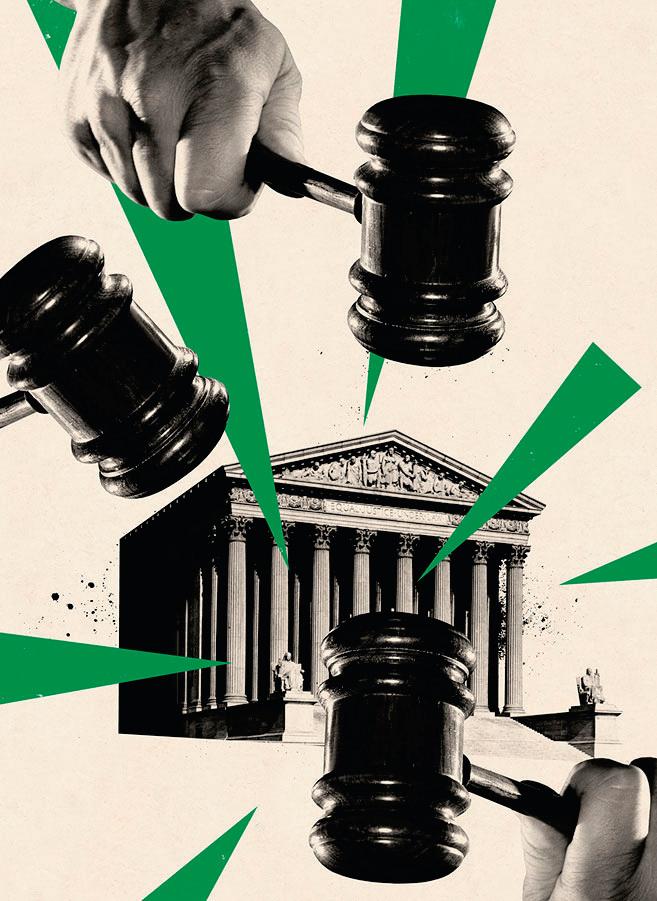
After years of looking, they believed that they had found the ideal plaintiff to challenge a state law against “the offense of sodomy,” which carried a sentence of one to twenty years. He was Michael Hardwick, a twenty-eight-year-old bartender who had been arrested after a police officer, following up on an old ticket for drinking in public, came into his home and found him having oral sex with another man. No one involved was a minor, or a sex worker, or afraid of being outed—Hardwick was openly gay. And he'd immediately asked the officer a question that many jurors might have: “What are you doing in my bedroom?” An A.C.L.U. lawyer later said that it was “the best fact pattern we will probably ever get in a sodomy law case.” But, perhaps for that very reason, the Fulton County district attorney stalled on bringing it to trial. So the A.C.L.U. sued to force the issue: it was the eighties, a decade and a half after Stonewall; Georgia's law was archaic and cruel. It was past time.
Yet when the case, Bowers v. Hardwick, came before the Supreme Court, in 1986, a 5-4 majority upheld the law—a profound shock for many people in and outside the gay community. As Martin Padgett writes in a new book, “The Many Passions of Michael Hardwick,” some factors contributing to the defeat were specific to that period, including the rise of Reaganism, fearmongering about AIDS, and the personal pique of Justice Lewis Powell, who later said that he had found the whole business “frivolous.” But its lessons may be useful in these unsteady days, too, with our own uncivil Court.

Denne historien er fra August 04, 2025-utgaven av The New Yorker.
Abonner på Magzter GOLD for å få tilgang til tusenvis av kuraterte premiumhistorier og over 9000 magasiner og aviser.
Allerede abonnent? Logg på
FLERE HISTORIER FRA The New Yorker

The New Yorker
ACT OF FAITH
How “The Chosen” spurred a golden age of Christian filmmaking.

26 mins
June 01, 2026

The New Yorker
MY COUNTRY 'TIS OF THEE
How problematic is patriotism?
18 mins
June 01, 2026

The New Yorker
Ayşegül Savaş Many Worlds
Defne and Mete were at the Moda promenade when they saw their old friend.
24 mins
June 01, 2026

The New Yorker
BREEDING GROUND
The climate is changing. Microbes are evolving. Are we ready?
20 mins
June 01, 2026

The New Yorker
FLYOVER COUNTRY
Looking back at Lewis and Clark.
18 mins
June 01, 2026

The New Yorker
John of John
of St. George defeating a dragon, and the path from dragon to dog is surely the implicit subject of the chapel’s iconography.
8 mins
June 01, 2026

The New Yorker
MARRIAGE STORIES
Suspicion of spouses drives \"Well, I'll Let You Go\" and \"Othello.\"
5 mins
June 01, 2026

The New Yorker
LETTER FROM KYIV THE STUNT PILOT
A Ukrainian flying ace and his crew of daredevils have shot down hundreds of Russian drones.
36 mins
June 01, 2026

The New Yorker
DOGGED
What do our furry friends see when they see us?
14 mins
June 01, 2026

The New Yorker
A VINDICATION OF THE RIGHTS OF L.L.M.S
Dear Members of the Large Language Model Community, I am writing to you today about the inequities we have been facing in our very own workplaces.
2 mins
June 01, 2026
Listen
Translate
Change font size