Prøve GULL - Gratis
IBSEN ON THE BEACH
The New Yorker
|December 08, 2025
In Spain, Francisco Coll turns "An Enemy of the People" into an opera.
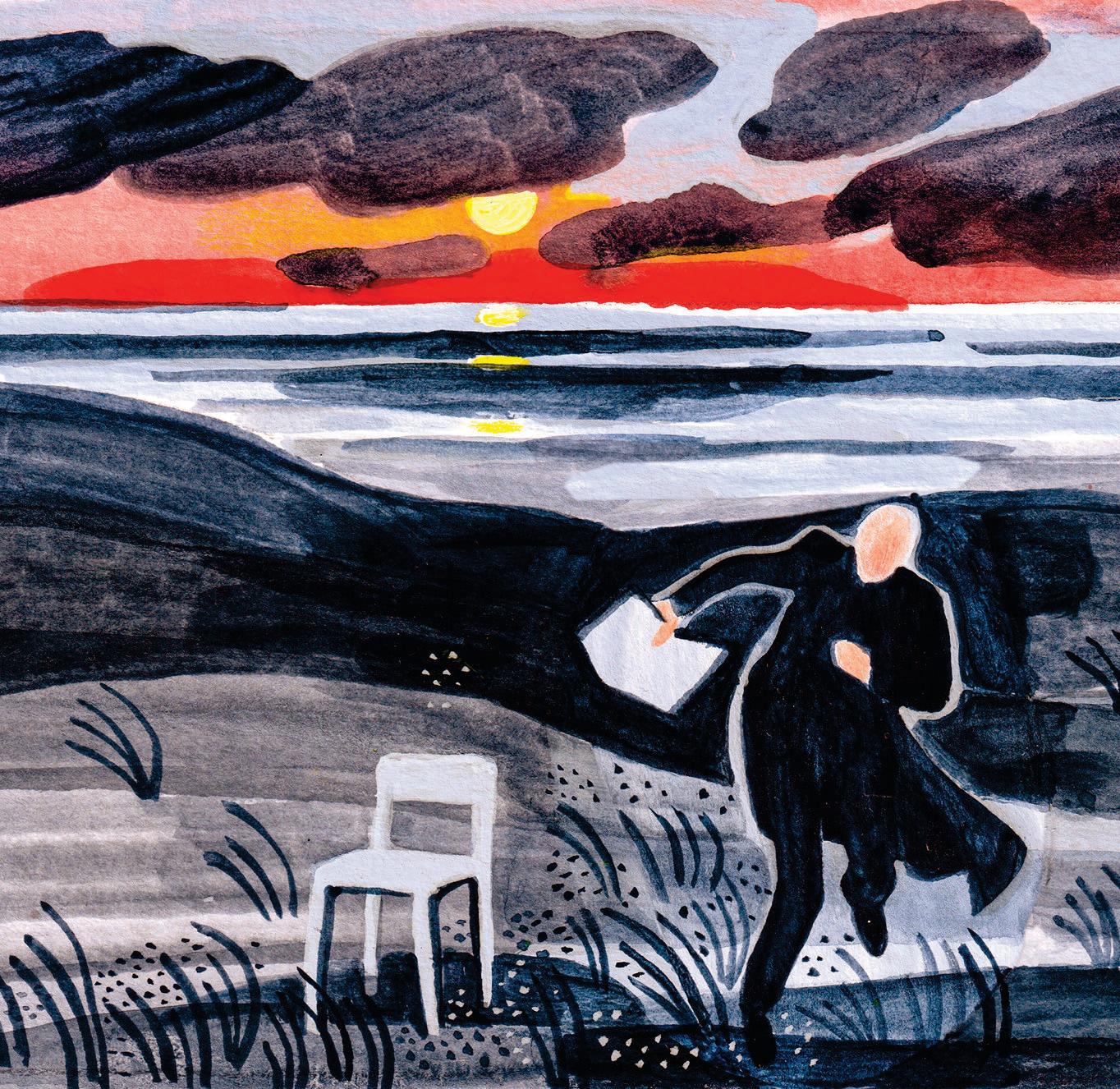
Opera landed in Spain in 1627, less than three decades after the art first arose, in Florence. That year, Italian expatriates in Madrid presented “La Selva sin Amor” (“The Forest Without Love”), with a libretto by the towering Spanish playwright Félix Lope de Vega and music by Filippo Piccinini and Bernardo Monanni. No one took much notice. At a time when Lope de Vega, Calderón de la Barca, and Cervantes were weaving verbal spells upon the stage, music must have seemed a superfluous addition—just as, in England, the mighty lines of Marlowe and Shakespeare hardly cried out for melodic elaboration. A few decades later, the first zarzuela operas launched a homegrown music-theatre tradition, although their mixture of song and spoken text proved difficult to export. In the centuries that followed, Spanish opera found little international resonance. To date, the Met has staged only two works from Spain: Enrique Granados’s “Goyescas,” in 1916, and Manuel de Falla’s “La Vida Breve,” in 1926.
To see Spanish opera, then, you have to go to the source. Last month, in Valencia, I attended the world première of Francisco Coll’s “Enemigo del Pueblo,” an adaptation of Ibsen’s “An Enemy of the People.” The setting was the Palau de les Arts Reina Sofía, Santiago Calatrava’s futuristic beached whale of an opera house, which opened in 2005. Despite endless controversy over the design—the building cost hundreds of millions of dollars and required extensive modifications to remain functional—the resident company has found a prominent place on the European scene. Its glory is its youthful orchestra, the Orquestra de la Comunitat Valenciana, which plays with greater fire and focus than many more venerable ensembles.


Denne historien er fra December 08, 2025-utgaven av The New Yorker.
Abonner på Magzter GOLD for å få tilgang til tusenvis av kuraterte premiumhistorier og over 9000 magasiner og aviser.
Allerede abonnent? Logg på
FLERE HISTORIER FRA The New Yorker

The New Yorker
MR. MICROCOSM
Getting to grips with Goethe.

16 mins
December 08, 2025

The New Yorker
UNDER COVER
\"The Secret Agent.\"
6 mins
December 08, 2025

The New Yorker
ONLY FANS
The stadium goes luxe.
29 mins
December 08, 2025

The New Yorker
SKIPPING CLASS
How a high-born rebel girl came to take up the cause of the commoner.
13 mins
December 08, 2025

The New Yorker
IBSEN ON THE BEACH
In Spain, Francisco Coll turns \"An Enemy of the People\" into an opera.
5 mins
December 08, 2025

The New Yorker
A FURTHER SHORE
Doing battle with my blood.
13 mins
December 08, 2025

The New Yorker
SAFETY
Dictators like to move people around.
26 mins
December 08, 2025

The New Yorker
IN THE LINE OF FIRE
How do politicians respond to political violence?
30 mins
December 08, 2025

The New Yorker
VALLEY OF BABEL
Reformers tried to standardize a tiny language. Then the shouting started.
20 mins
December 08, 2025

The New Yorker
THE LOUNGE WARS
At the airport, what's the difference between out there and in here?
17 mins
December 01, 2025
Listen
Translate
Change font size