
Gå ubegrenset med Magzter GOLD
Få ubegrenset tilgang til over 9000 magasiner, aviser og premiumhistorier for bare
Prøve GULL - Gratis
ESCAPE ROUTE
The New Yorker
|July 21, 2025
Geoff Dyer tracks the comic confusions of a working-class British upbringing.
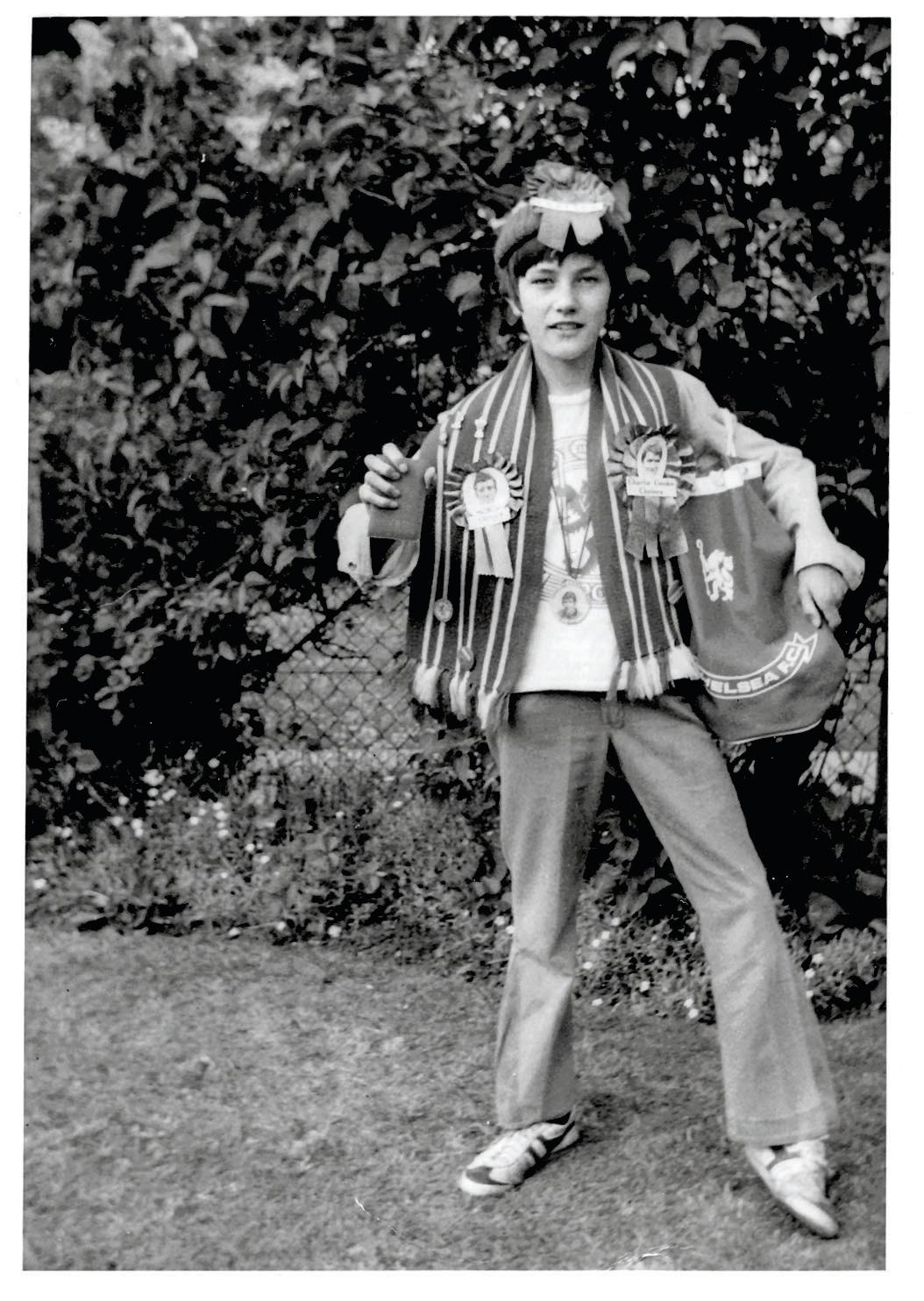
The escape from working-class life has good narrative pedigree, a classic form—beginning with the idea of escape itself. It’s something like a sharpened bildungsroman. The child is nudged forward by an ambitious parent, by an influential teacher, or simply by a curiosity that, like water, insists on finding its way in and out. There’s the Cortés-like discovery of world-disclosing books; the opening up at school or university; perhaps a gradual estrangement from those same ambitious parents, who discover, too late, that they’ve been underwriting the family’s own unravelling. And then there’s the journey away from the old home, toward actual new worlds.
“Homework” (Farrar, Straus & Giroux), a new memoir by the English writer Geoff Dyer, traces several such journeys. Dyer could hardly be un-self-conscious about what might be called his writes of passage. A coolly funny stylist—the author of the brilliant “Out of Sheer Rage,” among many other books—he knows a thing or two about narratives of, and out of, working-class life. Dyer was born in Cheltenham in 1958, the same year that the Marxist cultural theorist Raymond Williams, who would become an important influence on Dyer’s work, published the pioneering study “Culture and Society.” In a sense, Dyer grew up alongside British cultural materialism. Intellectually, the era was one of radical ferment, but radicalism worked on the canonical: D. H. Lawrence and Thomas Hardy remained royalty in schools and universities, thanks to the king-making attentions of Williams and F. R. Leavis. It’s no surprise to find Lawrence and Hardy invoked in “Homework,” or to learn that one of the secondhand books Dyer’s mother brought home was a battered orange Penguin of Williams's “Border Country.” You could say that Dyer has done his homework.


Denne historien er fra July 21, 2025-utgaven av The New Yorker.
Abonner på Magzter GOLD for å få tilgang til tusenvis av kuraterte premiumhistorier og over 9000 magasiner og aviser.
Allerede abonnent? Logg på
FLERE HISTORIER FRA The New Yorker

The New Yorker
HOW SHOULD A MOTHER BE?
We keep revising the maternal ideal—and keep falling short of it.

11 mins
January 26, 2026

The New Yorker
THE VERMONTER
What happened when Bernie Sanders left Brooklyn for Burlington.
16 mins
January 26, 2026

The New Yorker
BREAKING NEWS
Inside Bari Weiss's hostile takeover at CBS.
37 mins
January 26, 2026

The New Yorker
SCHOOL OF FISH
On the water with a Southern California seafood savant.
7 mins
January 26, 2026

The New Yorker
COLD COMFORT
The wintry triumphs of Helene Schjerfbeck.
6 mins
January 26, 2026

The New Yorker
WON'T BACK DOWN
The stubborn songs of Zach Bryan.
6 mins
January 26, 2026

The New Yorker
POWER AND PROTEST
On January 8th, the twelfth day of mass protests in Iran, which began when shopkeepers, responding to runaway inflation, closed Tehran’s Grand Bazaar, the Iranian government shut down public access to the internet, further shrouding an already largely closed society. Nevertheless, isolated images and details have been smuggled out, giving a hint of how brutal and monumental these events are.
4 mins
January 26, 2026

The New Yorker
Vinson Cunningham on Barry Blitt's "The Politics of Fear"
I was in a yellow cab in high summer when I saw it. Twenty-three at the time, I sometimes skimmed articles about politics on my clunky BlackBerry while cruising through Central Park to my first real job, fundraising for Barack Obama’s 2008 Presidential campaign. Usually, the ride was placid.
2 mins
January 26, 2026

The New Yorker
SHOW OF FORCE
After a chaotic visit to an ICE jail, a congresswoman faces felony charges in Trump's war against his critics.
37 mins
January 26, 2026

The New Yorker
THE ICE CURTAIN
Nome, Alaska, seems farther from Russia than ever.
26 mins
January 26, 2026
Listen
Translate
Change font size