Prøve GULL - Gratis
DON'T BLAME ME
The New Yorker
|October 13, 2025
Taylor Swift's new album eschews vulnerability for revenge.
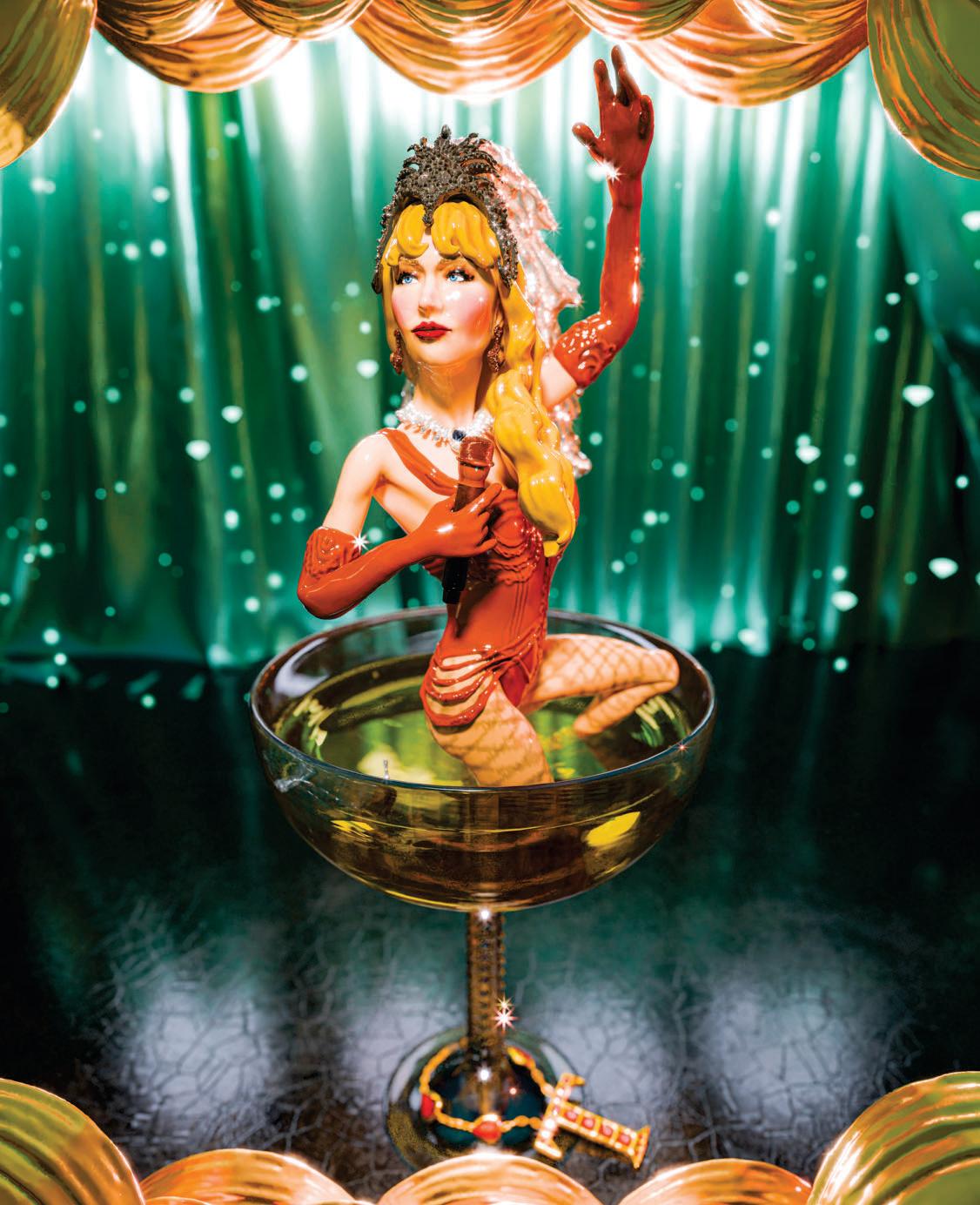
Swift has been slow to abandon the underdog mentality from her early years.
Since Taylor Swift launched the record-breaking Eras Tour, in 2023—a hundred and forty-nine dates, fifty-one cities, more than two billion dollars in ticket sales—she has been freakishly omnipresent in the cultural consciousness: a grinning lodestar in Louboutin boots. The tour ended last December, but, rather than ceding the spotlight, Swift doubled down on her mega-celebrity, first with a wildly publicized engagement to Travis Kelce, a tight end for the Kansas City Chiefs, and then by releasing “The Life of a Showgirl,” her twelfth studio album, and her second in less than eighteen months. It’s a cocky, temperamental record about power and insecurity. “What could you possibly get for the girl who has everything and nothing all at once?” she sings on “Elizabeth Taylor,” one of the album’s best and heaviest tracks. That paradox is central to Swift’s gestalt. She is equal parts formidable (“I’ll be your father figure / I drink that brown liquor / I can make deals with the devil because my dick’s bigger,” she boasts on “Father Figure”) and bruised. “I have been afflicted by a terminal uniqueness / I’ve been dying just from trying to seem cool,” she sighs on “Eldest Daughter,” a doleful ballad. (“Terminal uniqueness” is a phrase used in A.A. or other recovery programs—a toxic belief in your own exceptionalism.)
Swift has been slow to abandon the underdog mentality she developed as an upstart. What she does for a living is surely gruelling, but relentlessly pointing out how fame is poisonous and burdensome isn’t exactly revelatory. (A lot of jobs are hard; very few make a person unspeakably rich.) On “The Life of a Showgirl,” Swift is occasionally tender—“Honey” is arch, delicate, lovely—but more often she is vengeful, eschewing vulnerability in favor of bombast.

Denne historien er fra October 13, 2025-utgaven av The New Yorker.
Abonner på Magzter GOLD for å få tilgang til tusenvis av kuraterte premiumhistorier og over 9000 magasiner og aviser.
Allerede abonnent? Logg på
FLERE HISTORIER FRA The New Yorker

The New Yorker
VISITING HOURS
In Harriet Clark's début novel, a prisoner's daughter must find her way.

10 mins
May 11, 2026

The New Yorker
REVAMPS
Two new musicals on Broadway, \"Schmigadoon!\" and \"The Lost Boys.\"
7 mins
May 11, 2026

The New Yorker
RESOLVED
High-school debate, our real national pastime.
4 mins
May 11, 2026

The New Yorker
THE BIG PICTURE
Frederic Church turned landscape into a vision of national virtue.
17 mins
May 11, 2026

The New Yorker
COUTURE SHOCK
\"The Devil Wears Prada 2.\"
6 mins
May 11, 2026

The New Yorker
THE SHOT HEARD ROUND THE WORLD?
The American Revolution was just one front in a vast global war. Which went rather well for the Brits.
16 mins
May 11, 2026

The New Yorker
CROSSROADS
The inventor of “intersectionality” looks back—and ahead.
16 mins
May 11, 2026

The New Yorker
WHAT WE HOLD
The writing and meaning of the Declaration of Independence.
19 mins
May 11, 2026

The New Yorker
STANDINGS
My given name, Jeon-Gi, with a hard “G,” was one that some of the kids in my apartment complex enjoyed deforming.
33 mins
May 11, 2026

The New Yorker
AMERICAN TWEEN
In some ways, the world is cooked. But being a twelve-year-old still kind of eats.
33 mins
May 11, 2026
Listen
Translate
Change font size