
Gå ubegrenset med Magzter GOLD
Få ubegrenset tilgang til over 9000 magasiner, aviser og premiumhistorier for bare
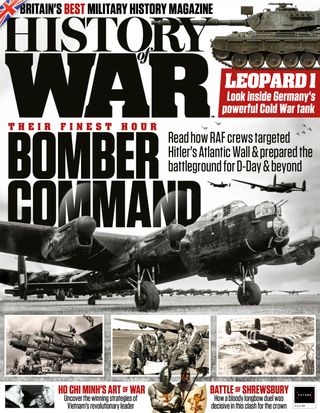
HO CHI MINH’S ART OF WAR
History of War
|Issue 117
The leadership of North Vietnam’s revolutionary premier succeeded in defeating the colonial French state, and later South Vietnam and its Western allies

Ho Chi Minh is credited as being the political leader who liberated Vietnam. He achieved this by first ending French colonial rule in 1954, then his strategies led to victory in the Vietnam War against the Americans and South Vietnamese in 1975. When he was born in 1890, French Indochina had just formed from Cambodia and Vietnam; Lao was added later. Many Vietnamese leaders looked for ways to end colonialism but none had made substantial progress. From observing previous methods, Ho designed his All-People’s War model.
Ho’s model comprised the three strategic fronts of political, propaganda and the military, linked by the Revolutionary Infrastructure. This infrastructure generally included ‘Communist Party cells’, which were then linked together by advanced ‘couriers’ using courier corridors, and ‘guards’. This covert administration became a comprehensive shadow government with all the associated services there to support, control and expand a ‘shadow nation’.
The objective was to fight a protracted war of attrition. Nevertheless, Ho knew that total victory could only be achieved through conventional units with symmetry on the battlefield with his enemy. To establish these conditions, the model was used to build Ho’s fighting units and diminish the strength of the opposing army. Then, at a strategic moment, his military leaders could inflict one swift death blow on the conventional units of his enemy, so forcing them into unconditional surrender.

Denne historien er fra Issue 117-utgaven av History of War.
Abonner på Magzter GOLD for å få tilgang til tusenvis av kuraterte premiumhistorier og over 9000 magasiner og aviser.
Allerede abonnent? Logg på
FLERE HISTORIER FRA History of War
History of War
MORE MISS MONEYPENNY THAN MATA HARI WOMEN SPIES THROUGHOUT THE DECADES
THEY LOOKED LIKE ORDINARY HOUSEWIVES, MOTHERS AND SECRETARIES IN SENSIBLE CLOTHES AND STURDY SHOES. BUT THESE INNOCUOUS WOMEN WERE EMBARKED ON COURAGEOUS AND OFTEN TREACHEROUS MISSIONS AS SECRET AGENTS

4 mins
Issue 153
History of War
THE END OF GREAT POWERS
Full-spectrum analysis of a state's economy, technology, leadership, society and alliances could be a superior way of predicting battlefield performance
3 mins
Issue 153
History of War
THE BATTLE OF JERUSALEM 9 JANUARY - 11 DECEMBER 1917
During a campaign that lasted nearly a year, British and Arab forces defeated the Ottoman Turks and entered the ancient city
7 mins
Issue 153
History of War
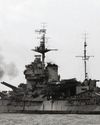
QUEEN ELIZABETH CLASS BATTLESHIP
These five super-dreadnoughts set the standard for early 20th century warship design in speed, firepower and protection and were the first fast battleships of the age
4 mins
Issue 153
History of War
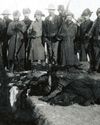
THE MASSACRE AT WOUNDED KNEE
In 1890, US troops killed more than 250 Lakota, at a location that remains the focus of resistance and dark controversy
10 mins
Issue 153
History of War
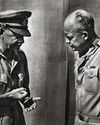
BORN IN NORTH AFRICA
HOW THE TUNISIA CAMPAIGN FORGED THE 'SPECIAL RELATIONSHIP'
3 mins
Issue 153
History of War
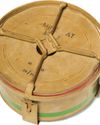
ANTI-TANK MINE
This lightweight General Service Mk V device could immobilise Hitler's heavy tanks and was used during fighting in Northwest Europe
1 mins
Issue 153
History of War
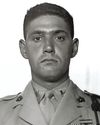
HEROES OF THE MEDAL OF HONOR BALDOMERO LOPEZ
During the daring landings at Inchon in 1950, this first lieutenant sacrificed his life to save his US Marine comrades
6 mins
Issue 153
History of War
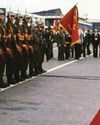
NORTH KOREA'S ROCKET REVOLUTION
After the peninsula was divided by a long-term ceasefire, Pyongyang and Seoul raced to build weapons that could obliterate each other
4 mins
Issue 153
History of War
THE GREAT TRAIN RAID THE MOST DARING SAS MISSION OF WWII
DAMIEN LEWIS' LATEST SAS ADVENTURE IS CHARACTERISTICALLY FAST-PACED AND ACTION-PACKED
2 mins
Issue 153
Translate
Change font size