Prøve GULL - Gratis
From Well to Wheels
Successful Farming
|January 2025
A look at ethanol's life cycle emissions.
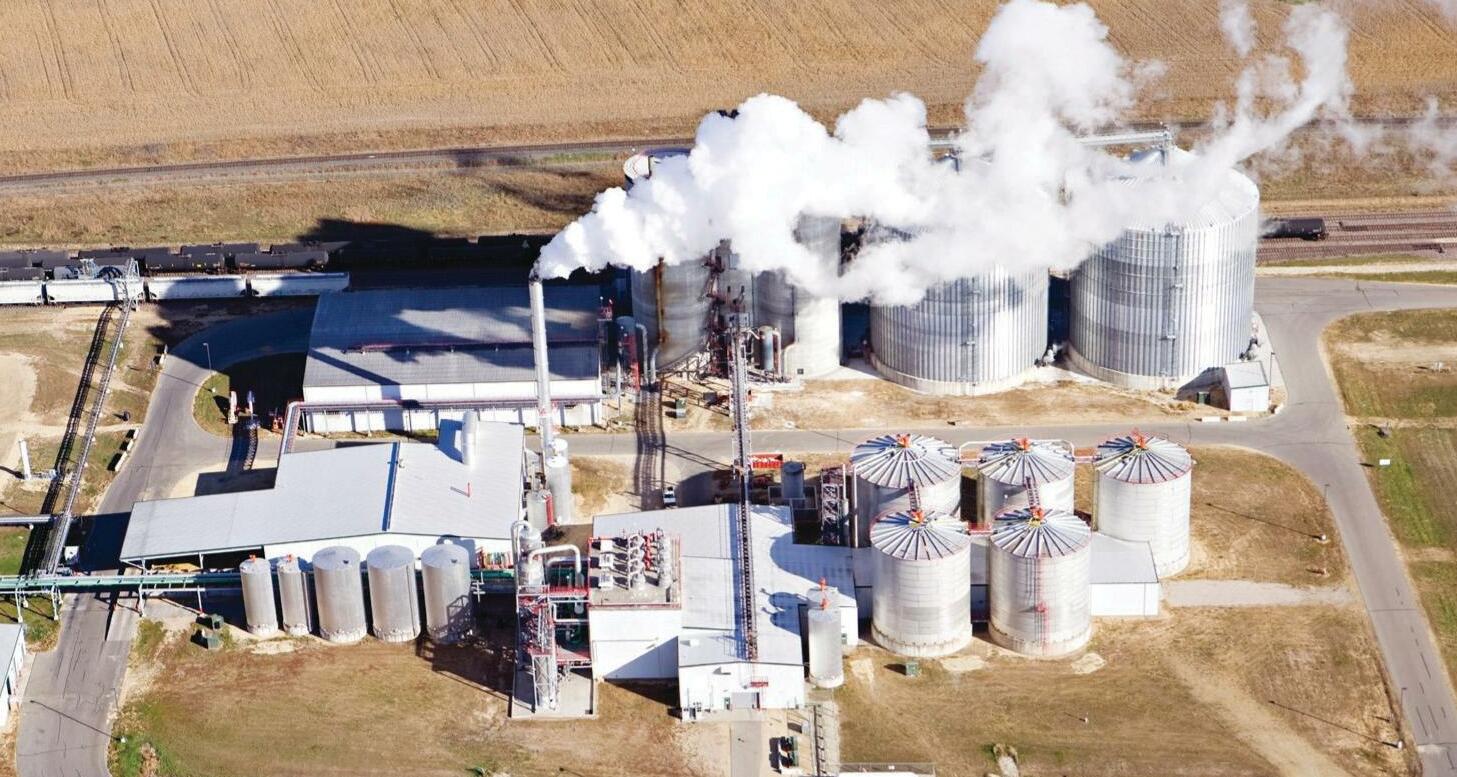
Corn ethanol has been the standard for biofuels in the United States since the Renewable Fuel Standard (RFS) was introduced in 2005. Carbon pipelines have been positioned as the next step the ethanol industry needs to sequester carbon, receive tax credits, and be poised for growth, including in new areas such as sustainable aviation fuel. In our series on carbon pipelines, we have covered how companies are working to establish pipelines across the Midwest. We also looked at how farmers can navigate eminent domain use when pipeline construction comes closer to reality.
For this story, we set out to directly compare the life cycle of greenhouse gas (GHG) emissions — from well to wheels — of ethanol and gasoline, and how carbon pipelines factor into the future of ethanol as a viable, low-emission fuel. This turned out to be more difficult than expected. Few recent independent studies have been conducted removed from the goal of adopting ethanol as a clean energy source in the U.S. There are so many different approaches to measure well-to-wheel emissions, it's almost impossible to find an agreed-upon carbon intensity (CI) score among various studies and stakeholders. The U.S. government uses the Department of Energy's Greenhouse Gases, Regulated Emissions, and Energy Use in Technologies (GREET) model.
Mark Heckman is vice president of sales and marketing at Edeniq, Inc., a California-based biotechnology company, and formerly ethanol services director at EcoEngineers, an Iowa-based engineering consultant. “In the carbon world, people talk about system boundaries — the handoff of where emission measurement starts and when it stops,” Heckman said. “The GREET model is a quick tool that pulls all these emission factors into it, and uses the science that's coming out of the Department of Energy and Argonne National Laboratory to state acceptable practices or levels to use, if you take farm practices as a whole.”

Denne historien er fra January 2025-utgaven av Successful Farming.
Abonner på Magzter GOLD for å få tilgang til tusenvis av kuraterte premiumhistorier og over 9000 magasiner og aviser.
Allerede abonnent? Logg på
FLERE HISTORIER FRA Successful Farming
Successful Farming
Roger Wenning
Taking the long view on soil health has allowed this Indiana farmer to drastically transform his land and yields.

3 mins
December 2025
Successful Farming
A Systems Overhaul
These farmers jump-started soil lite to provide health and fertility for crops.
5 mins
December 2025
Successful Farming
Do You Trust Your Land?
A trust may help you and your family with farm succession and retirement.
4 mins
December 2025
Successful Farming
Make Your Own Handy Tools
Craft your own wire splicers for fencing repairs, and a sprayer tip-cap remover to save your fingers.
1 min
December 2025
Successful Farming
Do 100 THINGS 1% Better
Yield contest champions confirm big yields come from small, consistent improvements.
7 mins
December 2025

Successful Farming
Rural Route Ramble
Holiday shoppers are descending on northwest Iowa communities, getting a glimpse of the beauty of small-town life and offering a much-needed boost to businesses.
4 mins
December 2025
Successful Farming
A Fresh Start
Up-and-coming farmers find peace, purpose, and a path to independence in Iowa.
1 mins
December 2025

Successful Farming
Sean Lehmann
The Braunvieh beef breed has become a favorite of this Kansas cattleman and his family.
4 mins
December 2025
Successful Farming
A SLOW UNWINDING
While some data shows farmland values are up, one expert sees farmland values declining due to market dynamics.
5 mins
December 2025
Successful Farming
Who Can Own American Farmland?
What does the National Farm Security Action Plan mean for foreign-owned businesses such as Syngenta?
3 mins
December 2025
Listen
Translate
Change font size